
ESS Tech, Alsym Energy partner for 8.5 GWh of non-lithium BESS solutions
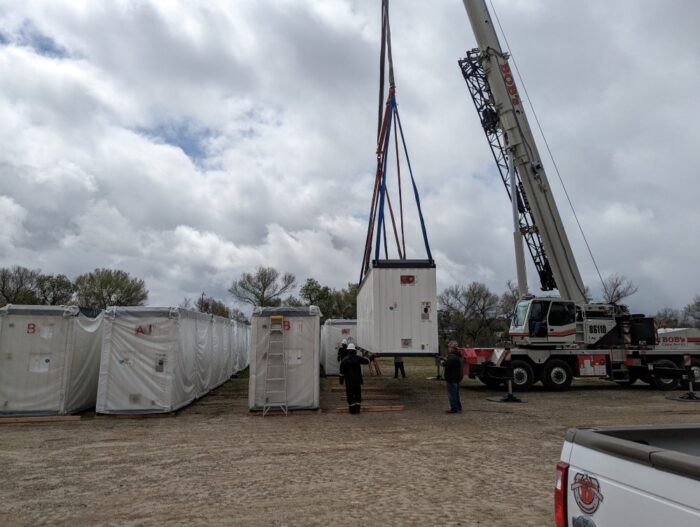
Long-duration energy storage system (LDES) manufacturer ESS Tech Inc. and battery maker Alsym Energy have formed a partnership to add 8.5 GWh of sodium-ion batteries to ESS Tech’s portfolio.
The agreement signifies a milestone for ESS, as it enters into the short- and medium-duration battery storage market. Historically dominated by lithium-ion products, the entry of ESS and Alsym presents a unique solution for the battery world. Drew Buckle, the CEO of ESS Tech, says Alsym’s iron flow and sodium-ion batteries are “complementary technologies” to one another.
“ESS’s existing Energy Base iron flow platform is engineered for the 8–24 hour long-duration segment, where deep daily cycling, 25-year asset life, and zero capacity degradation deliver the lowest levelized cost of storage,” he says. “Together, the two chemistries form a unified, non-lithium platform that enables ESS to meet customers’ full storage needs from a single trusted provider, whether the application calls for firming renewables over a few hours, shifting energy across a full day, or pairing both within a single project to optimize economics across the full duration curve.”
ESS Tech CCO Randall Selesky says the partnership offers “safer, more sustainable technologies” to the energy storage market at large. Combining Alsym’s sodium-ion technologies with ESS Tech’s systems gives customers a pathway to transition out of the lithium-ion market, without having to compromise on price or performance.
“Unlike lithium‑ion batteries and many other sodium-ion batteries, Alsym’s Na-Series batteries are non‑combustible and thermally stable, reducing system complexity, improving safety, and lowering total cost of ownership by reducing the need for extensive fire suppression and HVAC infrastructure,” Selesky says. “Alsym’s Na-Series has been developed using a proprietary, physics-informed AI platform for battery development that dramatically shortens the time to bring innovation to the market.”
The sodium batteries also utilize non-FEOC sourced materials, Selesky adds, and those materials do not have the same inherent risk of thermal runaway often present in traditional lithium-ion BESS products.
Supporting growing electrical need
ESS Tech has put itself in a strong position, the company says, especially as electrical demand spikes around the U.S. and beyond. The sodium-ion batteries will be able to support not only straining utilities, but independent power producers and data centers across the country.
Calling ESS Tech a leader in stationary storage solutions, Alsym CEO Mukesh Chatter says he is excited to watch the partnership blossom between the firms.
“As demand grows, it is increasingly clear that the industry needs solutions beyond lithium-ion to meet the speed and scale projections,” Chatter says. “By combining high performance, inherent safety, and supply chain resilience, Alsym’s Na-Series delivers that capability and ESS brings deep experience delivering grid-scale systems that maximize the value of renewable energy. Together, we are enabling a better path forward for energy storage.”
In addition to strengthening the U.S. energy grid, the sodium-ion batteries will serve commercial and industrial customers, ESS says. The newly crafted BESS systems provide a flexible, and perhaps more importantly future-proofed, solution for a number of application in the commercial energy world.

Comments are closed here.