
Soltec expands solar tracker presence in U.S. market with new president

Solar tracker manufacturer Soltec has appointed former Recurrent Energy chief development officer Alejandro Moreno as its new president of North American operations, the company says.
Taking the mantle from Alma Miller, who has since been appointed as the firm’s executive vice president, Moreno says he comes to his new position with a very clear goal. First and foremost, the Spanish company will aim to bolster its operations in the North American market under his watch, he says.
“What attracted me to Soltec is the combination of strong technology, a global footprint, and significant growth potential in the U.S. market,” Moreno says. “My priority in the first year is very clear: strengthen our position in North America by getting closer to customers, reinforcing our local capabilities, and ensuring we are competitive not only on product but across the full value proposition—from engineering to execution and service.”
As Soltec’s new leading man for the world’s largest solar tracker market, Moreno has to keep a pulse on the latest trends in the space. He says that what he’s found is that innovation still makes all the difference.
“Some people say trackers have become a commodity, but that is not entirely true,” he says. “Trackers may look similar from the outside because they share certain structural components. However, the real difference lies in the engineering behind each component and in the software that controls and optimizes the system.”
Tracking the tracker trends
The solar tracking market is constantly evolving, with technological advancements taking hold faster than any firm can plan for or predict. The industry has “reached a high level of maturity,” as Moreno says, as evidenced by its dominant position in markets across the world.
Trackers have become a force in the wider solar industry around the Americas, as well as southern Europe and the Middle East, according to Moreno. Where fixed-tilt solar assets once prevailed — areas like Asia and Central America — trackers are making noticeable progress there as well, Moreno adds.
The supply side of the market has also greatly matured, he says, creating a clear “market duality.”
“On the one hand, there are Tier 1 tracker companies with a high degree of technological sophistication, strong multi-gigawatt track records, and global supply chains,” Moreno says. “On the other hand, there is a growing number of new entrants—often coming from the fixed-tilt segment—who are entering the tracker space by integrating third-party electronics and components into their own structural solutions to compete for projects.”
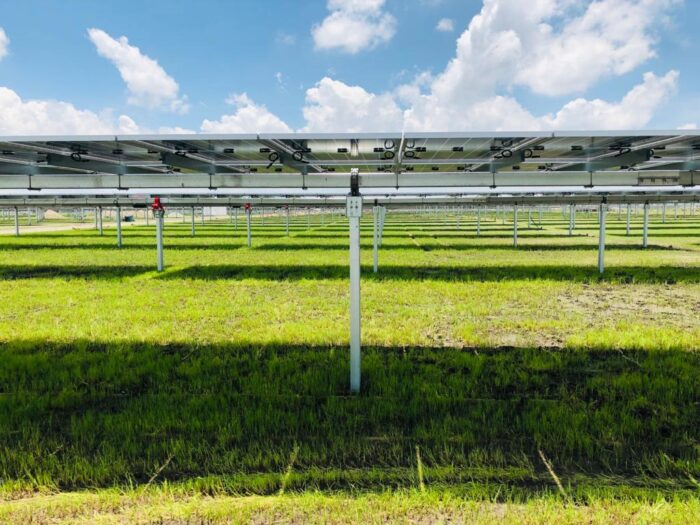
The key trends are mostly focused on increasing energy yield, especially in the U.S., which sits as the largest tracker market in the world. Characterized by an ever-rising level of technical requirement, the sector’s technological advancements tend to revolve around mitigating the threat of weather-related loss events.
“The key trends are focused on increasing energy yield through intelligent algorithms and enhancing resilience against extreme weather events,” he says. “That’s not only wind, which has traditionally been the main challenge for trackers, but also flooding, snow, and hail.
“Another trend is developing terrain-following structures to adapt to more complex sites. There is also growing demand for solutions that enable faster installation, such as preassembled systems.”
Modern solutions for the modern era
In terms of projects installed more than a decade ago, Soltec is the number three tracker company in the world, according to Moreno. He says the firm’s long-term product reliability has become its hallmark, with many owners of Soltec’s oldest plants claiming their trackers still work mostly, if not completely, like new.
Still, the modern solar industry necessitates innovation, Moreno says, now more than ever. He calls the implementation of AI in solar “particularly exciting,” and says Soltec is ready to jump at the opportunities that particular technological advancement presents.
“Soltec developed 3D backtracking more than six years ago to reduce shading losses on uneven terrain,” he says, “and over the past year we’ve enhanced it with additional intelligent features, such as a diffuse radiation module and production optimization algorithms that minimize losses during wind events when trackers move into stow positions.”
All of those capabilities are already integrated into the company’s Solboost product, Moreno says. The product improves energy yield up to 8.3%, and that number could get even higher with smart usage of AI.
Soltec has been developing electronic and software capabilities in-house since its 2004 founding, Moreno says. Those in-house capabilities have allowed the company to meet consistently evolving needs in the solar tracker space, as it pioneered a fully wireless communications system for plant operators. Now, the firm is working to advance those capabilities through machine learning.
Soltec is also working on the other side of things, with AI-focused tech companies using the firm’s solar solutions to help power their data centers.
“Solar has firmly established itself as the most competitive source of energy in the U.S. and the world, and it’s also the fastest way to bring new capacity online,” he says. “When you combine low cost and speed-to-market with the country’s growing electricity demand, we’re confident that the U.S. market is going to thrive.”
Weighing risk against opportunity
Even with the flurry of policy changes enacted by the second Trump administration during the sitting president’s first year and a half back in office, the solar tracker sector is “structurally strong,” Moreno says. Driven largely by the aforementioned AI data center boom and large-scale electrification, the wider solar industry greatly values tracker solutions in North America today.
Still, the tracker segment is in a time of great risks in the U.S. from a developer’s perspective, according to Moreno.
“No developer wants supply constraints, and yet it’s striking to me that two players have accounted for nearly 75% of U.S. tracker installations in recent years,” he says. “Fortunately, the latest market data suggests this trend has moderated, but even so, that remains a very high level of concentration in the U.S. tracker market and increases risk.”
Moreno adds that a healthy market should be very competitive, and the solar world is already seeing awareness of that among solar asset owners in North America. Going forward, he expects to see supplier diversification for trackers across the continent, rather than a few major players dominating everything.
Looking ahead, Moreno is “very optimistic” for Soltec’s future, and the fate of the solar tracker market at large. As the company moves further into the U.S., he says the company has a lot of confidence in the future of the solar industry.
“What (first) attracted me to the renewable energy sector is the combination of strong growth, innovation, and real impact,” Moreno says. “It’s a very dynamic industry that’s constantly evolving, and that keeps it exciting.”

Comments are closed here.