Vote: 101 kW to 1 MW | 2026 Project of the Year Awards

Here are the 101 kW to 1 MW finalists for the 2026 Solar Builder Project of the Year awards.
The form is at the bottom of the page. You are allowed to vote once per day from now until Friday, Oct. 16 at midnight (ET). (FYI: Our voting widget will let you vote more than once a day, but we filter these out in the back-end. Sorry, ballot stuffers.) Winners will be announced and prominently featured in the Q4 issue of Solar Builder magazine and online in December.
Thanks to Aurora Solar for sponsoring the 2026 Project of the Year Awards.
Be sure to vote in every category!
Ann Arbor Sustainable Energy Utility (SEU) Bryant Neighborhood Pilot Program
Ann Arbor, Michigan | 360 kW PV + 920 kW BESS (and counting)
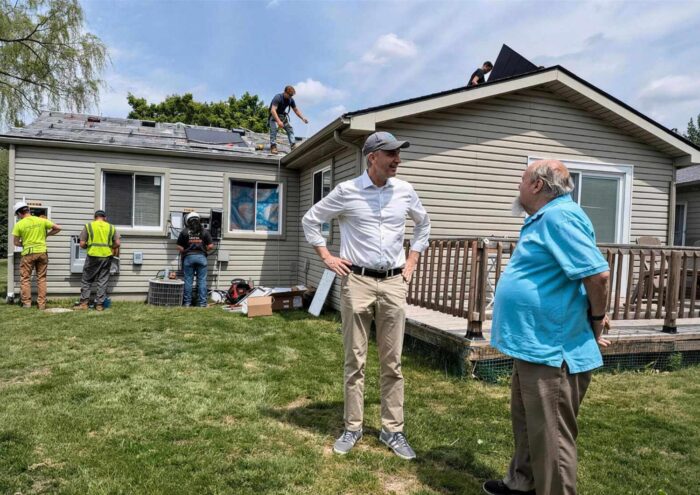
Ann Arbor Sustainable Energy Utility (A2SEU) is the first city-owned utility in the U.S. to purchase and deploy residential solar and battery storage systems directly in customers’ homes in the Bryant neighborhood. As of 9/4/26 more than 80 homes in the Bryant Neighborhood are fully equipped and permitted and operational with solar + energy storage system. Each individual household has 4.5 kW PV and 11.5 kW BESS.
The majority of residents in Bryant count as “energy-burdened,” meaning they spend a third of their income on utility bills. Participation in this pilot program is opt-in, and after a competitive RFP process weighing technical performance, service quality and price, A2SEU selected FranklinWH’s aPower S home battery, paired with REC Alpha Pure-RX solar panels installed by Michigan Solar Solutions, Homeland Solar and Oak Electric Service.
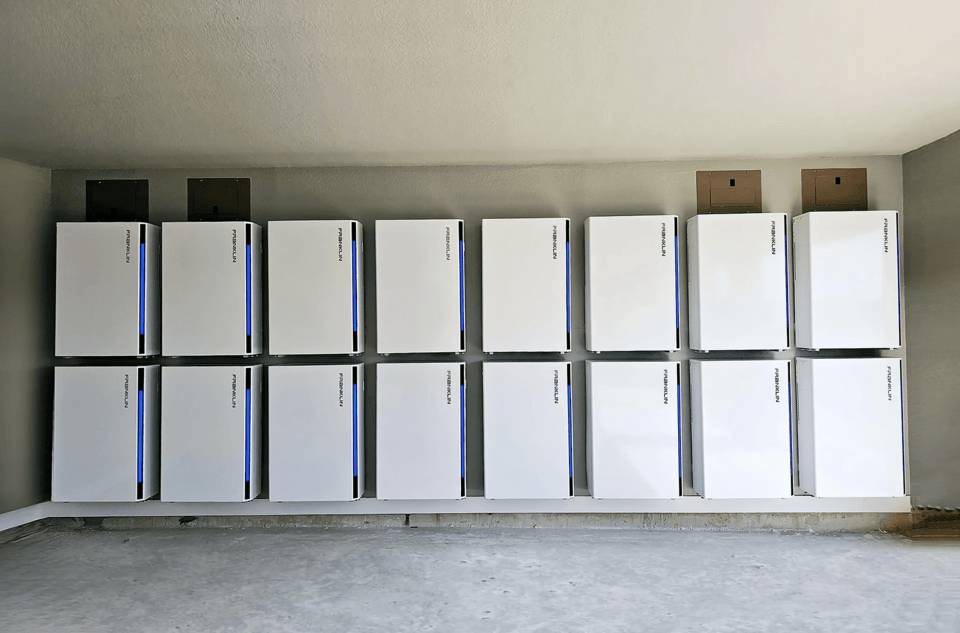
Each home’s FranklinWH System runs solar-first, using rooftop generation to charge the battery before drawing from the grid, then automatically switches to battery backup during an outage. Texture’s software then aggregates the homes into a single coordinated resource A2SEU can call on, turning roughly 150 individually owned batteries into a utility-scale asset. This is the first city-owned residential deployment of its kind.
“We measure success by how uneventful an outage feels to the family inside the house,” said Ronnie Pettersson, FranklinWH’s VP of product and application engineering. “Installers in Ann Arbor tell us our energy storage system was simple to put in, and homeowners say it has already powered them through a long grid outage that ruined a refrigerator full of food in the past. Those are the best compliments we can get.”
Installations began the week of April 27, 2026. The pilot covers approximately 150 homes, with plans to expand to 1,000 homes in 2027 and scale further in subsequent years. It’s expected to save participating households up to $1,000 per year in electricity costs plus it provides backup power during outages. For Ann Arbor, it’s a working model for how a municipally owned utility can use distributed home energy resources to improve grid reliability and advance local climate goals at the same time.
“Having the power actually produced in our community is really valuable for resiliency,” said Shoshannah Lenski, the utility’s executive director.
Developer/EPC: City of Ann Arbor Sustainable Energy Utility | Installers: Michigan Solar Solutions, Homeland Solar, and Oak Electric Service | Modules: REC Alpha Pure-RX panel | Inverters: FranklinWH | Mounting/Racking: IronRidge and Pegasus | Storage: FranklinWH
Anythink Nature Library
Thorton, Colorado | 203.5 kW
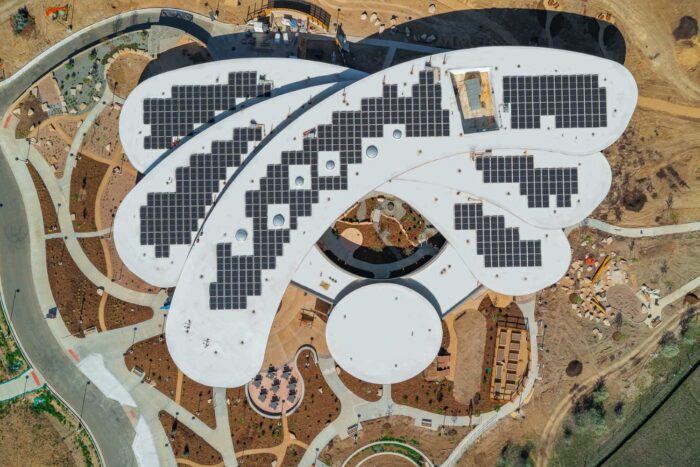
A library dedicated to helping people connect with nature is now drawing on nature itself to help power its mission. Namaste Solar has completed a rooftop solar installation at Anythink Nature Library, Colorado’s first public nature library in Thorton. Operated by Rangeview Library District, the library opened Aug. 8. The 203.5-kilowatt system is expected to generate about half of the facility’s electricity. By helping lower the building’s ongoing energy expenses, the solar project helps preserve resources that advance the library’s mission of environmental education, community experiences and lifelong learning.
Located on a 15-acre campus that is part of the 140-acre Aylor Open Lands, the library was designed with an integrated sustainability strategy that includes geothermal heating and cooling, water conservation measures and rooftop solar. Solar is a key part of that strategy, generating renewable electricity on-site to help earn energy and atmosphere credits as part of the building’s pursuit of LEED Gold certification.
The project builds on a longstanding relationship between Namaste Solar and Anythink Libraries, including previous solar installations at the Bennett and Brighton library branches, where Namaste Solar also provides ongoing operations and maintenance services.
Colorado-based Namaste Solar, an employee-owned cooperative and Certified B Corporation, designed and installed the rooftop system, with more than 20 solar professionals contributing. The project includes 370 solar panels and is expected to generate about 266,300 kilowatt hours of renewable electricity in its first year. That amount of clean energy is equivalent to powering a gasoline-powered passenger vehicle for about 543,497 miles, or roughly 22 trips around the Earth.
Developer/EPC/Installer: Namaste Solar | Modules: JA Solar | Inverters: Chint Power Systems | Mounting/Racking: PanelClaw
Foodlink x GreenSpark Solar PV Project
Rochester, New York | 679 kW
The Foodlink x GreenSpark Solar PV Project is a shining example of how mission-driven organizations can leverage underutilized assets to drive both financial and social impact. By transforming Foodlink’s rooftop into a 679 kW clean energy generator, this project provides more than just electricity; it provides a replicable blueprint for sustainability in the non-profit sector.
The core of this project’s innovation lies in its financial and technical integration. Utilizing a Power Purchase Agreement (PPA) model, GreenSpark Solar enabled Foodlink to host a large-scale system with zero upfront capital investment. This model transforms a fixed operating cost into a long-term asset, projected to save Foodlink approximately $200,000 over the next 25 years. These savings are not merely fiscal; they are direct investments into Foodlink’s mission of combating food insecurity, allowing for the expansion of programs that serve the Rochester and Finger Lakes region.
The project required high-level technical precision, particularly regarding facility integrity. Working alongside Upstate Roofing and Carlisle SynTec Systems, the installation team employed specialized techniques that protected the facility’s infrastructure and, crucially, preserved and extended the existing roof warranty. This level of coordination ensured that the project enhanced, rather than compromised, the building’s long-term utility.
Developer: Flo Solar | EPC/Installer: GreenSpark Solar | Modules: JA Solar | Inverters: Chint Power Systems | Mounting/Racking: Sollega
MANNA FoodBank
Mills River, North Carolina | 300 kWac
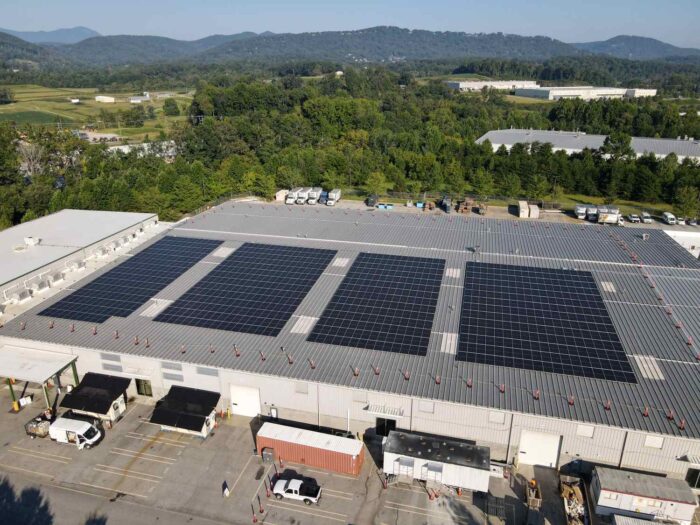
We were introduced to MANNA FoodBank nine months after floodwater from Hurricane Helene destroyed its former headquarters, and it was rebuilding operations in an old FedEx Warehouse. In the wake of the storm, the need for more sustainable, resilient operations became clear. To help address this need, MANNA hired Pisgah Energy to design and build a rooftop solar array at its new location.
Originally designed with modules on both the office and warehouse roofs, we reorganized the array during engineering, at MANNA’s request, to place all modules above the unconditioned warehouse to help manage heat in that space. The array was split to power the two separate building electrical services, with one system offsetting the cold storage loads and the other offsetting the office loads. Both systems interconnect at the respective utility-owned transformers, upstream of existing onsite generators.
To minimize operational disruptions, MANNA chose to have the solar array installed concurrently with the renovations at its new facility. While MANNA remodeled the office and added 16,500 square feet of cold storage, we built the solar array under a separate permit. Working under an individual solar permit ensures the installation will achieve Permission To Operate before renovations are complete, allowing MANNA to claim the 30% Direct Pay Incentive this year.
Because MANNA’s work is vital to food-insecure families throughout Western NC and the Qualla Boundary, the facility has remained operational during the renovations and solar construction. The intricate dance of working around both daily operations and major renovations proved to be our biggest challenge.
Overall, this project was relatively straightforward; what makes it stand out is how well it will serve MANNA and, in turn, support its hunger-relief mission. Enstall donated the IronRidge racking system through its corporate social responsibility arm, Enstall Empowers. MANNA also received a $200,000 BuildUS grant to support greater energy resiliency in rural Western NC. Between the donation, the grant, and Direct Pay, the food bank anticipates a 4.5-year payback on its investment. Ultimately, this 514.08kWdc array will generate over 643,000 kWh of solar energy annually, the equivalent of removing 94 gas-powered cars from the road every year it operates, ensuring cleaner air for the communities the food bank serves. In addition to reducing the nonprofit’s environmental impact, the array will create long-term operational savings that MANNA can reinvest in its core work of sourcing, storing, and distributing food.
Developer/EPC: Pisgah Energy | Installers: Pine Energy, Jackson Electrical Contractors, Renewable Energy Integration Group | Modules: SEG | Inverters: SolarEdge | Mounting/Racking: IronRidge and S-5!
Naples Airport
Naples, Florida | 116.1 kW
Naples, Florida is no stranger to extreme weather. Located along the Gulf Coast, the community has endured decades of tropical storms and hurricanes, making resilience a critical consideration for every new infrastructure project. For Naples Airport, a mission-critical aviation facility, installing rooftop solar wasn’t simply about generating clean energy—it was about ensuring the system could continue performing in one of the nation’s most demanding wind environments.
The airport’s new 116.1 kW DC rooftop solar array was designed to maximize renewable energy production while meeting Florida’s stringent high-wind building requirements. Installed on a newly constructed standing seam metal roof, the system was engineered to withstand wind speeds of up to 165 mph, equivalent to Category 5 hurricane-force conditions.
The project’s greatest technical challenge was balancing maximum PV coverage with uncompromised roof performance. Traditional solar attachments requiring roof penetrations can create long-term maintenance concerns, particularly in hurricane-prone coastal regions where water intrusion and uplift forces are significant risks. Instead, the project team selected S-5-S
clamps, a non-penetrating attachment solution with Florida Product Approvals for High Velocity Hurricane Zones (HVHZ). Paired with the IronRidge Aire® 2 racking system, the clamps securely attach to the standing seams without penetrating the roof, preserving the building envelope, manufacturer warranties and long-term weatherproofing while meeting rigorous structural engineering requirements.
Installation also demanded precise coordination across the airport’s active campus. Clamp placement, module spacing and load distribution were carefully engineered to align with the roof’s structural layout while delivering a clean, low-profile appearance appropriate for a highly visible public facility.
Developer: Owen-Ames-Kimball | EPC/Installer: PayOli Energy | Modules: Jinko | Inverters: Chint Power Systems | Mounting/Racking: S-5!