Vote: 1 MW to 10 MW | 2026 Project of the Year Awards

Here are the 1 MW to 10 MW finalists for the 2026 Solar Builder Project of the Year awards.
The form is at the bottom of the page. You are allowed to vote once per day from now until Friday, Oct. 16 at midnight (ET). (FYI: Our voting widget will let you vote more than once a day, but we filter these out in the back-end. Sorry, ballot stuffers.) Winners will be announced and prominently featured in the Q4 issue of Solar Builder magazine and online in December.
Thanks to Aurora Solar for sponsoring the 2026 Project of the Year Awards.
Be sure to vote in every category!
Christiana Solar Farm CattleTracker
Christiana, Tennessee | 3.25 MWac
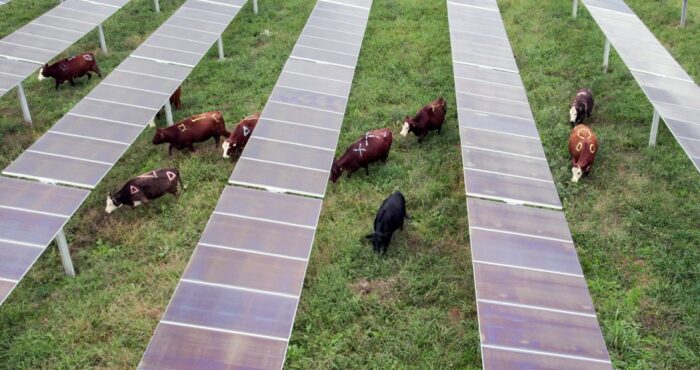
The cattle ranch is an enduring icon of American agriculture. As utility-scale solar has expanded across rural America, agrivoltaics has offered a way to keep agricultural land in agricultural production even as it generates energy—creating new opportunities for aspiring farmers without access to land as well as multi-generational family farms. Yet despite years of progress, one technical barrier has limited the model’s commercial scalability: safely integrating commercial cattle production into utility-scale solar facilities without compromising the performance, reliability, or operational requirements of a modern tracking system—or the commercial viability of the energy produced.
Standard tracker geometry, equipment clearances, and operating protocols were never designed with 1,500-pound animals in mind. As a result, cattle producers, who represent the largest segment of American livestock agriculture, have largely been excluded from grazing agrivoltaics, limiting the technology’s reach.
Silicon Ranch’s Christiana Solar Farm proves that this limitation is not fundamental. It is an engineering challenge that can be overcome.
The project is the first commercial deployment of CattleTracker, Silicon Ranch’s patented cattle-compatible agrivoltaics platform. Its design integrates reinforced tracker infrastructure, tracker-control software, and a grazing-mode engineered to accommodate cattle beneath operating solar arrays while supporting one of the largest electric co-operatives in the U.S. to keep rates stable with cost competitive energy. The result is a utility-scale solar facility that preserves the performance expectations of a modern tracking system while making cattle production compatible with utility-scale solar operations, dramatically expanding the productive use of the land.
Achieving this outcome required far more than increasing panel height. The project reconciles livestock behavior, electrical safety, maintenance access, vegetation management, and tracker optimization into a single commercially deployable platform.
Developer: Silicon Ranch Corporation | EPC/Installer: Pure Power Contractors | Modules: First Solar | Inverters: SMA America | Mounting/Racking: Nextpower
Dell Technologies’ Data Center Manufacturing Campus
Franklin, Massachusetts | 2.47 MWdc
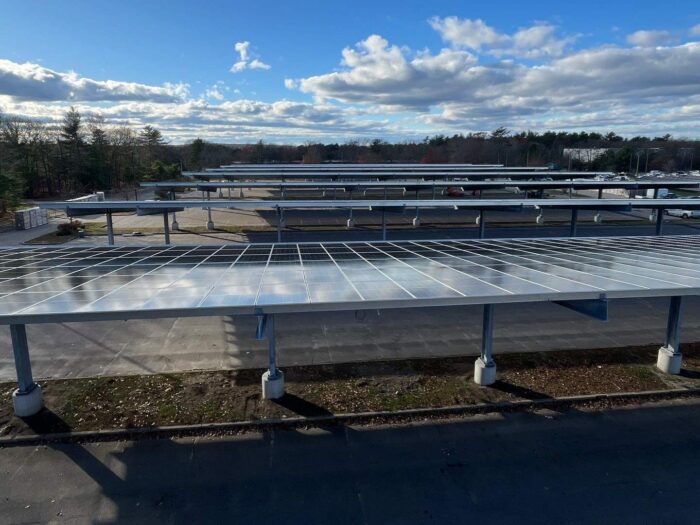
Dell Technologies partnered with Terrasmart to bring on-site solar generation to its expanding manufacturing campus in Franklin, Massachusetts, where the company builds, integrates, tests, and ships thousands of high-end AI servers each week. To offset the energy demands of that growth, Terrasmart designed and delivered two solar systems simultaneously: a 1.60 MW DC surface-lot canopy providing shade and stormwater protection for vehicles, and a 0.87 MW DC ground-mount system built on Terrasmart’s GLIDE Wave fixed-tilt racking, which follows the site’s existing terrain using continuous rows of pre-assembled components for faster installation.
The project overcame a series of mid-construction disruptions without losing time. After design and engineering completed, the original EPC withdrew from the project, and Terrasmart worked with Dell, Honeywell, and a newly appointed EPC to rebuild momentum and hold the original completion target. Once installation began in late summer 2025, crews discovered underground obstructions not caught in earlier surveys and a stormwater catch basin sitting too close to a planned foundation.
Terrasmart’s in-house design and construction teams redesigned the foundation layout in real time, relocating nine 36-inch-diameter, 15-foot-deep drilled piers and shifting the canopy to clear the catch basin, all within a single afternoon and without slipping the schedule. Later in fabrication, Dell requested snow guards be added to the canopy structure. Quickly, Terrasmart had a retrofit design ready and had its fabricator pre-drill the beams offsite, avoiding any on-site delay.
Despite the EPC transition, unforeseen subsurface conditions, and a mid-project design change, the project was completed on schedule and within the required 2025 construction window, ahead of the region’s winter weather. It also met prevailing wage and domestic content requirements. As a result, the combined 2.47 MW DC of on-site solar capacity is supporting the energy needs of Dell’s rapidly expanding AI server manufacturing operations and advancing the company’s clean energy goals.
Developer: Dell | EPC: Honeywell | Installer: Terrasmart | Modules: Trina | Inverters: SolarEdge | Mounting/Racking: Terrasmart
City of Fairfield Wastewater Treatment Plant Solar Array
Fairfield, Ohio | 1.5 MWdc
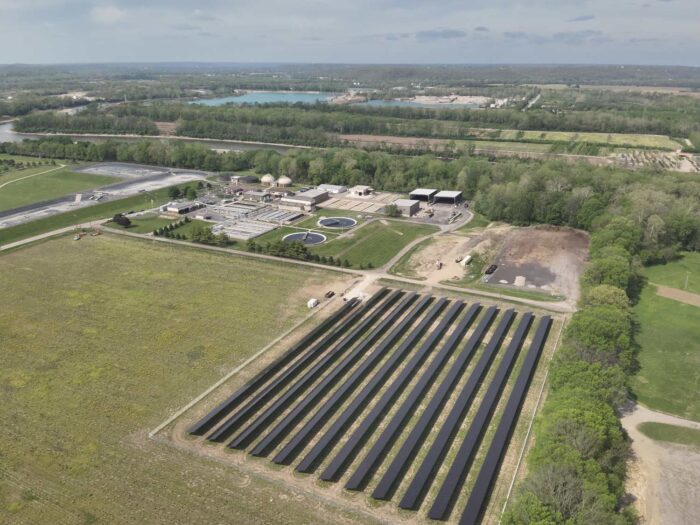
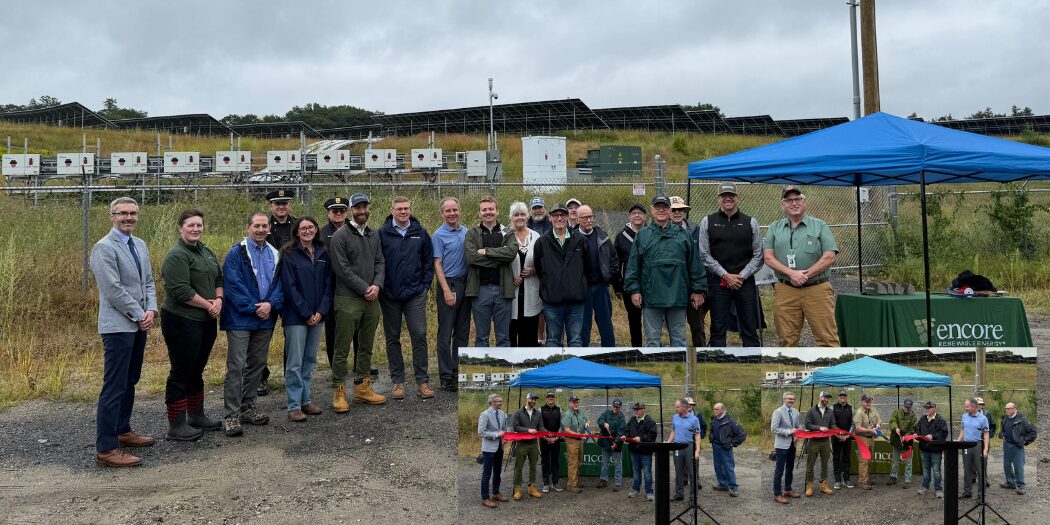
In August, the City of Fairfield, Ohio, held the ribbon-cutting for a project that turns the city’s single largest power consumer into one of its smartest long-term investments. This new 1.5-megawatt DC solar array at its Wastewater Treatment Plant helps power the plant’s pumps and aeration blowers, which run around the clock, accounting for roughly 20% of the city’s total electricity use. Fairfield, Ohio’s new 1.5 MW solar array has saved the city tens of thousands of dollars in utility costs in its first three weeks of operation, helping stabilize water and sewer rates for residents long term.
To offset that load, Fairfield partnered with developer Melink Solar to build a 6-acre solar field adjacent to the treatment plant, using 3,000 First Solar Series 7 modules (530 W each) mounted on a custom racking system engineered by Terrasmart, with fasteners supplied by A-Raymond.
Serving as both racking engineer and manufacturer, Terrasmart conducted on-site pull testing to properly size and design the driven pile foundations. Although the terrain presented straightforward topography and slopes, the site required tailored engineering solutions due to 30-inch frost depths and a customer requirement for a 35-year corrosion design life, both of which shaped the final custom foundation specifications.
Generating an estimated 2 GWh annually, the array offsets approximately 65% of the wastewater plant’s power draw and is projected to avoid roughly 31,360 tons of CO2 emissions. The $2.9 million project was made financially viable through a $1.1 million grant plus a 30% federal Investment Tax Credit boosted by a 10% domestic content bonus, achievable because the foundation, steel structure, combiner boxes, and modules were all sourced from U.S. suppliers.
Developer/EPC: Melink Solar | Installer: Melink Solar and Terrasmart | Modules: First Solar | Inverters: Solectria | Mounting/Racking: Terrasmart
Granville Agrivoltaics Project
Granville, Massachusetts | 8.8 MWdc + 12.16 MWh BESS
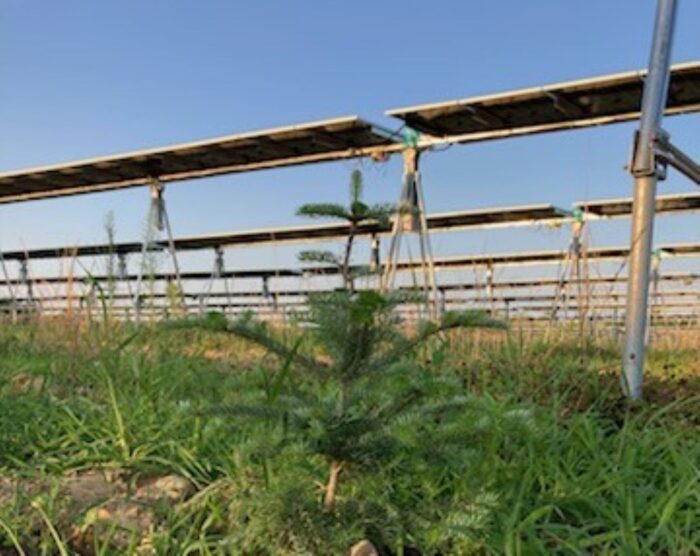
BlueWave’s Granville portfolio is transforming a historic Massachusetts farm into a model for the next generation of agrivoltaics, generating renewable energy while supporting approximately 1,000 apple and conifer trees on the same land.
The three-site, 8.8 MWDC dual-use community solar development spans approximately 45 acres in Granville, Massachusetts. The portfolio was developed in partnership with the Roberts family, who have farmed locally since the 1700s. The portfolio will help revitalize and diversify foliage, creating new agricultural opportunities alongside community solar generation.
Height, canopy, root systems, and long growth cycles often prevent tree crops from being incorporated into solar arrays due to potential design, installation, and operational complexities. As the trees mature, they can shade panels and affect energy production. At the same time, the array must provide sufficient space for pruning, harvesting, equipment access, and other ongoing farm activities.
BlueWave addressed these challenges by designing the agricultural and energy uses together from the outset. The arrays incorporate offset panel edges, tailored spacing, and other accommodations intended to support the trees throughout their growth while maintaining solar performance. This approach treats input from the Roberts’ agricultural expertise as a core component of the project design, rather than an addition to the completed solar plan.
As the portfolio operates, it will generate real-world insights into shading, crop health, equipment access, and coordinating between farming and energy production. These learnings can help developers, farmers, and regulators assess where tree-based agrivoltaics are viable and how future projects can accommodate crops with longer growth cycles.
Developer/EPC: BlueWave | Installer: Elm Electric and Western Earthworks | Modules: Qcells from Hanwha | Inverters: Solectria Renewables | Mounting/Racking: Solar Flexrack trackers with APA foundations | Storage: Gotion Inc.
Hillsboro Solar Project – Eagle Zinc Superfund Redevelopment
Hillsboro, Illinois | 6.9 MW
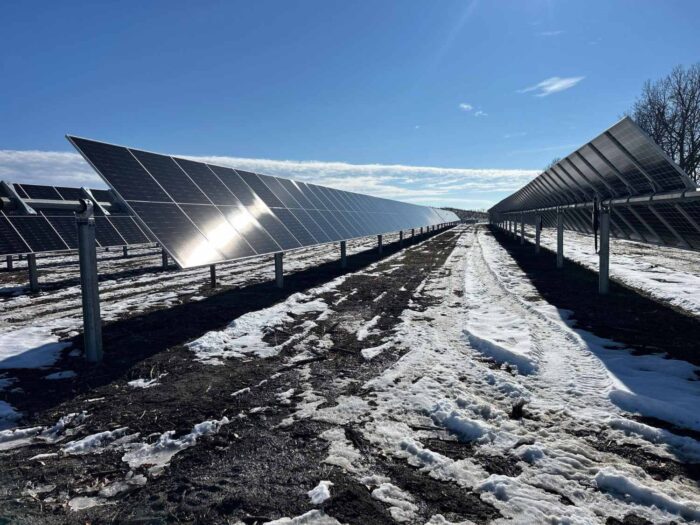
For more than 90 years, the property now home to the Hillsboro Solar Project was an industrial site. From 1912 to 2003, companies operating there smelted and manufactured zinc-related products, leaving behind contaminated soil, waste and structures. EPA placed the 132-acre Eagle Zinc site on the National Priorities List in 2007. Nearly two decades later, the site remains on that list.
But today, 33 acres of that formerly industrial property are being put back to productive use as a 6.9 MWdc community solar project.
Transforming a Superfund site into a solar asset required far more than a conventional installation. Standard Solar and its partners had to develop the project within an active federal remediation framework, working with a property subject to institutional controls, continuing EPA oversight and a long history of heavy-metal contamination. EPA’s cleanup included demolition of contaminated structures and construction of a 10-acre containment cell for zinc processing waste and contaminated material. The solar project was designed to coexist with those environmental safeguards rather than compromise them.
The result gives challenging land a new purpose while adding clean energy, economic value and ecological benefits to the community.
More than 11,500 modules on single-axis trackers will generate approximately 11,550 MWh annually — enough electricity for about 1,250 homes — while avoiding nearly 10,000 metric tons of CO₂ each year. The city-owned property also creates an opportunity for long-term lease and tax revenue rather than remaining idle.
Developer: AC Power | EPC/Installer: Pepper Program Management LLC | Modules: JA Solar | Inverters: Chint Power Systems | Mounting/Racking: Array Technologies
KIA Hail Canopies
West Point, Georgia | 10 MWdc
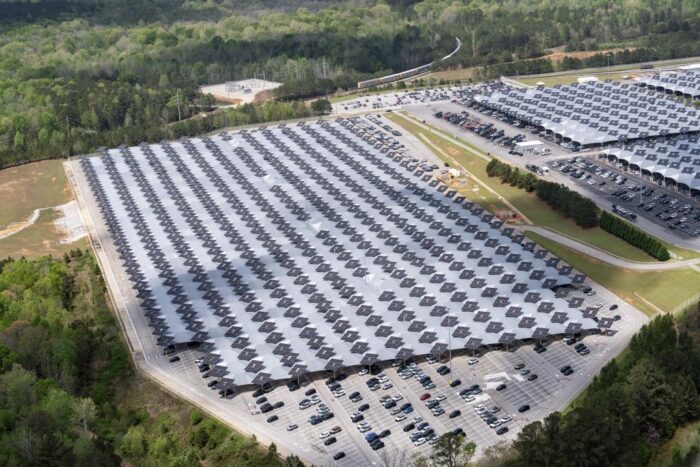
In March 2023, a severe hailstorm damaged more than 13,000 newly manufactured vehicles at Kia Georgia’s West Point assembly plant. The event created an urgent need to protect finished inventory and also presented an opportunity to think bigger. At the same time, Kia was advancing its transition toward 100% renewable energy across its manufacturing operations. The result is a project that turns climate risk into a long-term energy asset.
Spanning 3.2 million square feet, the completed canopy protects approximately 15,000 vehicles while supporting 10 MW of behind-the-meter solar capacity, making it one of the Southeast’s largest installations of its kind. Rather than dedicate additional land to a conventional solar farm, the project puts an existing vehicle storage area to work twice: protecting inventory from hail, heat and ultraviolet exposure while generating renewable electricity at the point of use.
The system combines fixed-tilt solar arrays with VPS’s protective fabric canopy. Bifacial modules are positioned above the reflective fabric to capture both direct sunlight and reflected light, increasing energy production. Specialized racking and fastening components support the modules along their long sides while leaving the rear glass unobstructed to maximize bifacial performance. The project’s Qcells modules were manufactured in Georgia, extending its benefits into the state’s clean-energy supply chain.
Delivering a solar array at this scale over an active automotive logistics area required extensive coordination among structural, solar, electrical and manufacturing teams. Georgia Power oversaw the solar system’s engineering, procurement, construction and safe integration into Kia’s existing electrical infrastructure. The array was interconnected without requiring grid infrastructure upgrades, and all electricity produced is consumed on-site.
Developer: Georgia Power | EPC/Installer: Radiance Solar | Modules: Qcells | Inverters: Chint Power Systems | Mounting/Racking: VPS
Oh Be Joyful Solar Array
Crested Butte, Colorado | 1.125 MWac
The Oh Be Joyful solar array in Crested Butte, Colorado is beautifully situated at edge of this historic mining town and at the foot of the Crested Butte itself. At 8,950 feet above sea level, it is believed to be the highest 1+MW utility-scale array in North America. The initiative for this project was borne from the town residents’ vision statement highlighting their sustainability goals. To bring that vision to life required unprecedented collaboration between the Town of Crested Butte (which provided the land), Gunnison County for permitting and the Wildland-Urban Interface approval, the local electrical co-op Gunnison County Electric Association (it was their first renewable energy project), Tri-State Electric the utility power provider and Outshine Energy, the project developer – as well as local entities including the irrigation ditch association and the local mountain bike association (to relocate the Baxter Gulch trailhead). The high alpine location presented exceptional environmental conditions and a very short building season which required tight timelines and coordination at every step along the way.
The array location is adjacent to an avalanche zone requiring an avalanche runoff study which resulted in curving boundaries as well as buffer mounds. The local wind and snow loads required custom fixed-tilt racking from APA to raise the modules 4-5 feet above grade. APA worked with Heliene, the module manufacturer, to engineer additional rails and attachments to manage wind lift and snow loading. The 125 psf snow load also required us to use underground duct banks in place of a CAB system, and we used ground vaults as equipment pads providing flexibility with conduit and wiring, and with the coordination of moving pieces and tight schedules. Chint-CPS engineers worked with us to ensure that their inverters would operate at this elevation without compromising performance or warranty. The shale subsoil required 100% pre-drilling for some 2,500 ground screws – burning up two drill rigs in the process.
One of the keys to the project’s viability was the federal tax credit which included domestic content standards and apprenticeship requirements. Heliene domestic cell modules were an essential component along with APA’s racking which included domestic steel ground screws made at their Ohio plant. APA provided an installation crew with a strong apprenticeship program meeting the lion’s share of the required hours. GCEA offset costs by establishing a program to sell RECs to participating subscribers in the community such as Mt. Crested Butte ski resort.
Developer: Outshine Energy | EPC/Installer: Paradise Power Company (PPC Solar) | /Installer: PPC Solar and APA Racking | Modules: Heliene | Inverters: Chint Power Systems | Mounting/Racking: APA Racking
Sonoma State University Microgrid
Rohnert Park, California | 4.1 MW PV + 1.55 MW BESS
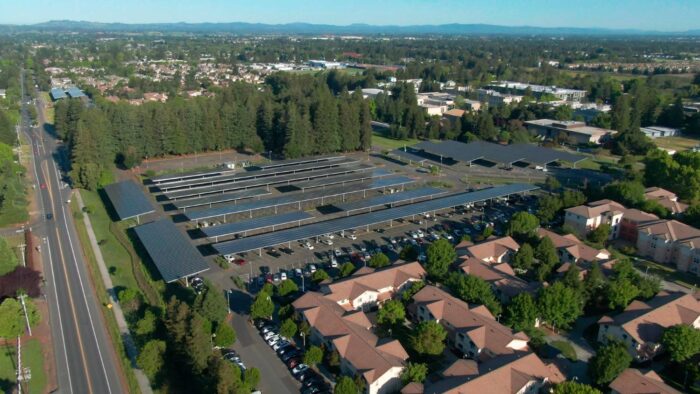
California’s dynamic climate demands equally dynamic action, and the California State University (CSU) system is rising to the challenge with a commitment to reach carbon neutrality by 2045. Expanding on a decade-long partnership that already brought solar to a third of CSU campuses, TotalEnergies teamed up with Sonoma State University (SSU) to transform ordinary campus infrastructure into a beacon of resilience and sustainability.
Rather than encroaching on greenfield land or being limited by traditional land-use constraints, this project repurposes underutilized asphalt parking areas. Featuring 4.1 MW of custom solar carports spanning five campus parking lots and an advanced battery energy storage system, this project represents one of the largest solar-plus-storage installations in Sonoma County, California.
The carports blend modern aesthetics with functional energy infrastructure by generating local clean power while also shielding student and faculty vehicles from sun and rain. In a region heavily impacted by Northern California wildfires, floods, and power outages, the system is also designed with advanced microgrid-ready capabilities to ensure essential campus hubs—like the Student Recreation Center and Emergency Operations—stay fully operational for both students and the broader Sonoma County community.
The system is expected to generate 7,933,297 kWh of clean electricity in its first year alone—equivalent to powering 1,200 homes or avoiding 2,000 metric tons of carbon emissions annually. By deploying stored surplus solar energy when grid demand and rates peak, the system is projected to save SSU more than $5.2 million over the first five years alone.
Even more compelling is the project’s financial circularity: utility savings achieved are redirected back into SSU’s Green Revolving Fund for future campus research and climate projects.
Developer/EPC: TotalEnergies | Installer: Elite Electric | Modules: Canadian Solar | Inverters: Sungrow | Mounting/Racking: Teichert | Storage: Tesla