
Market drivers for renewables and BESS from kWh Analytics
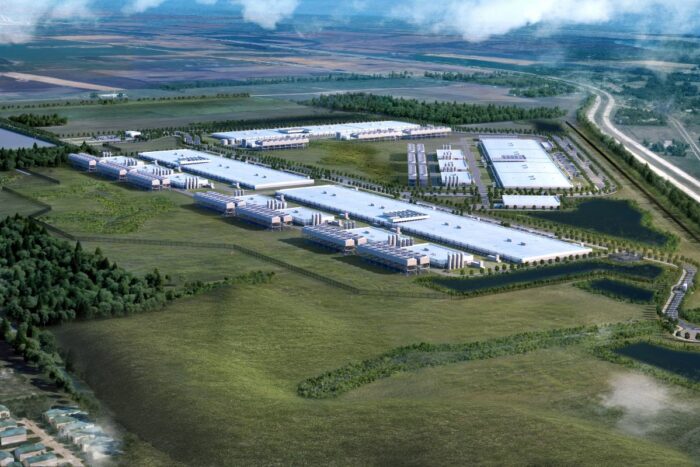
Renewables and battery storage are poised for growth amid accelerating demand for data centers, according to recent data from kWh Analytics. In an interview earlier this year, CEO Jason Kaminsky discussed how data centers are impacting the market in 2026, as well as potential policy headwinds.
As tech companies’ growth ceilings increasingly depend on electricity availability, power will become a business constraint if demand is not met. Renewable energy paired with battery storage becomes the only scalable answer in this cycle: Nuclear buildouts are too slow, gas turbines are supply-constrained, and coal extensions only marginally offset demand. Quick to deploy and, in most cases, less expensive than ramping up coal production, renewable energy will play an increasingly important role in meeting all-time high load demand, largely driven by AI and data centers.
Operationally, expect to see battery storage increasingly paired with data centers to manage both short- and long-term storage needed to manage peaks, shape demand, and maintain interconnection stability. Reputationally, increased reliance on renewable energy will not only power data centers but also alleviate concerns over their environmental impact.
Kaminsky explained how data center projects are being powered by renewable energy, whether with islanded power or grid-connected.
Read the kWh Analytics 2026 Solar Risk Assessment report
“We’re seeing a very recent shift toward data centers bringing more of their own power, often behind the meter,” Kaminsky says. “According to data from a forthcoming Cleanview report, roughly 48 GW of proposed data center capacity, about a third of planned projects, now plan to skip the grid partially or entirely by building behind-the-meter generation. This is a big change from a few years ago; in late 2024, less than 2 GW of planned capacity was behind the meter.”
However, Kaminsky explained that this shift does not mean data center projects are trending toward full islanded power across the board.
“Most projects are still likely to remain grid-connected in some form,” he says. “The important thing here is that data centers cover more of their own impact on the system to protect other consumers.”
Constraints on the market
While renewable energy and BESS are playing an increasingly important role in meeting heightened load demand from data centers, Kaminsky says these projects face constraints in keeping pace.
“Although quick to deploy and, in most cases, less expensive than ramping up coal production, renewable and BESS projects face headwinds ramping up fast enough to keep pace with data center demand,” he says. “Siting and permitting are probably the biggest constraints. The technology works and is readily available, but the question is whether projects are allowed to be built.
Kaminsky explains that interconnection queues remain a bottleneck for project completion, with some regions taking years to get through the queue.
“Supply chain and manufacturing delays can still matter, especially where multiple large loads and generators are competing for approvals at the same time,” he adds. “And renewables and BESS also face competition from alternatives being favored by regulators, such as oil and gas.”
Kaminsky explains that energy demand from data centers is growing by about 5% per year, which he adds “is very fast.”
“A recent report from Grid Strategies, shows data center load growth expected to reach roughly 90 GW by 2030,” he says. “And data centers only represent about a third of overall demand growth, alongside manufacturing, industrialization, and transport electrification so capacity need is significant.”
Aside from speed and cost, there are other factors that make renewables + BESS ideal for data centers, Kaminsky says.
“Batteries are an ideal match because data center loads are not static. They fluctuate throughout the day, creating peaks and troughs that storage can smooth out,” he says. “Short-duration batteries can reduce sudden shocks on the grid, while longer-duration storage can help maintain a more consistent demand profile. In addition, behind-the-meter deployment is a major advantage of renewables, allowing projects to control reliability, manage demand internally, and reduce stress on the grid.”
Minimal impact from regulatory headwinds
Regulatory headwinds will have minimal impact on renewable energy development, Kaminsky says. Current regulatory policy will only minimally dampen renewable energy development, as developers adapt quickly to looming deadlines.
With the Dec. 31, 2025, Foreign Entities of Concern (FEOC) cutoff and the July 4, 2026, begun-construction deadline for the Investment Tax Credit (ITC) shaping near-term strategy, developers are already finding creative workarounds such as purchasing custom transformers to achieve start of construction and avoid ongoing manufacturing bottlenecks.
Domestic manufacturing capacity is unlikely to scale fast enough to meet surging demand, ensuring continued reliance on imported equipment. We can expect to see some projects forgo tax credits altogether to sidestep FEOC restrictions. These near-term adjustments indicate that policy constraints will shape tactics but are unlikely to significantly slow broader renewable growth.
Kaminsky explains how the regulatory landscape is expected to remain stable for renewables following the 2025 changes.
“There is unlikely to be a major new federal bill that fundamentally changes the framework put in place recently,” he says, adding that developers are already adapting to the ITC deadline and FEOC rule changes.
“We’re seeing creative strategies, such as purchasing custom transformers or taking early construction actions, to ensure eligibility,” Kaminsky says. “Domestic manufacturing is expanding, particularly in battery storage, and we’re even seeing some EV manufacturers retooling their facilities to work on grid-scale battery storage manufacturing. Some projects may choose to forgo tax credits altogether to avoid FEOC complexity.”
Overall, Kaminsky explains that policy constraints will shape tactics, but it won’t stop development, adding that “the fundamentals still favor renewables.”
Looking at market growth 2026, Kaminsky sees continued demand growth driving development. “Exponential growth in renewables is expected to continue globally and, in the U.S., driven by demand growth, cost competitiveness and deployment speed,” he says. “We will likely continue to see a push from this administration to support oil and gas build out. The fact remains that gas turbines will continue to be difficult to source before the 2030s, and nuclear remains extremely challenging to build. Renewable and battery storage projects are often the only s


Comments are closed here.