
Operational discipline the differentiator in a solar + storage world
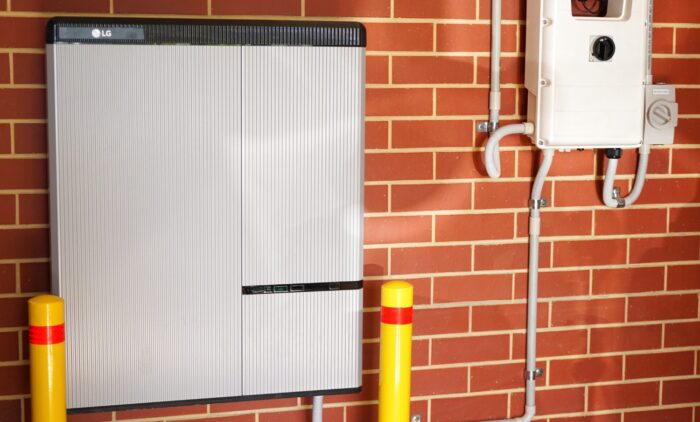
By Deep Patel, Gigawatt Inc. | The residential energy market is becoming more complex. Soft costs remain stubbornly high and continue to vary widely by region. At the same time, battery attachment rates are accelerating, making projects more complex across the board. This growth in storage is caused by three converging forces:
- Policy shifts that favor self-consumption,
- Growing concerns about grid reliability, and
- A rising desire for price stabilization as prices increase.
What was once a niche add-on is quickly becoming the standard.
However, this shift is squeezing installers. Projects are more complicated to design and execute, while margins are tighter and less forgiving of mistakes. The result is clear: Installers who want to scale in this environment need lean operations and more disciplined, streamlined processes. The companies that prosper through this market consolidation won’t be the ones working faster on the roof. They’ll be the ones that evolve their entire business models to remove friction across workflows and adopt repeatable best practices.
Selling storage: Bridging the expectation gap
Selling batteries is fundamentally different from selling solar. With solar, the value proposition has historically been straightforward: reduce your electricity bill. Storage introduces a more complex mix of financial, functional and emotional drivers that are harder for companies to communicate and for customers to evaluate.
One of the biggest challenges is expectation management. Many homeowners may assume that a solar + battery setup will not only provide backup, but also power their entire home indefinitely during an outage or automatically optimize their energy usage without tradeoffs. But as we know in the industry, system performance depends heavily on sizing, load prioritization, configuration, and outage duration. When those expectations aren’t clearly explained and set early on, even a well-designed system may feel like a failure to the homeowner.
To combat this, installers need to shift toward a more consultative sales process. That means clearly communicating what will and won’t be backed up, how long the system can run under different scenarios, and how it behaves in both on-grid and outage conditions. It also requires reframing the value proposition. Batteries are often still evaluated simply on payback, but their real value includes resilience, energy control, long-term flexibility, and price stability as rate structures evolve.
Financing also plays a role in closing this gap. As system costs increase with storage, customers need to both understand payback and be confident in the system’s performance over time. Ultimately, the installers that win on storage sales simplify the decision without oversimplifying the system.
Aligning incentives across the business
Many of today’s inefficiencies don’t come from individual steps — they come from the gaps between them. Misalignment between teams, particularly during the sales-to-install handoff, is a major source of delays, redesigns, and cost overruns.
Sales teams are often incentivized to maximize close rates, while operations teams are focused on buildability and execution. As systems get more complex with storage, that disconnect becomes more expensive. A solar-only project might tolerate some looseness. A solar + storage project will not.
The solution is tighter alignment and clearer guardrails. That includes standardizing what can be sold, involving engineering earlier in the sales process, and prioritizing fewer but higher-quality projects over higher volume with more variability.
Standardizing workflows to scale installations
As storage adoption grows, variability becomes the enemy of scale. The most effective installers aren’t increasing output by pushing crews harder — they’re redesigning workflows to make every project more predictable before the crew even arrives onsite.
The first lever is front-end standardization. This includes tighter design rules, fewer one-off system configurations, and stronger alignment between sales and engineering. Late-stage redesigns and failed permits are major hidden drivers of inefficiency and killers of crew productivity.
Permitting and interconnection also need to be treated as core operational functions, not an administrative afterthought. These steps remain some of the most persistent sources of delay, often adding weeks to project timelines when processes are inconsistent or error-prone. High-performing installers build internal discipline around clean submissions, quality assurance, and designing systems that streamline approval pathways.
Logistics is another major opportunity to improve efficiencies. Pre-kitting materials ensures every component is verified and the project is staged before the truck roll, reducing on-site delays and keeping crews focused on execution rather than problem-solving. As systems become more complex, this level of preparation and predictability becomes essential.
Finally, some installers are rethinking crew structures. Solar + storage projects require deeper electrical expertise, and in some cases, modular crew models or higher baseline training can reduce bottlenecks during installation and commissioning.
The common thread across all of these strategies is predictability. When variability is reduced across design, permitting, and logistics, one crew can reliably complete two to three installs per week without sacrificing quality.
The shift to energy management
The rise of solar + storage is doing more than increasing system complexity. It’s redefining the business model. Residential solar is no longer just a bill reduction product. It’s becoming an energy management and reliability solution. Customers are no longer just asking how much they can save, they’re asking how to control their energy, what happens when the grid goes down, and how their system behaves over time.
That shift raises the bar across the entire business. Sales becomes more consultative. Engineering becomes more complex. Installation requires deeper expertise. And post-install support becomes more critical.
For installers, this means adapting to a new reality. The sales prop is no longer just about generating cheaper electricity. Sales success now depends on educating consumers on the benefits of energy management, while also delivering a seamless customer experience.
The companies that thrive will simplify complexity for the customer, while mastering it operationally behind the scenes.
Deep Patel is the founder and CEO of Gigawatt Inc., the parent company of Unbound Solar and Real Goods. Unbound Solar has provided DIY solar kits and expert support for over 19 years, serving homeowners, contractors, and professionals. Real Goods, established in 1978, is a legacy brand in the solar industry known for reliable solar and energy storage products. Through these brands, Patel is focused on expanding access to clean energy by combining education, high-quality components, and a customer-first approach.


I agree with most of what you write, especially regarding the sales-to-install handoff, which is an issue that has ramifications I deal with every day.
I do, however, feel the need to critique the install photo you chose for this article. If this is a real outdoor equipment install rather than an indoor mockup, and I were the one deciding whether to approve this work, I would make the installers remove all of that PVC and plastic flex conduit and replace it with a metal raceway such as EMT. As pretty as that equipment looks right now, after a few years in the sun and other weather elements it will look terrible. The plastic will start to turn brown/yellowish and if the sun is directly on the PVC it will begin to warp and possibly crack at the glue joints due to PVC having a much higher thermal expansion (and contraction) rate, placing stress on the connections.
Also, the homeowner will likely be bummed at the stuff on their wall looking funkier every year.
Just my .02 cents..