
NC State research improves solar forecasting accuracy by up to 13%
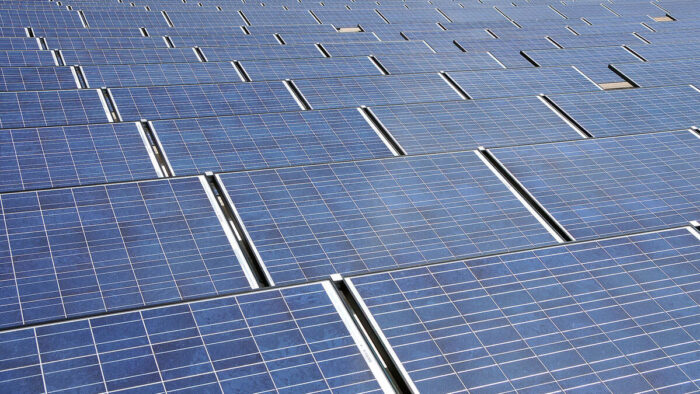
Researchers from North Carolina State University (NC State) have improved day-ahead solar forecasting by up to 13% over current tracking models, the university says.
The new research model “emphasizes the importance of taking regional variables into account when creating forecast models,” representatives say. To come to their latest conclusions, the reseach team compared two models — statistics-based calculations and AI neural networks — and combined them together to identify a single baseline forecasting model.
“Solar power generation has expanded rapidly because it is both renewable and widely available,” says Yen-Hsi Chou, a postdoctoral research scholar at NC State and corresponding author of a paper describing the work. “But increasing use of solar can also make forecasting supply and demand more challenging because the availability of sunlight isn’t always consistent. Utilities need accurate day-ahead solar forecasts to be able to plan ahead.”
The team’s two ensemble approaches were weighted averaging, which allowed the team to combine forecasts and give weight to better-performing models, and multi-input, which allowed for each model’s usage of different data from multiple locations. Tested at seven different sites using Imperial Irrigation District (IID) and the Los Angeles Department of Water and Power (LADWP) data from 2019 to 2022, the ensemble approach showed 11% and 13% improvements on each data set respectively.
“We wanted to use the models to find the relationship between weather data and solar power generation,” Chou says. “But the most interesting result was that no single model performed best in every case. We chose the most consistently performing model, BiLSTM, as a baseline and saw that by combining the forecasts from different individual models, we could further improve forecasting performance by over 10% in some cases, which was pretty impressive.”
Further testing
The new research indicates that these ensemble methods have massive potential for maximizing solar energy generation. However, Chou adds that both ensemble methods need further testing and fine-tuning on a region-to-region basis.
As of August 2026, these methods have only been tested across California, which already leads the U.S. in solar generation. Whether or not these methods would prove as effective in other, less traditionally sunny areas, remains to be seen, the teams.
However, the proof of concept is sound, says Anderson De Queiroz, associate professor of civil, construction and environmental engineering at NC State, and a co-author of the research paper
“As solar penetration continues to increase, forecasting uncertainty becomes a key consideration for energy planners and grid operators that need to balance supply and demand,” he says. “Our results demonstrate that combining multiple machine learning-based models can provide more robust predictions and help improve the reliability of solar integration into power systems.”
The team’s research findings suggest that these ensemble forecasting frameworks could be a boon to utility-scale distributed solar systems in particular. The paper, titled ‘A Hybrid Machine Learning Framework for Enhanced Day-Ahead Solar Forecasting in Large Scale Systems,’ is now available in the Journal of Cleaner Production.

Comments are closed here.