
Beyond Efficiency: How Serviceability Is Driving Solar Repowering Strategies
For commercial and utility-scale solar owners, inverter failures and aging systems are a reality that comes with time. What often catches owners off guard is how difficult restoring production can become as equipment ages.
As the industry enters its third decade of large-scale deployment, many sites continue to operate with first-generation inverter technology, introducing growing performance and reliability challenges. At the same time, the exit of several OEMs has left some systems effectively orphaned, with limited access to parts, service and technical support.
In this environment, manufacturer stability becomes critical. While many inverter providers have come and gone, SMA has remained a consistent presence, supporting asset owners with the continuity, expertise and service infrastructure needed to maintain and sustain system performance over time.
The primary operational risk in these scenarios is often not the failure itself, but the time required to recover. For owners and operators, extended downtime can translate directly into lost production and an increase in operational uncertainty.
“Owners are continuously evaluating assets through the lens of long-term serviceability,” said Rob Lamendola, technical business manager at SMA America. “Questions about parts availability, technician access and support responsiveness are becoming just as important as performance specifications.”
Carolina Solar Services (CSS) encountered this challenge firsthand with aging central inverters from another OEM that struggled to provide timely service and support. Extended lead times and limited responsiveness prolonged system downtime, placing an emphasis on selecting a dependable partner.
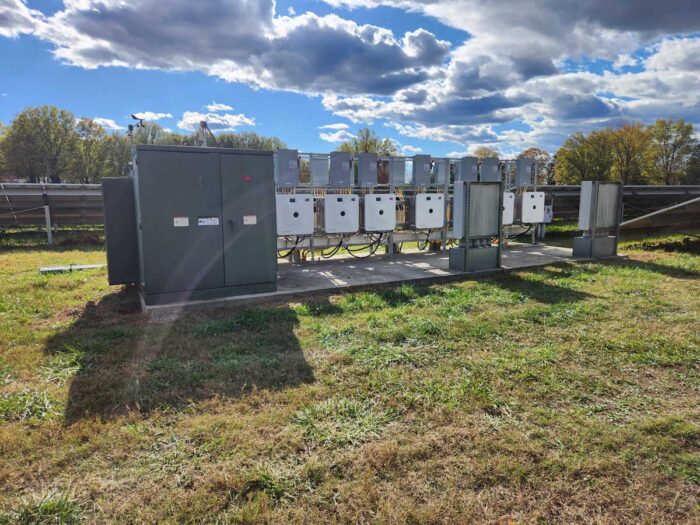
The site of interest, located in Burlington, North Carolina, was repowered using SMA string inverter technology with 20 Sunny Highpower PEAK3 FLEX inverters, a total system size of 2,993 kW DC.
“Inverter serviceability was no longer a constraint. String inverter technology is widely supported; parts are broadly available, and technicians can be trained and certified to repair common faults,” said Meredith Fowler, vice president of revenue at CSS.
The PEAK3 FLEX was well suited to the project’s repowering requirements, providing adjustable AC output, a compact footprint and flexible integration that aligns with existing system constraints while enhancing system reliability. Through SMA, CSS gained access to advanced inverter technology, responsive lifecycle service support and long-term asset management capabilities, contributing to improved system uptime and sustained performance optimization.
For SMA, that outcome highlights a shift occurring across the solar industry.
“For many asset managers and owners, the point where maintenance costs exceed replacement costs has already arrived. If your sites are running first-generation inverters, the repowering conversation is worth having now.” said Fowler.
While repowering discussions have traditionally focused on efficiency improvements or capacity gains, more owners are now evaluating projects based on lifecycle support and system recoverability.
As solar assets age, the drivers for repowering extend beyond rising maintenance costs to include improving system efficiency, replacing aging and obsolete technology and ensuring long-term serviceability. For many owners, these factors converge into a broader strategy focused on maintaining performance and minimizing risk. Increasingly, a key consideration is how quickly a site can be restored to full production when issues arise.

Comments are closed here.