
Maryland to pass solar-forward Utility RELIEF Act
Maryland has become the second state in as many days to pass solar-focused legislation, following Virginia’s fleet of renewable energy bills April 13.
Better known as the Utility RELIEF Act, the state’s HB1532 / SB841 is projected to save Maryland families “at least $150” on their energy bills every year, according to the state’s government office. The bipartisan bill passed through the state’s two legislating bodies, and Maryland Gov. Wes Moore has announced an agreement to sign the bill before the 2026 general session ends.
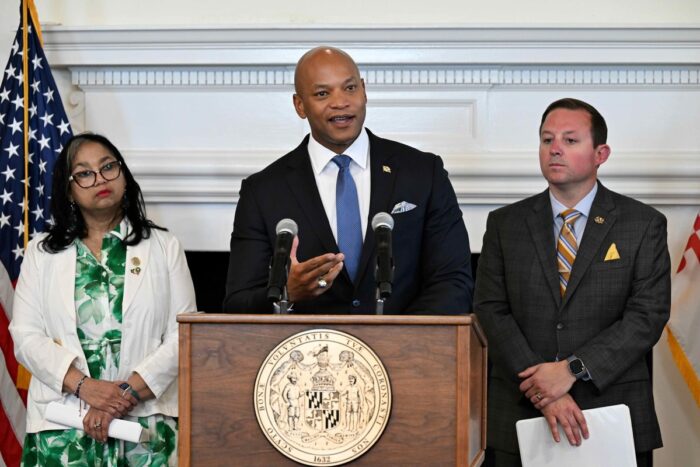
Moore says that his state’s residents “demand action” on spiking utility bills, and Maryland’s legislating body were more than eager to help them out in that regard.
“While the White House is focused on foreign wars, ballrooms, and the Masters, we in Maryland have spent these past weeks laser-focused on the single most important thing: making life more affordable for our people,” Moore says. “Amid soaring energy prices, we are not waiting for Washington to act; we are delivering relief now. The bipartisan Utility RELIEF Act is about taking control of the things we can control—pushing every lever to put money back in people’s pockets, and holding utility companies accountable.”
Analyzing the Utility RELIEF Act
First and foremost, the new bill focuses on energy bill relief, according to Moore’s office. The legislation allocates $100 million from Maryland’s Strategic Energy Investment Fund to offset utility fees and bills for residents of the Oyster State.
“Marylanders are reeling from unacceptably high energy bills as corporations are too often putting profits over the people they serve, and regional and federal entities have insufficiently kept pace with the rapid increase in the demand of electricity as supply steadily decreased,” says Maryland State Senate president Bill Ferguson. “The Utility RELIEF Act takes a systematic approach to the levers available to the State of Maryland, and makes immense policy changes in those areas so none of our residents are forced to choose between keeping the lights on and paying for their medication.”
Additionally, however, the bill has an outsized focus on renewable energy and the solar industry. It leverages another $100 million from the Strategic Energy Investment Fund to “establish an annual bidding process for local clean energy projects,” state officials say. Going hand in hand with that, the bill will aim to modernize Maryland’s grid with modern technology.
“These modern technologies are designed to increase the capacity and efficiency of existing transmission lines—increasing reliability and driving down costs for ratepayers,” the state office says. “The act also establishes a reporting process to the Public Service Commission for identifying economic and implementation feasibility of these technologies in Maryland.”
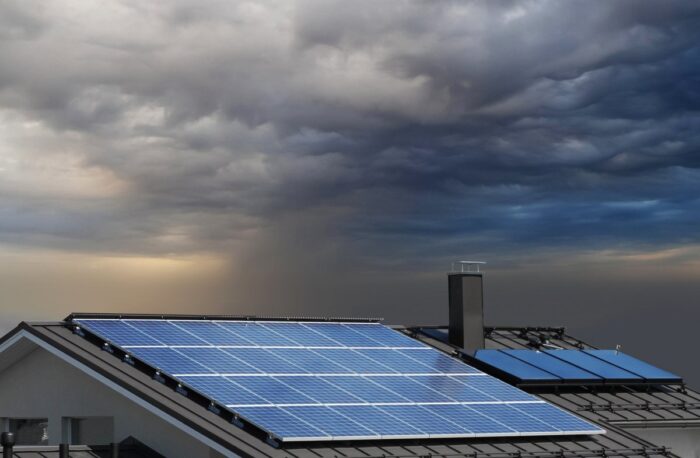
The bill also contains provisions for plug-in “balcony solar” systems up to 1.2 kW. Marylanders will be able to buy these systems in stores and plug them into their residences to offset energy bills.

The solar industry reacts
Georgina Arreola-Lennox, Mid-Atlantic state affairs director for the Solar Energy Industries Association (SEIA), says the Utility RELIEF Act will be a big help to the solar industry on the East Coast. The newly-passed legislation “doubles down” on rooftop and community solar, which Arreola-Lennox says is one of the best ways to reduce high energy bill prices.
“This bill charts a responsible path forward for the evolution of Maryland’s net metering program and provides regulatory certainty to companies that invested in projects under the current rules,” she says. “Rooftop and community solar are popular because they offer Marylanders some control over their own energy production and electricity bills. The solar and storage industry applauds Governor Moore, Senate Leader Ferguson, and Speaker Pena-Melñyk for their thoughtful leadership and collaboration.”
Robin K. Dutta, executive director of the Chesapeake Solar and Storage Association, says the bill will help the “energy reality” of Maryland. The upper East Coast has some of the country’s worst grid strain, and this new bill offsets at least some of that, he says.
“Local, distributed solar and storage will help Maryland keep energy costs down, and the Utility RELIEF Act recognizes that. By doubling the state’s net metering program from 3 GW to 6 GW, Maryland policymakers are prioritizing distributed solar as a way to keep households and business’ energy costs down.
“In the hottest summer days when air conditioners are on full blast, solar is there to meet customer demand and keep energy prices low.”



Comments are closed here.