
‘We’ll figure it out again’: CLEANPOWER 2026 heads to Houston
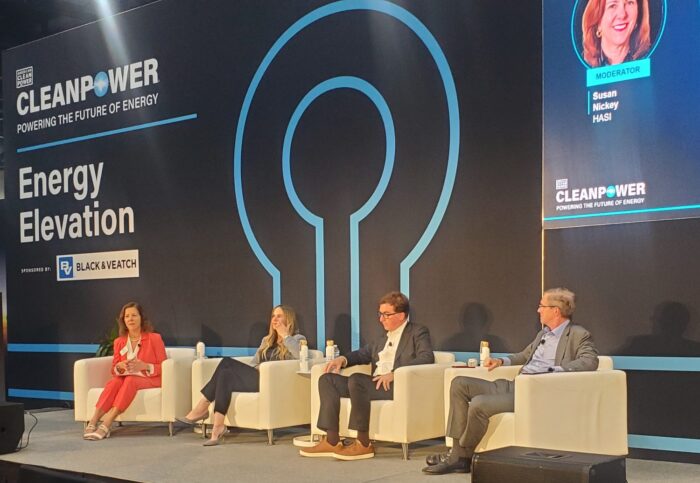
“It was the best of times. It was the worst of times,” read Jason Grumet, CEO of American Clean Power (ACP) as he kicked off the CLEANPOWER conference in Houston, the energy capital of the world, acknowledging the contrast of the positive market dynamics versus the challenging federal policies. The audience let out a defiant chuckle, capturing the persistent atmosphere of the show of: “We’ve figured this out before and we’ll figure it out again.”
While it was a bit too sweltering for an outside opening reception, it was not by accident that ACP chose Houston, Texas, as its newest location for its annual trade show and conference. The state is a leader in utility-scale wind, solar, batteries, and data centers, plus it is known for its extreme weather impacting grid resilience. In 2025 alone, Texas hit $24 billion in clean energy investments. Highlighting the state’s clean energy leadership, Terraflow Energy held an exclusive tour of its new 60,000 sq ft Long Duration Battery Manufacturing facility designed for data centers and located only 35 minutes from the convention center. The state is experiencing an energy abundance, compared to the rest of the world that is undergoing an energy scarcity — and not just because of the blockade in the Strait of Hormuz, but also due to the blockade on wind and solar by the federal government.
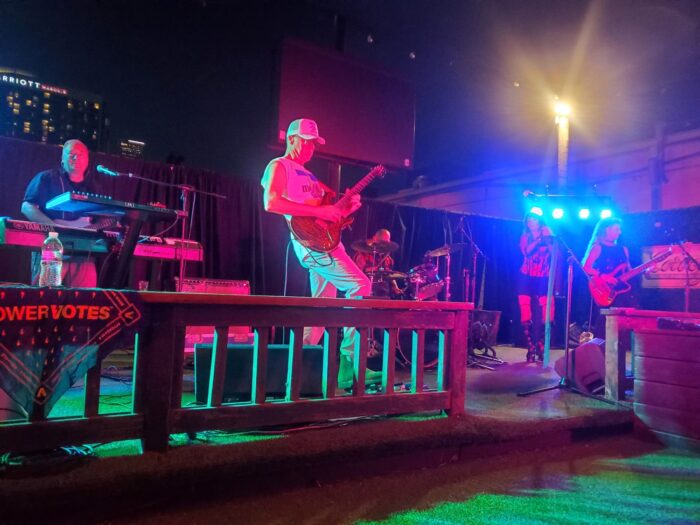
Overall, the Opening General Session had such an upbeat and positive atmosphere that anyone in the audience could have almost forgotten that there are critical OBBB deadlines looming around the corner. But there was a sense that the industry has quickly matured over the past few years with savvier communications and smarter policy agendas, including ACP’s new PAC reception, which headlined Nextpower’s CEO Dan Shugar and his band, Sweet Voodoo.
As another example of the industry’s growth, ACP launched and demoed its new CLEANPOWER IQ (CPIQ) platform, a comprehensive, real-time “database covering 40+ years of clean energy projects and detailed insights into domestic manufacturing facilities.” Pulling more than just publicly available data, the robust and interactive platform, with excellent data visualization, can be leveraged for advocacy, bizdev, manufacturing, procurement, and by media and communications professionals.
And of course, AI and data centers were discussed in almost every panel, presentation, and side discussion.
Panels and presentations
With so many changes happening in the industry, there were a number of insightful and interesting panels that ranged from investing strategies, tariffs, state-level policies, regulations, and of course AI.
“Where Capital is Flowing: Investor Perspectives on Energy Growth and Risk” with Susan Nickey of HASI, Edwina Kelly of CPP Investments, Jeffrey Osborne of TD Cowen, and Ray Wood of Bank of America Securities highlighted that while the political noise was being offset by the market, policy changes were still having an impact on investment. Some changes that were noted included:
- Construction-ready projects are more attractive than they were 3 years ago.
- Interest in firm power is up, but gas turbine pricing still supports renewables leading to a market demand for long duration batteries.
- Storage is an important flex mechanism for data centers.
- The market is still uncertain about project pricing, but it can likely absorb the delta and investors are becoming more flexible on evaluating projects.
The bottom line of the panel was that investors still believe in clean energy due to pricing, even past 2030, but at the same time the industry should continue to push for an ITC extension.
“Tariff Playbooks: How Industry Leaders Are Navigating Trade Challenges” with Vanessa Sciarra of ACP, Kimberly Ellis of Monument Advocacy, Jeffrey Grimson of Mowry & Grimson, PLLC, and Perry Spiegel of McLarty Associates discussed some of the key tariffs impacting the industry, such as International Emergency Powers Act (IEPA), section 122, 232, and 301. While IEPA was overturned by the Supreme Court, the 3 other sections are still putting price pressures on the industry. The good news is that Section 122 expires in July and that Section 232, while still available to the President, does not have the word tariff in it, and both are legally vulnerable. The Section with the most long-term potential impact is 301, which is for unfair trade practices. This is currently being wielded against 16 countries for so-called “overproduction” and 60 countries for forced labor, including indirectly. Other industries have had success arguing for exemptions, such as the agricultural sector for machinery, and this may be replicable for the solar industry with the right approach. Plus, this type of blanket tariff is unprecedented, leaving it legally vulnerable, especially with a Supreme Court that is getting clingier to the Constitution and separation of powers doctrine. Overall, the panelists agreed that the goal of the tariffs are to reduce our dependency on China, especially for critical minerals. It was also noted that trade policy is often used to force change in other countries, that it seems as if this time it may be a two-way street, as China may also be changing the US to have more of a “small yard, high fence” trade strategy.
“PowerTalk with Jason Grumet Featuring NARUC Leaders” with Jason Grumet of American Clean Power Association, The Honorable Ann Rendahl of National Association of Regulatory Utility Commissioners (NARUC) & Commissioner of Washington Utilities and Transportation Commission, and The Honorable Jehmal Hudson Commissioner of Virginia State Corporation Commission discussed the two big elephants in the room: data centers and permitting. With large load customers being given higher rates, data centers are now beginning to outbid utilities on new power generating assets, causing indirect costs to ratepayers. The panel also called for permitting reform at both the federal and state levels. The panelists noted that one way to solve both of these issues is resolving the political divide between electrons, and the good news is that clean energy and economic growth are not competing.
“State Leadership in Action: Regional Strategies to Meet Energy Demand” with Sarah Cottrell Propst, MPA of ACP, Steve Caminati of Pattern Energy, Kelsey Hallahan of ACP, Chris Kunkle of Apex Clean Energy, and Mike Weiner of Fluence centered their conversation around affordability. The consensus was that energy prices are becoming a Tier 1 voter issue. Caminati captured the importance of smart energy policies by stating, “Governors can’t have an economic development strategy without an energy strategy.” Some examples that the panel noted were Virginia, which rolled out one of the most ambitious ESS targets, and Texas, with the largest clean energy portfolio in the country. Also mentioned were Illinois and Michigan for passing redesigned permitting regimes that created a tremendous amount of certainty and predictability, which are desperately needed from states. On the same topic of batteries and affordability, it was called out that batteries are the best technology for maximizing the grid we already have.
To no one’s surprise, the standing room only panel was “How AI is Accelerating Clean Energy Project Deployment” with Russell Gold of T1 Energy, Craig Cornelius of Clearway Energy Group, Mark Donahue of Mortenson, and Sheldon Kimber of Intersect. During the panel, they discussed the challenges and opportunities in the data center and energy sectors. The conversation kicked off with the need for standardization in data center energy planning in order to streamline development and reduce project delays. But other project delay factors also were discussed, such as the supply chain, labor shortages, and community pushback. The IRA’s apprenticeship requirements were highlighted as an important solution for workforce development. Early collaboration to address disinformation and gain community buy-in was another critical way to address the causes of project delays. Of course, interconnection queues were also mentioned and the solutions discussed included an approach that bundled load and generation for interconnection studies and the option to go off-grid. The panel also made future predictions, which included significant advancements in clean firm solar and wind with batteries and technology-enabled permitting and grid connection processes.
On and off the show floor
While many felt that CLEANPOWER 2026 was quieter, there were 8,000 participants this year. The show floor was filled with various companies showcasing their new products and solutions.
Filling in one of the most critical U.S. manufacturing gaps for the solar industry is ES Foundry with its crystalline PV solar cells that are manufactured in Greenwood, South Carolina. While the initial impetus for refurbishing the then Fujifilm factory into its 1 GW plant was the IRA, the company’s cells are fully FEOC compliant and qualifies as domestic content. The company has a deep commitment to its local city, employing over 360 employees and partnering with Piedmont Technical College on a workforce development program. The company is planning on expanding its facilities to 3 GW in H2 of 2026 and growing its workforce to 500 employees. With discussions frequently drifting to policy at the conference, ES Foundry believes that U.S. government support is necessary for the industry’s continued growth.
While downstream, Bila Solar is focused on providing high-quality, domestic-content panels to the market. After transitioning its singe line in Indiana back from ultra-lightweight modules to conventional glass and aluminum/steel bifacial modules, the company recently achieved its ISO 9000-1 certification, validating its quality management system. It continues to conduct third-party and customer audits, and its AA-Series 530-550 Watt Dual Glass Module was recently named a Kiwa PVEL Top Performer in the 2026 PV module reliability scorecard.
Fresh off its inverter acquisition agreement, Nextpower announced its entry into the energy storage market with its agreement to acquire Prevalon Energy. These acquisitions are part of the company’s evolution into a holistic solar technology platform, which Jonathan Eastwood, chief commercial officer, describes as “very much in response to customers.” He explains that during this environment of unprecedented demand growth, an integrated system is more efficient as it compresses overall timelines and accelerates design — which is especially critical for the speed-to-power challenges facing the AI and data center market. The battery acquisition is particularly relevant to meeting AI energy demand and the new market conditions in which developers need to build where demand is.
GameChange Solar came to the show brandishing its new name GameChange Energy to reflect its transition into an end-to-end solution provider. As part of its name change, the company consolidated its solar tracker, eBOS, asset monitoring, and transformer division. CEO Phillip Vyhanek explained that the company’s mission is to improve quality while reducing CAPEX and that when a site is engineered to work together it reduces costs. For instance, by optimizing for eBOS layout, it can reduce eBOS costs by 15% and increase installation efficiencies. The company is also addressing the transformer shortage with a 330,000 square foot expansion of its transformer facility in Mumbai, India.
Meanwhile, Erthos is taking a completely different direction with its earth-mounted solar solution. In what it calls a quilted solar panel design, its solution lays panels flat on the ground and uses ballasting on the permitter, consisting of pre-cast concrete blocks. According to the company, this design dramatically reduces system CAPEX and achieves one of the highest wind ratings. The system requires “smooth, not flat” grading, under a 10% slope, and does not fit heavy snow-load regions.
Affordable Wire Management (AWM) introduced its utility-scale Gen 5S Arden hanger with a new design that enhances cable airflow, boosts ampacity, and lowers project development costs. The new staggered design of the hanger allows for increased airflow and reduces voltage drop. Plus, with the battery market growing, especially due to data center demand, AWM displayed its new Strata for BESS wire management that eliminates trenching and prevents overheating.
And I couldn’t close out the article without mentioning that Fight Night made its official debut at CLEANPOWER, after doing the same at Intersolar this pat February. As the clean energy transition expands and matures, it feels appropriate that so does the long-standing tradition of Fight Night.
Jessica Fishman is a strategic marketing and communications leader with over 15 years’ experience in renewables, including seven as head of global public and media relations at SolarEdge. Passionate about addressing climate change by accelerating the clean energy transition, she has worked at leading renewables companies, building marketing and communications departments.


Comments are closed here.