
Are you a DGenerate? How distributed generation is shaping the solar industry
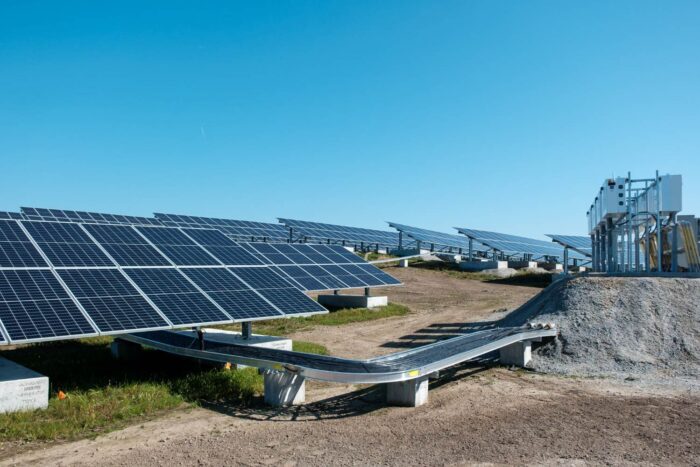
Federal policy upheaval hasn’t slowed the distributed generation (DG) solar market — it’s accelerating it. In the cover story for the Q2 2026 issue of Solar Builder, I spoke with industry leaders to unpack why the “middle market” of solar — too big for rooftop, too small for utility-scale — is becoming the industry’s most dynamic segment.
The recently passed safe-harbor deadline tied to the One Big Beautiful Bill Act (OBBBA) has compressed margins and stretched deal timelines from 60 days to 7-8 months as developers recalibrate expectations. Surging electricity demand — driven largely by data centers — is fueling deal flow despite the policy headwinds, with speed and scale becoming solar’s core competitive advantage over slower-to-build alternatives like natural gas.
Featured sources:
- Megan Byrn, VP of business development at Standard Solar
- Jon Powers, president of CleanCapital
- Markus Virta, managing partner at Cascadia Renewables
The article traces how DG’s definition has shifted — what once counted as “utility-scale” a decade ago (around 10 MW) now sits comfortably within DG’s typical range of a few hundred kilowatts to 30 MW. Standard Solar’s Byrn points to a fast-growing “orphaned” segment between 30-100 MW that’s outgrowing traditional DG categorization altogether.
Read this article exclusively in the Q2 2026 issue of Solar Builder.
Virta provides a technical lens on grid constraints, framing the challenge as a “physics problem” involving both power (rate of delivery) and energy (quantity of delivery) limitations. He advocates for dynamic, locational pricing and warns that VPP aggregators may outpace utilities if they don’t modernize their own distributed energy resource management systems (DERMS).
3 Key Takeaways:
- Market bifurcation is accelerating. DG is splitting into distinct sub-segments — traditional 1-30 MW projects and an emerging 30-100 MW “orphaned” tier — each with different capital and development needs.
- The post-ITC era demands recalibrated expectations. With the 48E tax credit safe-harbor deadline hitting July 2026, developers and financiers must align on thinner margins early, or risk elongated, inefficient deal cycles.
- Grid physics, not just policy, will shape DG’s future. Locational, dynamic pricing — and who builds it (utilities or VPP aggregators) — may determine how quickly distributed resources can be integrated to meet surging, non-coincident demand from data centers and electrification.
Brad Kramer is editor of Solar Builder. He has reported on the energy industry since 2009, with a focus on renewables since 2022.
Comments are closed here.