Exploring ETC 2026 | What solar installers need to know before attending
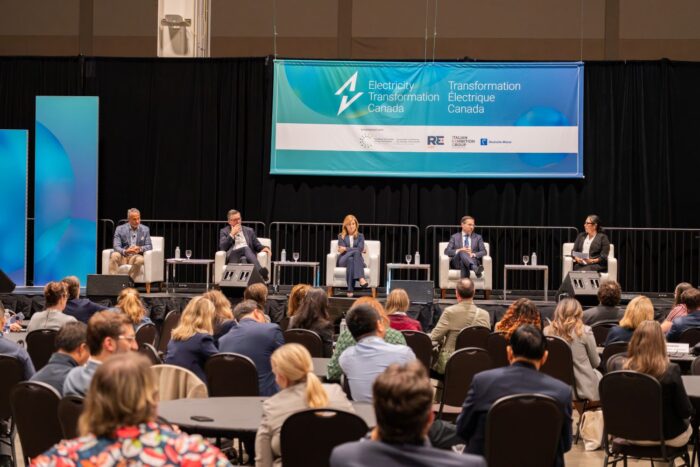
Canada’s largest renewable energy gathering returns to Toronto this fall, and for solar and energy storage installers, it’s shaping up to be one of the more consequential stops on the trade show calendar. Electricity Transformation Canada (ETC) 2026 runs Oct. 19-21 at the Enercare Centre, bringing together thousands of clean energy professionals for three days of education sessions, plenary discussions, and a sprawling exhibit hall built around the technologies installers put in the ground every day.
Organized by the Canadian Renewable Energy Association (CanREA) alongside RE+ Events and the Italian Exhibition Group, ETC has grown quickly since its launch. Last year’s edition drew a record-breaking high of roughly 2,900 energy professionals from Canada and abroad, featured more than 120 speakers, and packed the show floor with 180 exhibitors spanning distributors, manufacturers, and financiers.
This year’s event is organized around the theme “Clean Power Nation,” and according to Phil McKay, senior director of member Programs at CanREA, that framing is meant to capture where the industry’s attention is right now.
“We have some predictions, but you never know what’s going to stand out as people get talking, but that’s one of the benefits of the event,” McKay says. He pointed to a handful of storylines likely to dominate hallway conversation and stage time alike: the rise of data centers as a new category of grid load, AI’s dual role as both an energy consumer and a tool for running a more efficient grid, and a cluster of major transmission and offshore wind developments spanning several provinces.
“You have large offshore wind prospects in Nova Scotia. We’ve got the deal with Newfoundland between Quebec and Newfoundland, which could carry a bunch of other renewables, not just hydro too,” he says, adding that fallout from a recent federal investment summit in Toronto is also likely to shape discussion on the show floor. “That kind of Clean Power Nation theme I think will hold firm throughout the three days.”
McKay says this year’s event is trending toward exceeding last year’s heights. As of this interview, the show already had more than 200 confirmed exhibitors and was anticipating more than 2,500 attendees, though he cautioned that a full breakdown of growth — by geography, sector, or company size — won’t be available until after the show wraps. “We are anticipating growth… I think we have our fingers crossed for a few more digits there,” he says. For installers weighing whether the trip north is worth it, the scale alone makes a case: this is where Canada’s wind, solar, storage, and grid-modernization sectors converge under one roof.
Despite the broadening scope, McKay was clear that solar and storage installers aren’t being crowded out by the show’s expansion into grid, EV, and demand-response territory. “As far as solar and storage goes, certainly continues to expand at the show,” he says, pointing to sessions on electrical code compliance, retrofit strategy, and solar mounting and racking as evidence the programming is still getting into what he called “the technical nitty gritty.” He also flagged growing attention to solar optimization tools like cloud tracking and export optimization, plus a less hardware-focused thread on virtual power plants and financing structures that spans both residential and commercial-and-industrial work.
Why installers should pay attention
ETC bills itself as a hub for “cutting-edge technologies and groundbreaking solutions” across the renewable energy landscape, and the conference programming reflects that breadth — but solar and storage installers will find plenty tailored specifically to their work. The event’s exhibitor categories include installation-focused listings for solar and energy storage systems, electricity storage technologies, energy management systems, and hybrid-energy solutions, alongside the manufacturers and distributors installers already work with on a daily basis.
That combination matters for a workforce navigating a market in flux. Canadian installers are contending with shifting incentive structures, an increasingly complex storage attachment calculus, and utility interconnection rules that vary province to province. A conference that puts policymakers, utility representatives, financiers, and equipment manufacturers in the same building — and on the same panels — gives installers a rare chance to hear how those pieces fit together, rather than tracking each development separately through trade press and webinars.
McKay noted that grid-reliability and regulatory voices are increasingly part of the conversation too. “We’ve got a lot of really key voices from people like NERC, the North American Electric Reliability Corporation, the big utilities… that are more on the grid generally,” he says.
Inside the agenda
ETC’s education program is built around multiple tracks running in parallel across the three-day event, supplemented by plenary sessions meant to set the tone for each day and workshops that go deeper on specific technical or business topics. Past editions have organized programming into a handful of education streams covering the full sweep of the clean energy transition, with sessions addressing the most pressing issues facing Canada’s renewable sector.
Beyond the formal session tracks, the show floor itself functions as a secondary education venue. Previous years have featured multiple expo hall theaters running continuous programming throughout the event — technical talks, product demonstrations, and shorter educational sessions that don’t require pre-registration, making them an easy way for installers to duck in between meetings and pick up practical, product-specific knowledge.
For installers specifically, the agenda’s emphasis on storage is worth flagging. As battery attachment rates climb across residential, commercial, and utility-scale solar projects alike, ETC’s programming and exhibit floor both lean into that shift — a signal that the conference organizers see storage integration as central to where the installer market is headed, not a side conversation.
McKay framed the shift as a sign of the sector growing up. “You’re seeing everything from like recycling of batteries to excessive wear on cathodes,” he says, adding that programming has moved from big-picture grid-integration questions into “the nitty gritty of how to operate” storage assets that are now, in his words, “ubiquitous.”

The exhibit hall: what installers will find on the floor
For many installers, the real value of a conference like ETC is less about the sessions and more about the exhibit hall — the chance to compare hardware side by side, talk directly with manufacturer reps, and scope out new suppliers without the sales pressure of a one-on-one meeting. ETC’s floor is organized around exhibitor categories that map closely onto an installer’s day-to-day sourcing needs, including:
- Installation-specific technologies for solar and energy storage systems
- Electricity storage technologies and energy management systems
- Manufacturers of solar and wind energy equipment
- Distributors carrying renewable energy supplies
- Smart grid technology and systems for electrification of transportation
- Energy system security and hybrid-energy solutions
Four dedicated business pavilions add another layer of focus to the floor. The Energy Storage Pavilion is the most directly relevant to installers working on battery-attached projects, positioned as a showcase for companies improving storage efficiency, reliability, and grid resilience. A Hydrogen Pavilion covers fuel cells and hydrogen production and storage technology — an adjacent but fast-growing space some installers are beginning to track as commercial and industrial hydrogen applications mature. Rounding out the floor are an Indigenous Business Pavilion, spotlighting Indigenous-led renewable energy companies and energy sovereignty projects, and a Start-Up Pavilion reserved for early-stage clean energy companies with fewer than 20 employees and under $1 million in revenue — a good place to spot emerging technology before it hits the mainstream distributor channel.
Asked what a first-time installer might overlook on the floor, McKay pointed past the hardware booths. “They’re obviously going to be drawn to the names and the brands that they might know,” he says, but encouraged installers to also seek out standards and reliability voices — CSA representatives and NERC staff among them — to talk through field-deployment challenges and emerging AI-driven security measures. “It’s just such a great way… to have a lot of forward-looking conversations, not just what’s the next best hardware that I want to purchase for my jobs.”
Networking and the bigger picture
Trade shows live or die on the conversations that happen outside the formal sessions, and ETC leans into that with a full slate of networking programming, starting with a welcome reception on the opening evening. Past events have also featured award presentations recognizing standout Canadian clean energy projects — categories have included recognition for on-site solar installations, Indigenous clean energy companies, and utility-scale storage projects — giving installers a look at what winning project execution looks like elsewhere in the country.
McKay says one deliberate mechanism for bridging the installer and policy audiences is the show-floor presentation theater. “We do use the presentation theater on the show floor to give installers, service providers, and even some of those policy regulatory folks the platform to speak to that audience in kind of a… less loaded kind of way,” he adds, noting that speakers are often approached by attendees right off the stage rather than needing to seek people out themselves.
For installers running crews across provincial lines, or those eyeing expansion into new Canadian markets, the conference’s mix of attendees is arguably its biggest draw. ETC pulls in utilities, policymakers, regulators, technology providers, and researchers alongside the installer and contractor audience, which means hallway conversations can surface interconnection insights or incentive-program details that don’t always make it into public documentation.
McKay also flagged growth in commercial and industrial solar-plus-storage as a theme worth watching, driven less by incentives than by underlying economics — reliability, peak shaving, and increasingly complex landlord/tenant arrangements. “You’ve got these tensions of like building owner versus a lot of them being leased… even seeing things like green leases,” he says, describing a pattern where tenants push for cleaner power and utilities respond with programs designed to avoid costly infrastructure upgrades.
Getting there
ETC 2026 takes place at the Enercare Centre in Toronto, Ontario, from Oct. 19-21. Registration options include full-conference passes for attendees who want access to all education sessions across the three days, as well as expo-hall-only passes for those primarily interested in the show floor and business pavilions. Housing and transportation information, along with a full agenda and exhibitor list, is available through the event’s website as the show date approaches — and given that the agenda is still subject to change, installers planning their trip should check back closer to October for confirmed session times and speaker lineups.
Whether the draw is a specific storage technology on the show floor, a session on interconnection policy, or simply the chance to compare notes with installers working similar projects in other provinces, ETC 2026 is positioning itself as the fall’s essential stop for anyone building out Canada’s solar and storage infrastructure. With last year’s record attendance as a baseline, expect this edition to be bigger still — and worth blocking off the calendar for.
Brad Kramer is editor of Solar Builder.