
Solar brawl for all | Spotlighting the projects, programs and people caught up in the Solar for All funding fight
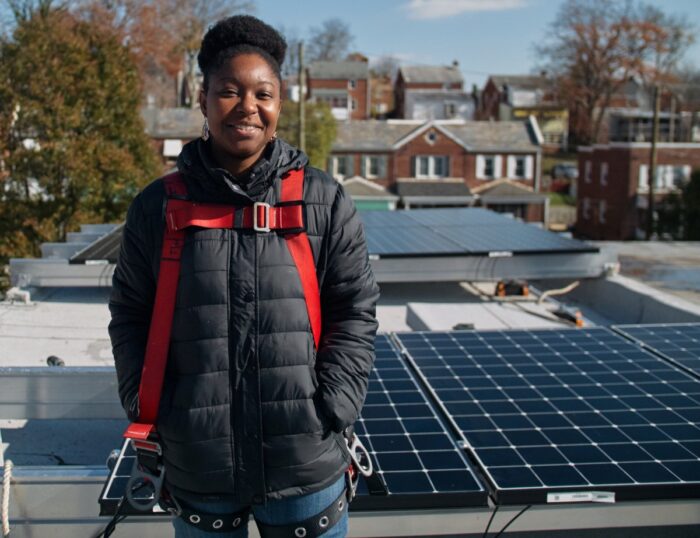
The Trump Administration sought “energy dominance” in 2025 — and dominate they did. Reminiscent of the president’s WWE days, the administration put the solar industry in a series of submission holds: tariffs, FEOC rules, tax credit tweaks, new oversight from the Department of Interior — all aimed at slowing the post-IRA renewable boom.
The quickest TKO came from EPA head Lee Zeldin, who canceled the $7 billion Solar for All program in a social media video — cutting off funding that would have expanded solar access for low-income households across the country.
But the fight over that funding isn’t over. It is escalating.
By god — that’s … that’s the Southern Environmental Law Center’s music!
The SELC started the official rematch by filing a federal lawsuit in October, joined by Lawyers for Good Government, the Conservation Law Foundation, and the Lawyers Committee for Rhode Island, to reverse what they call the administration’s “illegal termination” of the program. The government has 60 days to respond to the filing (Dec. 5 at the latest).
“Families all over the country were counting on energy bill relief that disappeared overnight when the administration unlawfully terminated Solar for All,” said SELC Senior Attorney Nick Torrey. “We’re asking the court to fix the Trump administration’s huge mistake.”
Then came the states. Attorneys general from 22 states — plus D.C., Kentucky, Pennsylvania and Wisconsin’s economic development agency — have filed their own lawsuits to force the EPA to reinstate the money. Their filings argue the agency “has no lawful authority” to de-obligate funds Congress already awarded and obligated under the IRA.
Adding to the pressure, 32 U.S. senators (30 Democrats and two independents) sent a joint letter to Zeldin demanding reinstatement:
“Your agency’s decision to terminate Solar for All is not only unlawful — given this funding was congressionally appropriated and fully obligated — but also ill-timed… Solar for All will save Americans an estimated $350 million annually on their energy bills at a time when working families need it most.”
The senators warned the cancellation is already disrupting workforce training underway in West Virginia, Alaska and across the Midwest, and pressed EPA for a full accounting of how it plans to repair what they describe as a breach of trust.
As this political brawl spills from social feeds into federal courtrooms, we’re keeping the spotlight where it belongs — on the communities and contractors left waiting.
The stakes
According to the U.S. Energy Information Administration, 34 million American households are energy insecure, often forced to choose between electricity and other basic needs.
The 60 programs tied to Solar for All funding would have given 1 million homes access to solar power, according to the Clean Energy States Alliance, and provided more than $400 million in savings annually for decades to come.
That’s a modest start given the scale of energy insecurity — but a meaningful one, since those benefits would compound every year through lower bills, local jobs, and community ownership.
Anya Schoolman, executive director of Solar United Neighbors (SUN), estimated Solar for All would “slash household electricity costs by 20 percent, lowering electricity bills for each household by roughly $400 each year.”
The funding was spread across the map.
“Appalachian communities have been hard hit by the downturn of the coal industry and rising electric bills. Solar for All is a practical program that could create real relief for households across the region,” said Dana Kuhnline, program director at ReImagine Appalachia.
The Solar for All program had granted $637 million to projects in Virginia, Pennsylvania, Ohio, West Virginia, and Kentucky, plus another $811 million in multi-state initiatives. Kuhnline estimates that canceling those awards “undermines good work for more than 6,000 Appalachians over four years, and prevents solar installations for 150,000 households in low-income and disadvantaged communities.” Those projects, she added, “would have saved Appalachia’s low-income households more than $70 million on their utility bills.”
In Georgia, the funding expanded the Georgia BRIGHT program, which offers no-cost solar to about 900 low-income households statewide. Nearly 500 households signed up within 24 hours of the launch. Additional lease and community solar programs were in the works.
Grassroots programs left hanging
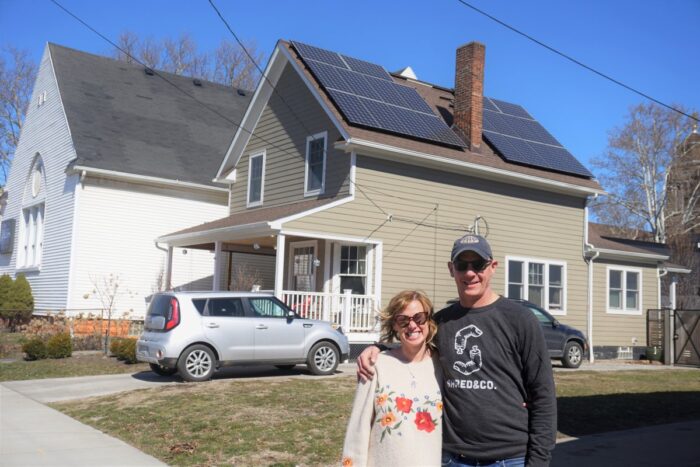
For Solar United Neighbors, the Solar for All cut stopped years of work mid-stride.
SUN, a nonprofit that organizes bulk-purchase solar programs, has helped more than 11,000 families install 92 MW of rooftop solar since 2007. Most participants pay or finance systems on their own, but Solar for All funding was poised to reach families without the upfront capital.
“Scale is what makes this model work,” says Ben Delman, editorial director of SUN. “Solar for All lowers the cost of solar for everybody — and lowers everybody’s energy bills — because we’re putting so much more clean electricity back on the grid.”
With that funding, SUN expected to help 6,000 families go solar in Florida, with additional projects in Texas and Indiana. Each program was tailored to local needs: some focused on single-family homes, others on community solar or multifamily housing.
In Houston, SUN was developing “Hub Homes” — resiliency centers with solar and batteries. “If the power goes out, those homes can open their doors to neighbors to charge phones, stay cool, or power medical equipment,” Delman said. “That’s the kind of locally driven design Solar for All made possible.”
Each project was also structured for long-term support, with maintenance contracts built in and opportunities for local workforce participation. All of it — from the Houston Hub Homes to the early outreach in Florida — is now on hold.
Tribal energy sovereignty on pause
For groups like GRID Alternatives, the nation’s largest nonprofit solar installer, the losses are measured in real numbers: tens of thousands of low-income households, hundreds of millions in bill savings, and thousands of job opportunities.
GRID had already begun preparing its first Solar for All ribbon-cutting, planned in Traverse City, Michigan, with Habitat for Humanity. That project, and dozens of sub-awards from other recipients eager to partner with GRID, are now indefinitely suspended.
By 2029, GRID’s two Solar for All programs — rescinded by the EPA at a value of nearly $330 million — were projected to serve 40,000 households, generate $541 million in savings, create 6,700 job-training opportunities, and avoid 3.4 million tons of CO₂ emissions.
The cuts hit Tribal programs particularly hard. Indigenized Energy, part of a coalition of 14 tribes awarded Solar for All funds, confirmed it has already made staff cuts and lost its opportunity to participate in a $135 million initiative through the Tribal Renewable Energy Coalition (TREC).
The nonprofit was preparing to deliver residential solar across the Northern Plains — projects designed to reduce bills and build energy sovereignty.
“This isn’t just about numbers on a spreadsheet,” said Cody Two Bears, founder and CEO of Indigenized Energy. “It’s about families who can’t afford their electricity bills, skilled workers in Indian Country who just lost their livelihoods, and a planet that desperately needs us to heal it. The true cost will be felt in homes, on our lands, and across our shared future.”
Bottom line: A breach of trust
Even if Congress or the courts restore the money, the damage may be done. We’re talking non-profits and small businesses. Many programs can’t survive long-term uncertainty.
“In Florida, for example, we’d already begun pre-qualifying folks,” Delman says. “To suddenly say, ‘Sorry, we’re not doing this anymore,’ is a big breach of trust — especially for communities that have been promised help before and seen it vanish.”
The sudden stop of Solar for All, through no fault of the participating organizations, risks deepening that skepticism.
“For your audience,” Delman adds, “we’re encouraging folks to reach out to their members of Congress. This money was appropriated. Congress holds the power of the purse — and this is a proven way to lower energy costs in their districts.”
But the damage goes beyond dollars. Solar for All wasn’t just about expanding access to new technology. It was about building a path forward for clean energy can serve everyone.
And once that trust is gone, no court order can flip the switch back on.



Comments are closed here.