New IEEFA report finds building solar cheaper than gas power plants
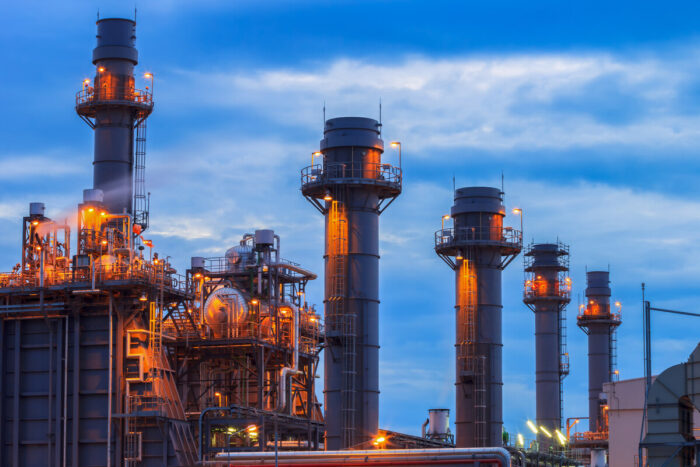
A recent report from the Institute for Energy Economics and Financial Analysis (IEEFA) has found that gas-powered electricity generation plants are now more expensive than simply building a solar field.
The cost of gas-fired power generation has jumped over the past few years, IEEFA officials say. Recent pricing puts gas around $2,500 per kW installed — which comes out to $2.5 billion for a 1 GW unit. Not only is that roughly triple the cost of similar projects built earlier this decade, but it comes online much slower than solar or wind power.
The report says that consumers of NextEra Energy, one of the world’s largest solar and battery developers, saved more than $1.1 billion in fuel costs between 2017 and 2024. Not only that, but solar generation totaled 7.6 million MWh for the company in 2022 alone, which saved customers an estimated $375 million.
Now, the company projects that its levels of solar generation will jump from 12.4 million MWh in 2024, to 55.8 million MWh just a decade later. In addition, it expects gas’s share of the generation mix will drop from over 71% to about 45.7%, largely thanks in part to cost savings.
“Wind and solar do not share the shortcomings of gas. Their costs are not tracking its rapid upward climb, and the hardware is readily available,” says Dennis Wamsted, IEEFA’s energy analyst and author of the report. “Renewable projects can be built in 18 to 36 months, and they have no fuel costs—ever.
“Paired with dispatchable battery storage, which continues to benefit from declining capital costs, renewables offer firm power and fixed costs on short development timelines.”
Rising costs move the needle in solar’s favor
Rising costs are wracking the entirety of the energy economy, and gas-fired power generation has taken the brunt of those costs. The report states that rising costs have “undercut gas’s competitiveness” thanks to capital, fuel, and pipeline costs all skyrocketing in the world of liquid natural gas.
“A 2025 analysis of data from the Federal Energy Regulatory Commission (FERC) and the EIA by BTU Analytics showed that pipeline construction costs (calculated as the price per mile) had jumped by 90% for projects completed before 2024 compared to those completed or proposed since 2024,” the report says. “Importantly, that calculation does not include the blowout costs of the Mountain Valley Pipeline, which entered commercial service in 2024, years late and with a total cost of roughly $9.7 billion — $6.2 billion more than the original estimate.”
In return, solar and batteries have taken up the mantle as “a clear cost winner,” the report says. Dispatchable battery storage has grown exponentially since 2022, expected to reach 89 GW of installation by 2027 compared to 50.3 GW in 2026.
“Their costs are projected to continue falling, while their energy storage capacity improves,” the report says of batteries. “An enormous amount of global R&D investment is focused on improving batteries—for consumer electronics, for electric vehicles, and for grid-scale and consumer energy storage. This research has led to consistent improvements in energy density (more power in the same amount of space), lower costs, and safer chemistries. It almost certainly will continue to do so in the future.”

A bright future for renewables
Despite constant federal policy changes, things are looking up for solar and other renewable energy sources at grid scale in the U.S., according to the report.
New solar plants and other renewable energy solutions are being built, in the face of mitigating policy like the One Big Beautiful Bill Act from 2025. Although one renewables plant isn’t going to get the job done, hope is high that the U.S. will adopt these more sustainable, and less costly, power plants at scale. Experts in the field predict that renewables and batteries will “far outpace new fossil fuel additions.”
New gas plants will, of course, remain a staple of the American energy ecosystem for years to come. But as those plants become more expensive to build and maintain, the costs will speak for themselves. In short, the rising costs that target consumers, developers, utilities, and investors will eventually catch up with fossil fuels, the report forecasts.
“Solar, wind, and dispatchable battery storage can be built much more quickly, at lower cost, and at a scale that matches actual demand growth rather than optimistic AI-driven projections,” the IEEFA report concludes. “Renewables and battery storage are also better for consumers, providing protection against rising, volatile fuel costs and shielding them from the high cost of new gas-fired capacity.”