
Ascent Solar tests space solar products for atomic oxygen exposure
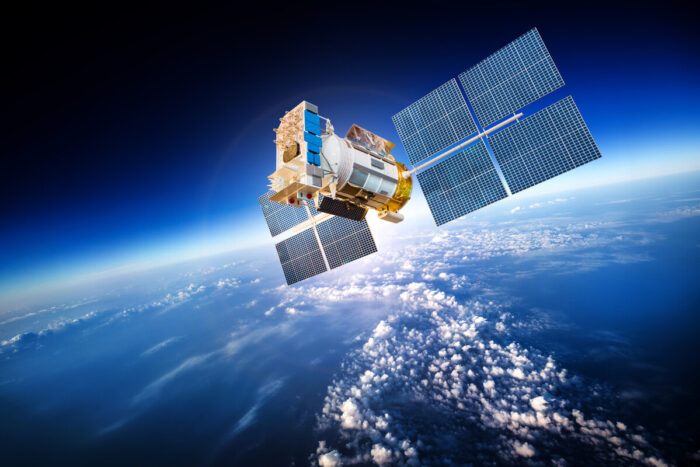
Solar module manufacturer Ascent Solar Technologies has announced the test results for its thin-film PV modules in atomic oxygen exposure conditions, with hopes to one day send the product into space.
The preliminary testing phase produced positive results, the company says, with the products showing “significant resilience to atomic oxygen in low-earth orbit.” Most predominantly found in low-earth orbit, the highly reactive atomic oxygen particles can damage many materials, Ascent representatives say, either shrinking, cracking, eroding, or heavily oxidizing them.
“These positive results represent yet another critical value proposition of our PV technology, enabling spacecraft operators to endure the punishing conditions of space,” says Ascent Solar CEO Paul Warley. “With best-in-class lightweight panels, a highly flexible and rollable form factor, as well as resilience to the stresses of launch, our PV continues to prove itself to be the best choice for orbital power systems, especially as the commercial space market continues its rapid orbital infrastructure expansion in the coming years.”
Specifically for spacefaring solar panels, atomic oxygen can directly interact with the compounds that cover the cells themselves. This causes oxidation that reduces the transmission of light, thereby allowing for less electricity transfer over time.
Testing for LEO
Treating for low-earth orbit often entails specialty coating and chemical treatments, according to Ascent Solar officials. These methods can enhance the resilience of polymers in space, as well as metal surfaces and composites, but when dealing with glass or other components, separate measures are often necessary.
Silicon and gallium arsenide (GaAs) solar technology sees wide use in LEO applications, the company says, but their long-term performance is often “significantly encumbered” by atomic oxygen-rich environments. Mitigation of the atomic material, whether by GaAs technology or other means, is a critical piece of the puzzle, the company says.
“Exposed cover glass adhesives, polymer encapsulants, interconnect coatings, and other protective materials are susceptible to erosion and degradation over time of a few percent to more than 10% over several years in LEO,” Ascent Solar says. “This erosion contributes to power loss and reduced array lifespan. AO mitigation is a critical design consideration for ensuring reliable long-term operation.”
Ascent has completed “several” rounds of atomic oxygen exposure testing on its space solar products, officials say. These tests have yielded favorable results on products that include a 1 mil fluorinated ethylene propylene (FEP) film as the primary barrier from atomic oxygen.
The test’s exposure rates were equivalent to that of six months on orbit at the same altitude as the International Space Station, or 248.5 miles / 400 km into space. Results indicated zero loss of power, Ascent Solar says, and the company is now moving forward with additional testing, to simulate longer mission durations in atomic oxygen-rich environment.

Comments are closed here.