Solar year in review report shows positive signs, despite some slowdown
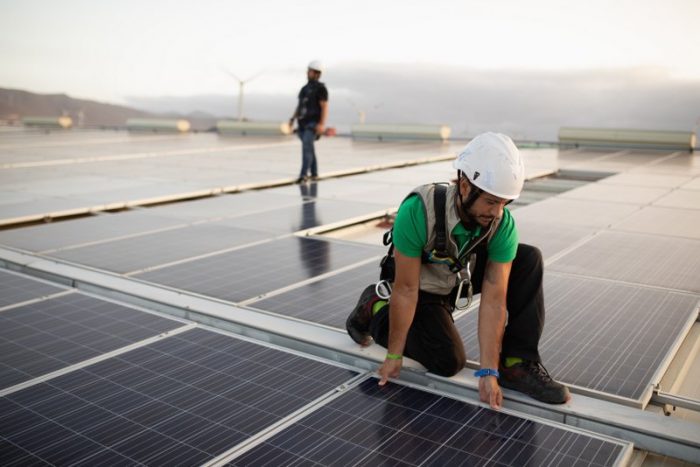
Despite consistent policy headwinds from a number of sources, including the federal government, the U.S. solar industry installed more than 43 GW of new capacity in 2025, according to a new report by Wood Mackenzie and the Solar Energy Industries Association (SEIA).
The latest Solar Market Insight report shows promising numbers for the solar industry going forward. In the first year of the second Trump administration, solar and energy storage accounted for 79% of all new electricity capacity installed; 54% of that was solar alone.
But despite the high percentage of solar installed in 2025, that number of 42 GW installed represents a 14% drop from 2024’s figures. Specifically, the industry’s utility-scale sector saw a decrease of 40% from Q3 2025 to Q4 2025 alone. Things were somewhat more palatable in the residential sector, where figures declined only 2% to about 4.6 GWdc of capacity installed.
Even through all of that, SEIA and Wood Mackenzie have high expectations for the industry and its new capacity additions going forward. Wood Mackenzie says that through all of its future solar industry outlooks, capacity will constitute “roughly half” of new capacity added each year, up to 2060.
“It’s clear that solar will continue to be the dominant source of new power capacity in the United States, even as gas generation continues to grow,” says Michelle Davis, head of solar at Wood Mackenzie and lead author of the report. “Strong demand growth combined with escalating costs of new gas plants will allow solar to remain competitive, even without tax credits.”
A monumental year
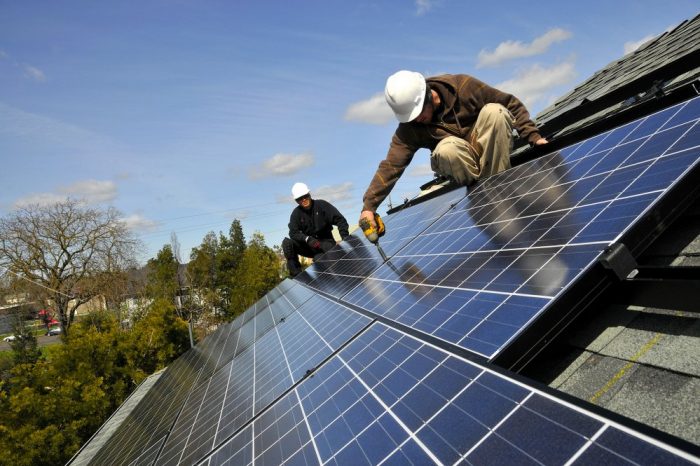
2025 was a pivotal time for the solar industry, with new cell capacity continuing to expand and, despite policy changes, wafer capacity came online for the first time in nearly a decade. Module manufacturing also grew more than 50% throughout the year, up to 65.5 GW of capacity coming online, but domestic production remained slow.
“Solar and storage continue to dominate new capacity additions to the grid despite policy headwinds. American households and businesses of all sizes are demanding solar + storage because they deliver fast, affordable power to help meet rapidly rising demand,” says Darren Van’t Hof, interim president and CEO of SEIA. “Washington must deliver policy certainty for the market to work and to keep pace with growing energy demands. Without this certainty, less solar will get built and Americans will pay the price with higher energy bills.”
In contrast to the residential and utility-scale sectors, the U.S. commercial solar market actually grew by 6% during 2025. Adding 2.3 GWdc of new capacity, programs like NEM 2.0 in California helped to bolster the commercial segment.
But despite such a turbulent year for renewable energy policy, solar “remains the dominant form of new electricity-generating capacity” in the United States, the report says.
“The first year of the Trump administration was a monumental year for the domestic solar and storage manufacturing industry,” the report says. “With the opening of a wafer manufacturing facility in Q3, the United States now has the capacity to produce every major component of the solar supply chain. In 2025, cell production capacity continued to grow and module manufacturing increased more than 50% with 65.5 GW of capacity online.”

A positive outlook
Despite political headwinds from the Trump administration, the solar industry has been able to respond. Much of the solar and storage capacity added in the United States during 2025 came from states the president won in the 2024 election cycle, according to the report.
“(The Solar Market Insight) finds that over two-thirds of all solar capacity installed in 2025 was built in states won by President Trump,” the report reads. “Texas, Indiana, Florida, Arizona, Ohio, Utah, and Arkansas rank among the top 10 states for solar additions in 2025. Despite regulatory actions targeting clean energy and changing tax policy, the economics of solar remain strong as one of the few solutions that can quickly meet surging electricity demand driven by data center growth.”
The story behind the numbers shows a much more promising future than the numbers themselves would suggest. In its ten-year outlook, the new report says it expects the cumulative U.S. solar capacity to nearly tripe from the end of 2025, jumping to 769 GWdc installed by 2036.
The report also includes “high and low case” alternate scenarios for the industry, allowing professionals to remain prepared for any future timeline.
“This year, these scenarios consider different estimates of safe harbor capacity, the outcomes of various tariff investigations, permitting actions for projects on public and private land, and different power demand trajectories, among other factors,” the report says. “While the U.S. Treasury released interim guidance on the foreign entities of concern (FEOC) provisions enacted in the One Big Beautiful Bill Act (OBBBA), there are still several areas of uncertainty our forecast scenarios consider.”