Balcony solar bills take hold across state legislatures
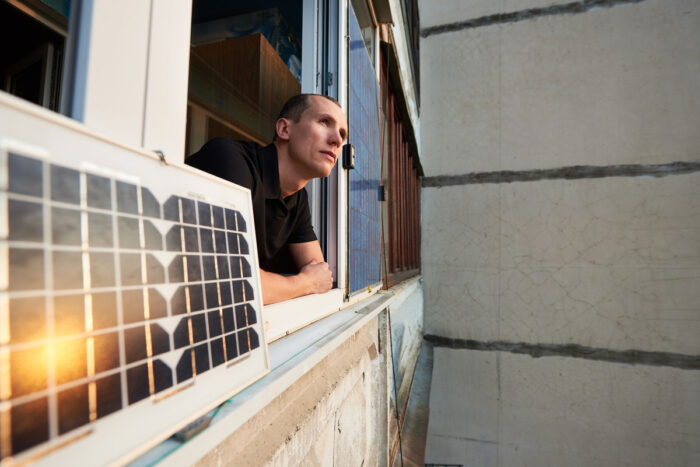
Residential solar: it’s not just for homeowners anymore.
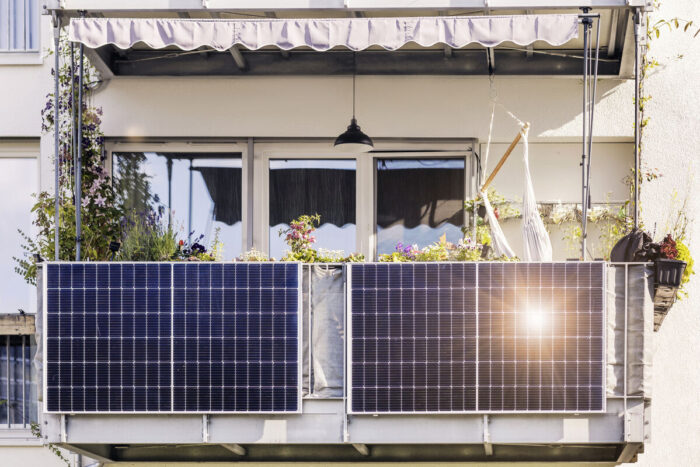
Originally taking off in Europe near the end of the last decade, plug-in solar systems, or “balcony solar,” has come to prominence most notably in Germany throughout the 2020s. Now, the products are gaining traction in the U.S., with permitting laws already having passed in two states, and gaining momentum in a third, thanks to recent legislation.
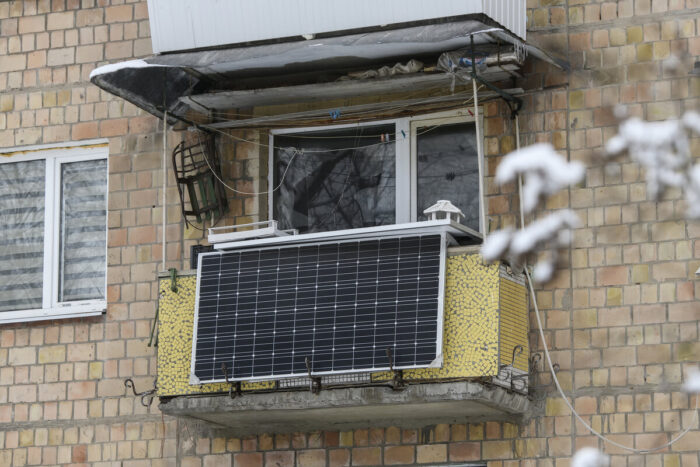
The idea of a plug-in solar system is relatively simple: Buy one or two solar panels from a retailer at your local Walmart, plug them into your house or apartment, and passively offset at least part of your electrical bill every month. In practice, it’s certainly more complicated than that, thanks to a number of mitigating factors. But the journey for balcony solar in the U.S. all started in the Beehive State.
Utah sets the blueprint
By and large, Utah is a relatively unassuming state when it comes to solar energy, currently coming in at 16th in SEIA’s ‘Solar State by State’ rankings with about 4.7 GW installed. But it was Utah Republican State Rep. Raymond Ward who first opened the door to balcony solar in the United States.
Ward introduced the Utah’s House Bill 340 — later known as the “Solar Power Amendments” — in January 2025.
“I read an article that said you could buy these routinely in Germany, and it was easy to buy them and easy to use them,” Ward says. “I was looking around and realizing you could not buy one here, and it took several months to figure out why you couldn’t buy one here.”
Ward says that in an unexpected stroke of luck, even the state’s utility lobbyists, despite providing some friction, mostly stood down.
“In Utah, I got lucky,” Ward says. “I knew the utilities would have something to say about it, so their lobbyists put me in touch with a couple of their engineers and managers. The two folks I got in touch with knew right away what I was talking about. … They understood the parameters, and to them, if this and this and this are all met, they don’t care.”
The bill passed unanimously in March 2025, just two months after its introduction. And thus, the balcony solar race began.
Following the leader
Utah Gov. Stephen Cox kicked off a countrywide domino effect when he signed the Salt Lake State’s balcony solar bill into law last year. In less than a year since the Solar Power Amendments took effect, more than half the states in the Union have introduced some sort of plug-in solar bill, with recent counts sitting at about 28 states, plus Washington, D.C.
The states involved, while obviously leaning in favor of already solar-heavy areas, spread across the political spectrum. Wyoming, the state which carried President Trump’s largest margin of victory in 2024, introduced a bill in favor of the practice in February 2026.
In Ohio, the House’s bill has received co-sponsors from Reps. Tristan Rader and Chris Glassburn, both of whom represent Cleveland-area suburbs. Despite the existence of Senate Bill 294, which would essentially institute a statewide ban on solar, the bill’s Senate partner legislation has garnered support from a few of Ohio’s Republicans.
“This is, at the end of the day, removing a regulation,” Rader says. “It’s allowing for people to produce a little bit of their own energy and take a little bit more ownership of some of the costs in their life. I think that’s something that’s certainly garnering a lot of attention and support.”
Ohio, like many other states, has utility rates calculated by “peak days,” Glassburn says, adding that balcony solar can bring costs down across the state. He says that by mitigating power usage through balcony solar, Ohioans can shave kilowatts off of the highest-usage days of the year, thereby flattening the Buckeye State’s electrical utility rates.
This, Rader and Glassburn say, is the key to implementing balcony solar nationwide. The argument that is going to resonate, as always, is the economic argument.
“If (the peak) happens to be a hot day, solar is obviously aligned,” Glassburn says. “If it’s going to be 98 degrees outside, the sun is probably shining. So, anything we can do to lower those peaks helps not just that individual, but everybody. Because then, our collective bills go down, because that top day is not so high.”
Should balcony solar be approved in Ohio, or any state, for that matter, the journey is still only half over. Solar systems still need to be able to make their way into stores, and that’s another battle in itself.
Taking balcony solar products to market
In Utah, plug-in solar systems have already hit the market, thanks to companies like Bright Saver Inc. Bluntly advertising that “you were going to buy all this separately anyway,” the San Francisco-based nonprofit sells all-in-one solar kits with panels, inverters, and mounts already included, with prices starting at $1,499. Products like that can easily tie into balcony solar efforts nationwide, Ward says.
“For (safety) committees to work, you’ve got to have an industry that sells the thing, to find the people to work on the committee,” Ward says. “That is at least starting to happen. I don’t know how long it will take.
“The second thing that’s happening is, now that it’s understood that this is a thing, … Legislatures are starting to take action, and it matters when legislatures take action. That’s one of the things that gets these companies moving, that already sell these things in Germany.”
Bright Saver only ships its Californian net metering expansion kit to within 50 miles of its Oakland storefront as of March 2026, but the wider blueprint is in place. Smaller, low-cost solar systems are still efficient enough to cut down on bills for homeowners to a noticeable degree, and Bright Saver claims the product will pay for itself in five years or less, on average.
Outside of Bright Saver, companies like CraftStrom, Hoymiles, and APsystems are doing their part to get these products to stores in the U.S. As demand for electricity increases across the country, homeowners and renters are bound to look for the cheapest option to cut down on their utility bills. Currently, Hoymiles’s 800-watt plug-in solar kit comes with two panels for just $950.
The main hurdle of UL and NEC certification still remains, however. Ward says that in Utah, some companies have started bringing their products to market with the logic of “close enough.” That is to say, their reasoning that if all the balcony solar system’s parts are NEC and UL certified, then the entire system itself must be NEC and UL certified be default.
“The main thing that needs to happen, both back then and now, is to have (UL Solutions) make a functional standard for electrical safety for a consumer product,” Ward says.
It’s also important to note, Ward says, that these are “just normal solar panels.” The pieces of equipment are all the same, so the barriers to usage are few and far between. All that matters now, he says, is that the right people and the right institutions need to open the proverbial floodgates.
Not a political issue
Ward was surprised to see the relative lack of pushback on balcony solar legislation from either Utah-based utilities and his own Republican constituents. But Ward, Rader, and Glassburn all shared the same sentiment: This is not a political issue, but an issue of opportunity.
“You could not make in the argument in Utah that solar is special because it will save us from climate change, and therefore the state should subsidize it,” Ward says. “But that’s why it’s so important to say that I am here asking the government for nothing. … I’m just asking for the government to let the private market work, that’s all I’m asking.”
When it comes to safety concerns, Ward concedes that letting the private market work the way it’s supposed to is easier said than done. To put it bluntly, the practice of balcony solar has a perception problem. Partially fueled by utility companies and fears of safety hazards, it still remains to be seen how many states that have proposed these bills, become states that actually pass them.
But that fear is just as easily offset, once again, by the level of sheer economic benefits that come from solar energy options. This method already worked for the state of Ohio’s grand energy reform bill in 2025, according to Glassburn.
“We did a very large utility reform with the majority Republicans in House Bill 15 last year, and it wasn’t just politics,” he says. “We didn’t say, ‘This is the Solar and Wind Relief Act.’ We said, open playing field, whoever’s the cheapest competes. All of the above have an equal opportunity. But you say that to anybody, and the price it out, solar’s going to win.”
All of these factors leave the American balcony solar industry in an interesting spot, standing on the precipice of mass adoption but with no guarantee that it goes any further. It could become a national phenomenon, just as easily as it could be shot down after passing in two or three states. But Ward expects that long-term, the practice will be crucial to the country’s energy wider landscape.
“In the longer term, I see this as really important,” Ward says. “If power is going to be where it gets more and more expensive, then this is one way in which people in states where power is expensive — which may soon be all of us — can mitigate some of their costs. In states where power is expensive, your time to get back your investment is three or four years.”