Siting Solutions Project releases guide for clearing clean energy bottleneck
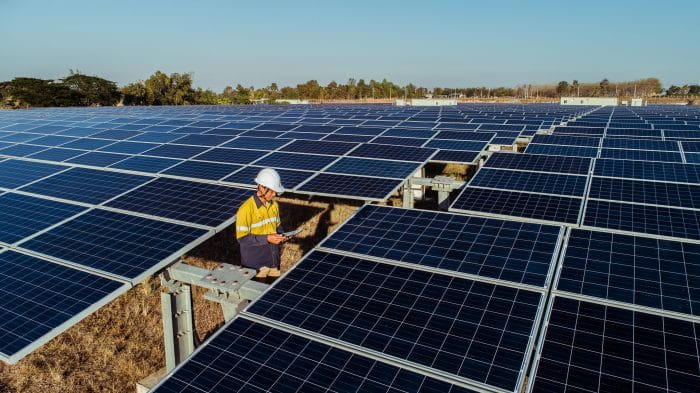
Clean Tomorrow’s Siting Solutions Projects released its new Siting Policy Field Guide on Dec. 18, offering policy models, principles, and a “practical framework” for clean energy advocates.
The new field guide aims to tackle siting, which the project claims has become the U.S.’s “biggest clean energy bottleneck.” Project officials have centered the guide around designing clean energy advancements while also balancing company stakeholder needs.
“Siting is the bottleneck holding back America’s clean energy potential,” says Alex Breckel, co-author and Senior Director of Programs at the Siting Solutions Project. “With the right policies in place, states can cut energy costs for consumers, attract investment and deliver real benefits for workers, landowners and host communities.”
The guide’s authors have also partnered with Data for Progress and Strategic Economic Research for external research and collaboration. Internally, the guide’s authors say they drew on recent state-level reforms around the U.S. that have been successful. In lieu of a blanket solution for the U.S. as a whole, the guide has opted for four adaptable policy solutions, designed for state level political leaders.
The guide calls for a review and revision of current state siting processes to help the U.S. decarbonize its future and climb over its largest clean energy barrier.
Examples for the future of solar siting
As electricity needs continue to rise thanks in part to AI data centers, the U.S. is facing an energy crisis nationwide. Research by the field guide authors states that “energy bill increases are now a top source of financial stress for households nationwide,” regardless of region, economic status, or political views.
To meet rising demand and conquer this “critical challenge,” the guide’s authors have urged state leaders and clean energy advocates to follow examples set by various states around the U.S., as well as other areas around the world, both of which have had successful examples.
“States don’t need to start from scratch – successful models already exist,” says Nelson Falkenburg, co-author and Siting Policy Manager for the Siting Solutions Project. “This Field Guide shows how states can adopt clear, fair and predictable siting rules that unlock clean energy growth while strengthening community trust.”
The field guide also released six principles for siting policy, in hopes of turning siting from the U.S.’s more dire clean energy issue, to its largest opportunity. The principles include instituting transparent permitting processes, establishing enforceable timelines, straying away from political pressure, protecting landowners’ rights, ensuring benefits for host communities, and planning for wildlife land stewardship programs.
However, the guide states that “policy design is not enough.” For the U.S. to have lasting success in clean energy, politicians must carefully implement the new technology with clear metrics of progress. But Clean Tomorrow officials say that the technology is ready for state-level implementation, and policymakers have the ability to create a strong clean energy framework across the U.S., fixing the issue of rising energy needs.