The state of PV Hazard Control | Problems and solutions from the solarboi
By Derek Mast | “So how much do you think you saved just by avoiding all the rapid shutdowns?”
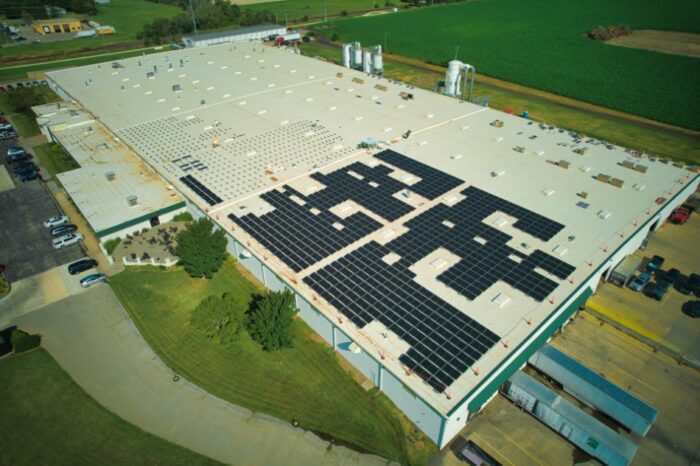
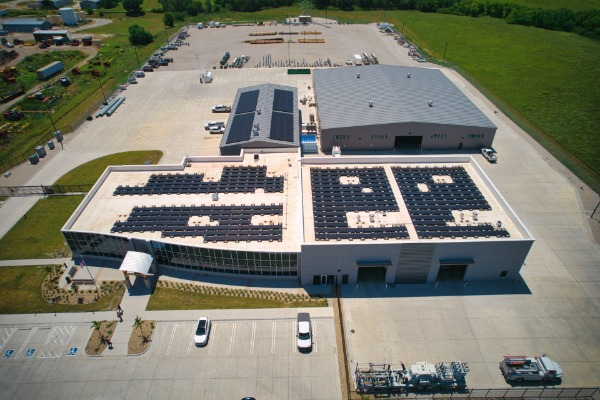
I was doing a third-party inspection for a customer — the customer, EPC and I were walking around the roof, drinking coffee and chatting as the sun rose.
The project manager stopped for a moment, thinking and doing the math in his head. “About 900 modules on site, about $50 per shutdown, so … probably almost $25,000?”
It took me aback for a second. Granted, I’m no project manager who is used to seeing hundreds of thousands of dollars casually pass back and forth between themselves, customers and suppliers, but even in the context of a 450 kW rooftop project, that seemed significant.
“And that’s not even factoring in the labor associated with installing those, right?”
“Oh yeah, for sure.”
PV Hazard Control Systems (PVHCS), or UL 3741, are gaining steam as an alternative to module-level rapid shutdown (MLRS) in the C&I space, and as a service technician, I’m thrilled. Since NEC 2017’s MLRS requirement took effect in 2019, the complexity and instability of rooftop solar has only increased. Not only has the industry had to buy and manage more product, but installers expect to do a few truck rolls in the first year or two to replace optimizers or track down failed connectors due to the tripling of connection points.
These struggles have been felt by many, but PVHCS, introduced in that same 2017 NEC update as a “rapid shutdown PV array,” and renamed to its current moniker in the 2020 version, has been our way out.
However, using PVHCS in the design of a rooftop system is far from ubiquitous, due to the complexity moving from the field to the design table. Following UL 3741’s initial publication in 2020, it took time for manufacturers and listing entities (NRTLs) to figure out the best strategies for using and testing against it. In 2022, SMA and Sollega were famously the first to partner on a solution through the NRTL Intertek, and the industry has largely followed this example.
Problem: The solution was clunky
Sure, it had huge positives! It took us back to the array-level shutdown method, first pioneered in NEC 2014 and adjusted slightly in later versions. As of NEC 2026, 690.12(B)(1) specifies voltage must be 30 V or less within 1 foot of the array boundary. In Sollega’s listing, the array-level shutdown device was SMA’s inverter, which makes it pretty easy — as long as you’re on a flat roof. And only used SMA inverters.
More inverters were listed over time, but extreme specificity remained a problem. The racking companies were the ones submitting for these listings, and Intertek is dogmatic about listing each model of inverter, wire tie and cable clamp, tightening the design restraints for systems. Say an inverter company releases a product to the North American market, and they weren’t already talking with racking manufacturers about getting listed for PVHCS for a year prior, they’re locked out of a ton of potential design opportunity.
Some inverter companies clearly lack the resources to push into listing process, either. Want to use a Midnite MNSSR with an EG4 or Sol-Ark inverter and build a code-compliant off-grid rooftop system without module-level shutdown? There’s no listings of this type that allow for it, as of the writing of this article, despite the fact that there’s nothing lacking in the technical solution.
It can also be extremely difficult to know which inverter has been listed with which racking without reading through every single PVHCS installation addendum. Is there an interesting inverter you saw on the show floor that you’d like to use? Most of the time, the sales people don’t even know what racking they’re listed with. It’d gotten so difficult that I created a reference website at pvhazardcontrol.com, which has proven valuable to designers who want to design with PVHCS but just don’t know how to easily find the relevant information.
There’s a better way
In 2024, TerraGen was the first to partner with the NRTL CSA Group on an inverter-agnostic PVHCS listing. This worked the same as all the other PVHCS listings, but importantly the restriction is not to individual models of inverters. Instead, it allowed any inverter with PV Rapid Shutdown System (PVRSS) or PV Rapid Shutdown Equipment (PVRSE) listings through UL 1741.
That sounds complicated, but you’re going to have a hard time finding a modern inverter that’s listed to UL 1741 without PVRSS or PVRSE, because any inverter without module-level rapid shutdown capability is dead on arrival anyway. This listing essentially allows any compliant inverter or string shutdown device, regardless of whether it was specifically tested with that racking system.
Soon, other racking manufacturers started taking this path — Pegasus, KB Racking and PLP. This covers enough range of use cases that designers can now use PVHCS anywhere, with whatever products they think will fit the bill. Yet this flexibility only applies to flat-roof installations where inverter placement is straightforward.
There are still product bottlenecks
Despite the solutions available to us, there are still big holes in the market that have yet to be filled. The flat-roof market is completely and utterly solved at this point, but sloped roofs have more difficulty with achieving array-level shutdown. Placing an inverter directly on a 45-degree pitched roof is out of the question both logistically and aesthetically, and may even be worse for longevity than MLRS. The ultimate solution is a halfway point, where shutdown devices control entire strings of modules.
In 2014, there were a number of products on the market (smart combiner boxes, string level shutdowns, etc.) that allowed for this, but it’s taking time for the market to reintroduce them. These products exist in other countries, and RE+ featured considerable discussion around new products coming down the line. Some take a PLC-based approach to shutdown, like JMTHY’s or Fronius’ announced string-level shutdowns, but some take the approach of an AC or DC-powered relay, like Projoy’s PEFS firefighter switches. However, as of the writing of this article, none of these have hit the North American market.
Tesla briefly offered an effective solution — their MCI-1. It was 600 V DC and rated for 19 A short circuit current. It only worked with their inverters, but at least it was reducing devices and connections. However, they recently replaced it with the 165 V DC MCI-2, which again forces more devices back on the roof.
One string shutdown does exist in North America that’s SunSpec-compliant, works with just about any inverter you’d like to try it with, and widely available on the market: the Midnite Solar MNRSS-600S-SS. However, the limitations are immediately apparent. With module ampacities commonly in the 13-16 A range, the 12 A rated device works with vanishingly few modules, and we’re left to sit on our CAD applications and wait for newer, higher-capacity solutions.
Once we get these products on the market, we’ll be free to stress less about perfectly mixing and matching products, and be able to focus more on creating safe and reliable power. But it’ll only be safe if you follow the instructions.
Read the … fuuuun … manual already!
I’m a huge advocate for easing up on the complexity of installations with PVHCS listings, but removing the installation manual for the RSD doesn’t mean you have fewer manuals to follow. PV Hazard Control allows for fewer failure points, but only if you follow the instructions.
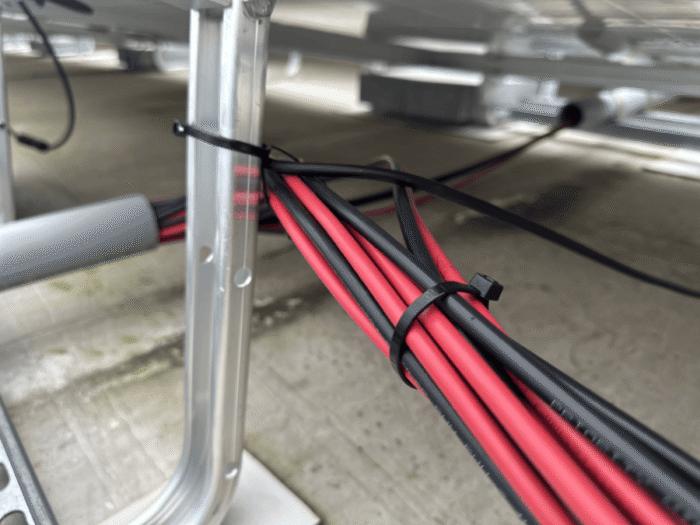
Most rackings have a PV Hazard Control installation addendum that accompanies the listing, and there you’ll not only find the equipment that’s listed for use, but also instructions for wire management. Wire management is one of the most important ways to maintain firefighter safety for PVHCS, so always ensure your team is provided with and trained on these guidelines.
Don’t forget that many PVHCS have specifically listed wire management products. If you’re pulling random plastic cable ties off the proverbial ULINE shelf, you aren’t compliant. One of the notes I made on that early morning inspection was that the wires were not secured per the instructions of the racking manufacturer. They were using random, thin, 50-lb zip ties — ones that I’ve seen be partial to breaking early in the life-cycle of systems. The foreman clearly wasn’t familiar with the idea that the racking manufacturer specifies wire management as a part of the PVHCS listing. There are commonly listed options from Wiley, Heyco and RayTray, but those aren’t ubiquitous across all listings. Always check to make sure you’re using the right products and installing them correctly, so your inspector signs off on your project without a second thought.
And yes, your AHJ must allow it
Someone commented to me recently that PVHCS won’t ever gain legitimacy from some Authorities Having Jurisdiction (AHJs), stating that they’re always going to prefer module-level rapid shutdown. This is a fundamental misunderstanding of AHJs and the NEC, because if your jurisdiction requires module-level rapid shutdown, they must also allow PVHCS.
Let’s take, for example, an AHJ that has adopted only NEC 2017, not updating to newer standards. As stated earlier, PVHCS showed up in NEC 2017 under a different name, in article 690.12(B)(2)(1):
“The PV array shall be listed or field labeled as a rapid shutdown PV array. Such a PV array shall be installed and used in accordance with the instructions included with the rapid shutdown PV array listing or field labeling.”
The informational note goes on to define a rapid shutdown PV array, very similarly to how NEC 2020 defines PVHCS. The only changes to the section in the 2020 version is to specify that, “Yeah, we’re talking about PV Hazard Control, we just didn’t have the name for it yet.”
Only once you get past that paragraph to 690.12(B)(2)(2) do you get the option of using MLRS, shutting down all voltage to 80 V inside the array.
Therefore, the only way for an AHJ to adopt NEC 2017 and exclude PVHCS is to explicitly amend their local code to exclude article 690.12(B)(2)(1). I have not yet seen this done.
The future is bright
The return on investment with PV Hazard Control-based systems is clear — reduced cost on installation, fewer service truck rolls and less complexity needed on-site. It’s a slowly maturing option on the residential side, but options abound for the C&I space. It’s not only allowed but endorsed by electrical code.
As the North American solar industry focuses on stabilizing and reducing cost in a country without easy tax credits, we must push for these solutions and simplify systems for owners. It’s here. It’s code-compliant. Use it.
Derek Mast is an expert solar technician and chronic nerd. His online projects range from exhaustive cataloguing of PVHCS, video creation about solar repair, and restoring and releasing antique electrical code books for free. Known throughout the industry as “The solarboi,” Mast curates a vast database of solar know-how at buildshiny.com.