
FranklinWH’s aPower series sets ‘global benchmark’ with TIA-942 certification
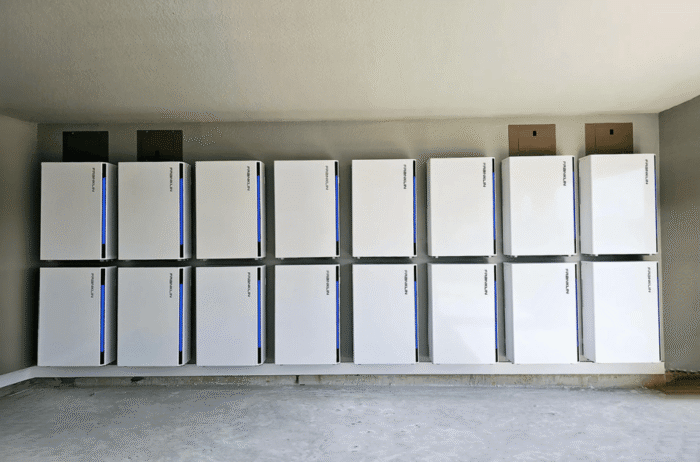
FranklinWH Energy Storage Inc. has received TIA-942 certification with its aPower battery storage line of products, according to company officials.
Developed by the Telecommunications Industry Association, the certification ranges from rated 1 through rated 4, and is a standard in data center applications. Meant to ensure “reliability and availability of equipment,” the testing standard has become a staple in the commercial energy storage and electrical landscape.
Extending that standard to home energy storage systems “sets a new benchmark” in the residential ESS market with regards to reliability, resiliency, and availability, according to FranklinWH CEO Gary Lam. The San Jose-based manufacturer’s aPower battery system is designed to hold 13.6 kWh from solar, grid, generators, and EV power sources.
“With this certification, we are raising the bar for residential energy storage, giving homeowners added confidence that their system will perform when they need it most,” says Lam. “TIA-942 is a rigorous, measurable standard trusted by the world’s most critical facilities. Bringing this level of proven reliability to the home means performance isn’t just promised, it’s verified.”
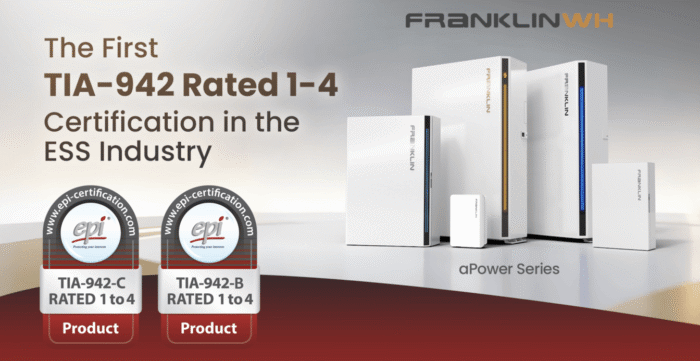
The TIA-942 certification “evaluates infrastructure across power systems, redundancy, monitoring, fault tolerance, and overall resiliency,” according to FranklinWH. Until now, the standard had never been applied to residential systems, and was mostly saved for enterprise-level systems, including computer data centers and other always-on facilities.
The aPower 2 can scale up to 225 kWh for residential usage with up to 15 units per aGate, according to the FranklinWH website, and can power a surge strong enough to start a 5-ton A/C unit.
“The superior storage capacity of the aPower 2 means more solar power can be captured and converted into electricity to be stored in the battery to power your home for free, minimizing waste, cutting grid reliance, and contributing to a more sustainable energy footprint,” the company says.
The testing standard is issued by Enterprise Products Integration and is “widely considered the leading standard” for uptime in various electrical and data facilities.



Comments are closed here.