
Solar to complement Canada’s hydroelectric upgrades
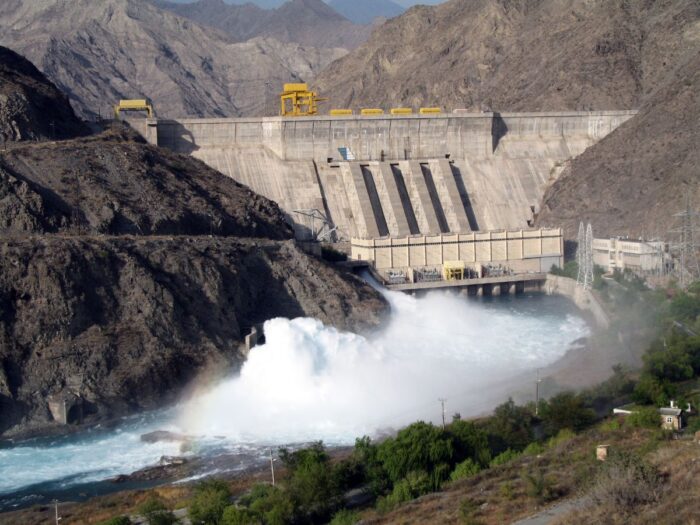
Canada’s hydroelectric dam network is any country’s energy dream come true, providing about 60% of the country’s electricity needs. Yet eventually, capital-intensive upgrades of these units need to take place to avoid rising double-digit losses in generation. While hydros meet most of Canada’s energy needs, solar is growing rapidly as an alternative to new hydro power capacity and to hydro upgrades.
Upgrades carry looming costs
Canadian electricity growth continues, with the expectation that new or refurbished hydro and solar, among other clean sources, will cover the gap. In British Colombia, for example, “electricity demand in B.C. is expected to grow by another 40% over the next 20 years,” according to utility provider BC Hydro.
However, the provincial government has essentially ruled out new greenfield hydro development, leaving upgrades the only means of boosting hydro capacity, explains Tom Hackney, a Policy Advisor for the BC Sustainable Energy Association, which advises BC Hydro on its planning.
Existing hydro already carries the heaviest load for national electricity generation. Out of some 15,000 dams in Canada, about 550 large facilities generate most of the country’s total annual hydro production of 82,000-plus MW of electricity. In British Columbia, the cost of the Site C additional dam project alone has increased to an estimated $16 billion. Billion dollar-plus hydro upgrade plans also include hydros in Ontario, Québec, and Newfoundland and Labrador.
The majority of hydroelectric plants in Canada are between 30 and 100 years old, according to a 2023 study by engineering consultant Hatch, commissioned by WaterPower Canada (WPC). “Many of the plants are due for major refurbishment/life extension with potential for redevelopment or upgrade in the next 10 to 20 years,” reports the Comparative Analysis of Electricity Generation Costs by Source.
Countrywide, these hydro upgrades will command huge investment, with recent announcements showing planned investments totaling more than $100 billion by 2035 from major hydro-producing provinces like Quebec, Ontario, and British Columbia, along with federal support. Upgrade costs for hydro are less than greenfield hydro projects, but depending on the location and other details, the difference can be narrow.
“When assessing [hydro] electro-mechanical equipment, life extension costs can be assumed to be 60% of the costs associated with greenfield projects, while upgrade expenses can be considered to be 90% of the greenfield costs,” says the International Renewable Energy Agency (IRENA), in its Renewable Power Generation Costs 2024 study of the global hydro sector.
“However, hydropower total installed costs are highly site-specific, particularly in remote locations where specific civil engineering requirements, logistical and grid connection challenges can significantly increase overall cost,” IRENA explains.
While BC Hydro does not view solar as a viable replacement for hydro upgrades in general, in some specific locales, it could make sense, notes Hackney.
Solar vs. hydro or solar + hydro?
Solar has already proven to be a cost-effective replacement for coal generation in Canada. Solar is also a major component in new clean energy capacity plans, like BC Hydro’s Call For Power 2025 program in which the utility “is looking to acquire up to 5,000 GWh/year of additional clean and renewable energy and expect[s] to award Electricity Purchase Agreements (EPAs) in early 2026.”
However, advocating the use of greater solar generation to offset some of the planned hydro upgrade investment is not an easy calculus.
“With proper planning…upfront capital costs tend to be lower for hydro, although transmission infrastructure can get expensive. Solar requires big initial investments but has no ongoing fuel costs. Operations and maintenance are also lower for simple solar panels versus complex hydro turbine mechanics. Both offer competitive lifetime generation costs, especially as solar prices fall,” calculates battery system provider EcoFlow.
Levelized cost of energy (LCOE) is one key economic consideration to consider in comparing new solar to upgraded hydro. Lazard’s states that unsubsidized utility-scale solar LCOE, without tax credits, ranges from $0.038 per kWh to $0.078 per kWh.
Hydro upgrade LCOE ranges more widely.
“LCOE for hydropower refurbishments and upgrades ranges from as low as $0.01/kWh for additional capacity at an existing hydropower project to around $0.05/kWh for a more expensive upgrade project assuming a 10% cost of capital,” reckons IRENA, in its global analysis.
Localized collaboration
Choosing when and where to utilize more solar in lieu of upgraded hydro is the realm of the energy engineering analysts. BC Hydro, which plans billions of dollars in hydro upgrades, envisions a complementary solar and upgrade solution.
“BC is well positioned to add intermittent renewable sources of energy, such as wind and solar, to the electricity grid because of the way hydro-electric dams act as batteries within our integrated, flexible electricity system. Reservoirs store water and allow BC Hydro to ramp electricity production up or down almost instantly, providing a firm, reliable backup when the sun isn’t shining or the wind isn’t blowing,” wrote Josie Osborne, BC’s Minister of Energy, Mines and Low Carbon Innovation, in a June 2024 statement.
Part of the rationale is the drop in cost for solar.
“Because the cost of wind and solar, and the time needed to construct new facilities, has dropped significantly in recent years, renewable energy sources are even more attractive for investment and electricity production,” Osborne said.
Meanwhile, the Canadian Renewable Energy Association (CanREA) suggests a national collaborative approach in which “solar would provide scalable, low-cost capacity and in which modernized hydro would provide the reliable backbone of the grid, offers the most resilient and affordable path to Canada’s clean energy goals.”



Canada’s hydro system is a huge strength — it still delivers about 56% of Canada’s electricity — but a lot of it is aging and getting hit by dry years. Refurbishments are coming either way, and they won’t be cheap. The upside is we already have roughly 82 GW across ~550 big hydro plants, so smart upgrades can add real value without building new dams.
Solar can help in the right places. Utility-scale solar is now often in the $38–$78/MWh range and it gets built faster than major hydro work. In B.C. especially, hydro reservoirs can ramp up and down and “cover” solar when clouds roll in, which makes the combo work.
The catch: solar doesn’t show up when winter peaks hit, so the real bottlenecks are firm capacity, transmission, and storage. And some hydro refurb projects are still extremely cost-effective (~$0.01–$0.05/kWh), so solar shouldn’t be framed as “instead of” upgrades — more like “use solar to reduce the amount of upgrading we need, where the grid can actually absorb it.”