From Design to Build: Simplifying Garage Canopy Complexity
Parking garage canopies are shaping the next generation of solar power. The key to tapping underutilized opportunities while simplifying complexities is expert design and engineering.
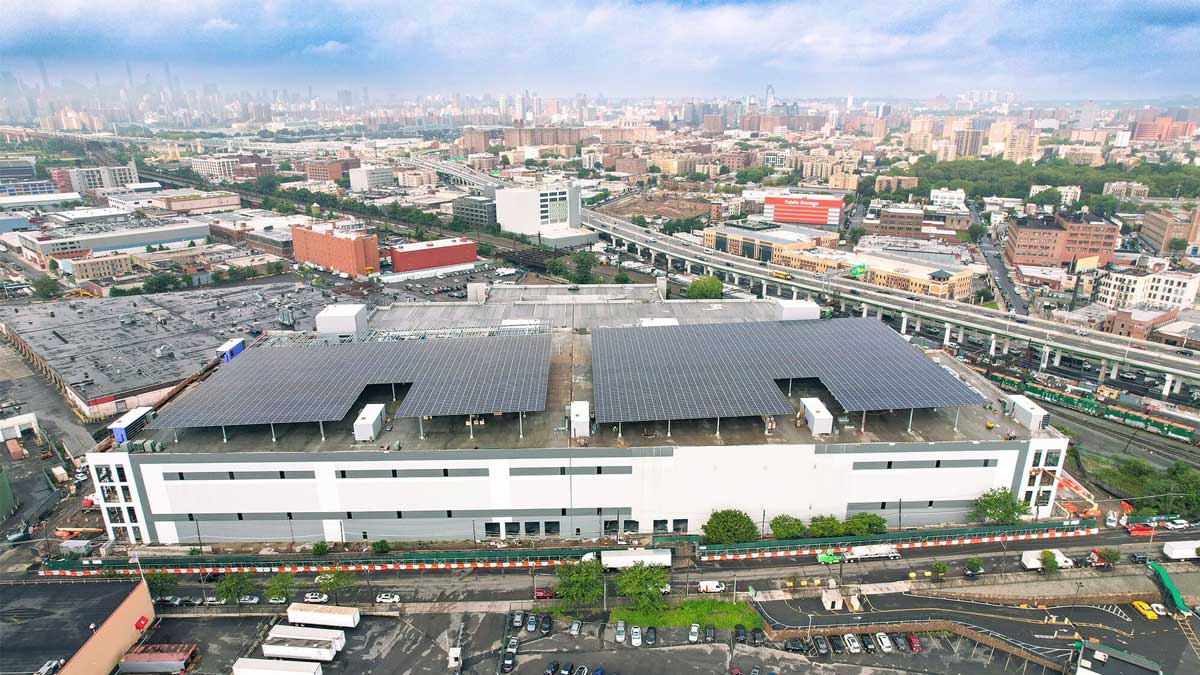
The abundance of parking garages across the U.S. presents an area of high-potential growth, especially as greenfield space for solar farms becomes increasingly scarce and increasingly contested due to land competition. Garage structures in dense urban or commercial settings offer valuable real estate for PV arrays. Still, unlike ground-mounted structures, garage canopies must work within the structural limits and layout constraints of an existing building, and have unique needs compared to ground mount solar.
Common Design Complexities
Simplifying complexities begins with understanding common design challenges on garage structures. Misaligned columns , inconvenient shear wall placement , and joints in the shear wall may require shifting connections. Beyond the physical structure, there are intricate electrical infrastructures and water drainage systems to consider. All of these challenges have a solution: for example, heavier jack beams can maintain structural stability in the case of misalignment. It’s critical to identify these challenges and develop workaround strategies upfront, in the early design stage.
Developing a Framing Plan
In this design phase, a framing plan establishes the structural layout. A proper framing plan before engineering ever begins is imperative to a soundly built structure. The plan identifies column placement and parking stalls, keeps space for drive aisles, and examines each structural wall. Only then can a team determine where canopy columns can safely connect to the garage.
From there, the framing plan allows project teams to estimate steel requirements, develop canopy layouts, and evaluate the loads that will be transferred to the structure. With this information, the team can generate early cost estimates.
Understanding Reaction Loads and Structural Forces
With a framing plan in place, the next step is ensuring the parking structure can support the canopy long-term. Reaction loads are key to determining the forces transferred from the canopy to the existing garage structure, and the resulting longevity of the project. Loads must be approved by third-party structural engineers before work can continue.
Structural forces also add complexities to canopy design. Shear forces – the lateral force created by the canopy’s dead weight – cause potential side-to-side movement. Moment forces are the rotational forces acting on the column connection, and can cause structural twisting and severe damage if not clearly identified and addressed. How these forces interact with the parking structure directly influences the type of column connection that can be used.
Choosing the Right Connection and Bracing Type
Once reaction loads and structural forces are accounted for, connections and bracing considerations ensure additional stability. There are two primary approaches to connecting canopy columns to a garage structure: pinned connections or fixed connections.
Pinned connections are common when adding a canopy to an existing garage structure. They also typically require additional lateral support, like bracing.. Fixed connections can lower costs because of steel and material reductions, but can entail more involved engineering. Clear and early coordination between garage engineers and solar canopy engineers is vital.
To brace a structure, cross bracing is the most straightforward option, but it’s not always feasible. For example, garages with aisles in the path of cross braces or asymmetrical designs may need portal frames instead of cross bracing. These frames add vertical steel members and a horizontal beam to create a rigid frame, allowing for clear traffic flow while enhancing lateral stability.
Questions on an upcoming build or project kickoff? Reach out to a canopy expert at Terrasmart to talk through the feasibility of installing canopy solar on a potential site.
Balancing Layout and Design Considerations
When adding to the built environment, solar design isn’t net new. Solar canopy design needs to balance existing structural constraints with future energy production and blended aesthetics. To balance all of these elements, project teams weigh a variety of design configurations. No two garages are alike, which means these considerations are custom for each project.
Design options include:
- Tee designs are cost-effective and work well with mixed aisle and perimeter parking rows.
- Longspan designs can maximize coverage and energy production, making them one of the most common canopy design choices for parking structures.
- Monoslope designs optimize solar production by installing panels at a consistent tilt, however overall canopy height may be a concern.
- Louvered designs, on the other hand, maintain canopy height but require careful shading considerations.
- Alternating slope designs offer flexibility in layout and can help minimize shading when oriented correctly.
Energy output is not the only performance factor in layout and design. Water management systems, decking options, snow guards, and fascia trim can all help improve performance and usability. Likewise, matching existing design and visual aesthetics is not just a vanity consideration, it can be a significant concern for business entities with branded garages or parking connected to headquarters locations, for example.
Managing Installation Challenges Unique to Garage Canopies
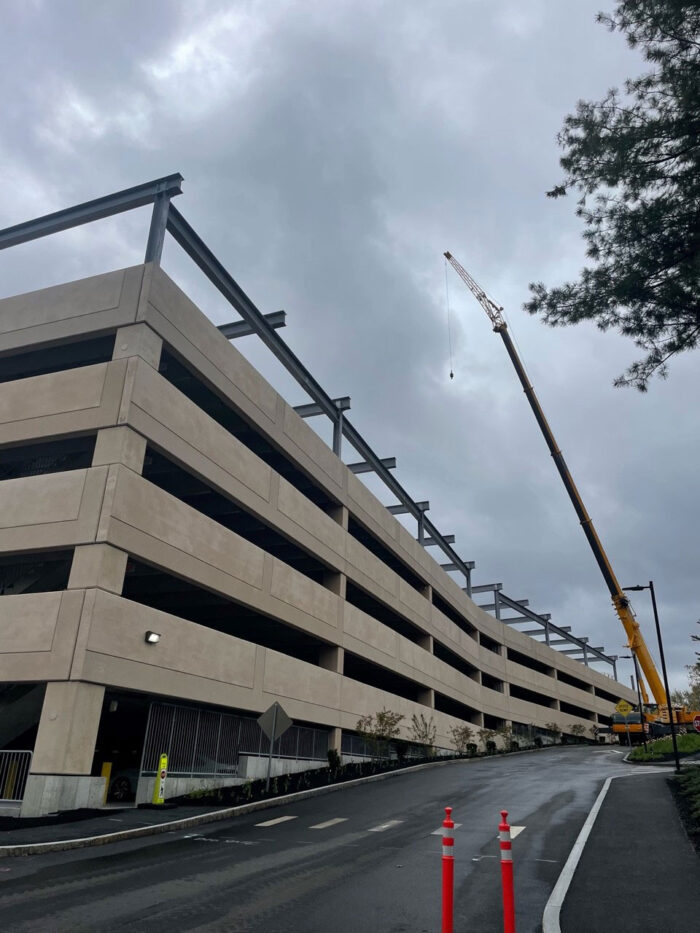
New construction in areas that are already densely built introduces new logistical challenges. From finding a space for a laydown yard to ensuring trucks can get through city streets, urban canopies need experienced planners to navigate the unique logistics.
Besides the urban density, the build height adds new complexities. Steel beams need to be transported to rooftop height, cranes are typically required, and the limited staging space can constrict workflows and complicate logistics.
To solve for space and height factors, install teams can manage assembly on the garage roof or handle pre-assembly on the ground. Like layout and design considerations, there is no cookie-cutter answer to the best approach. The right option will depend on the level of site access, the degree of urban density, and the structural capacity of the garage.
Early Engineering and Expert Partners Leads to Better Outcomes
Solar canopies on parking garages offer significant energy potential in space-constrained environments, maximizing land use while generating clean power. However, these projects require careful coordination between solar designers and structural engineers.
By addressing framing plans, analyzing loads, and understanding connection design and installation logistics early in the process, developers can avoid installation setbacks, costly redesigns and ensure long-term canopy stability. By balancing layout and design factors and mitigating challenges specific to commercial garage solar, developers can optimize construction schedules and overall project success.
As commercial solar opportunities expand, thoughtful engineering will play a critical role in making garage canopy projects both structurally sound and economically viable. An experienced team that offers end-to-end canopy solutions can reduce complexity from pre-design through COD, ensuring a smooth build, a highly-productive site, and a structure that lasts for the long haul.
Reach out to a canopy expert at Terrasmart or download the new garage canopy ebook to tap into the potential of garage canopy solar.
Author: Patrick Lynch, Canopy Project Architect
Sponsored by: