
From Air Sealing to Energy Apps: A Side-by-Side Look at Home Energy Evolution
I still have a soft spot for blower door tests and a caulk gun. Monitoring energy data from a smartphone app may be more modern, but it’s not nearly as satisfying.
My career started in the late 1990s walking construction sites with a hygrometer, flashlight and caulk gun, tracking moisture issues and air leaks before they became expensive problems. The philosophy was simple: measure it, document it, fix it and verify it.
That mindset followed me into residential energy efficiency work in the early 2000s. Back then, blower door tests revealed what many homeowners didn’t realize: even well-built homes leaked air. Attics, rim joists, recessed lights and duct systems all contributed to unnecessary energy loss. Air sealing, insulation upgrades, duct sealing and properly sized HVAC systems consistently delivered some of the best returns on investment.
For homeowners committed to maximizing efficiency, solar often came next.
That sequence mattered. Reducing energy consumption before installing solar allowed systems to be sized more appropriately and improved overall economics. I designed and installed many of those early residential PV systems using string inverters and straightforward grid-tied configurations. They performed well and helped establish the foundation of today’s residential solar market.
Fifteen years later, many of those systems are still producing energy. The challenge is that the inverters supporting them are now reaching the end of their useful lives. Warranties have expired, original monitoring platforms have disappeared and replacement parts can be difficult to source. Meanwhile, the modules themselves often remain in good condition and capable of producing power for years to come.
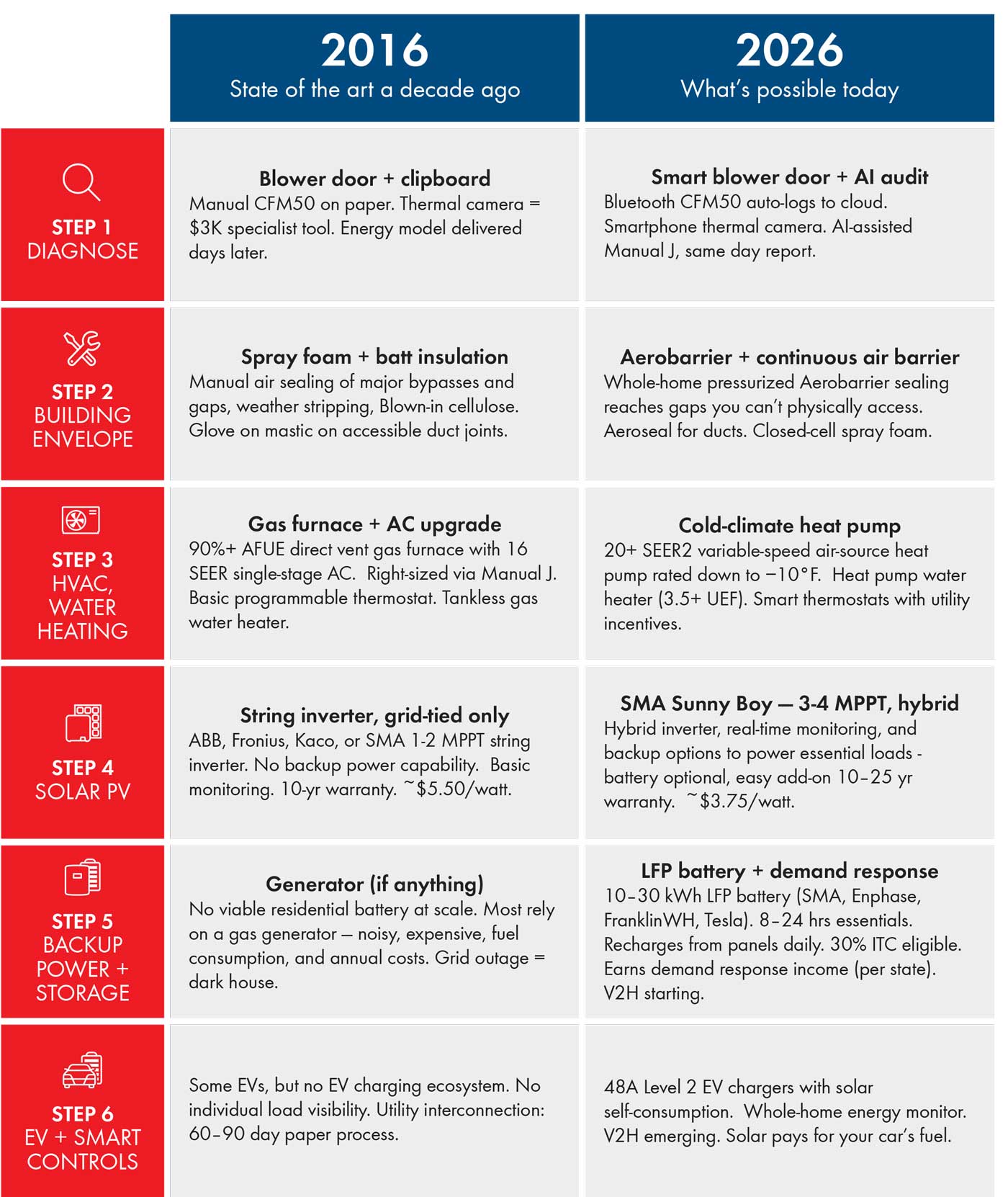
Most homeowners also forget an important limitation of those early systems: they offered no backup power capability. When the grid went down, the solar system shut down as well.
Today’s inverter technology changes that equation.
A modern inverter replacement can restore reliability, improve monitoring and introduce backup power capabilities that were not available when many systems were originally installed. With the SMA Sunny Boy Smart Energy, homeowners can access backup power for essential loads directly from solar during daytime outages, even without a battery. Refrigeration, communications equipment and other critical circuits can remain operational when the grid is unavailable. Battery storage can be added later for additional resilience.
This evolution reflects a broader trend across the industry. The fundamentals have not changed. We are still evaluating system performance, identifying inefficiencies and improving outcomes for homeowners. The difference is that today’s tools provide capabilities that were difficult to imagine when many of these systems were first installed.
As residential solar systems age, inverter repowering represents an opportunity to extend asset life, improve performance and deliver new functionality. For many homeowners, a simple inverter replacement can unlock benefits that did not exist when their system was originally commissioned.
By Rob Lamendola, Technical Business Manager, SMA America
Sponsored by:



Comments are closed here.