The largest solar farm in U.S. history moves forward | Projects Weekly

This week on Projects Weekly, the path is just about clear for the largest solar and storage project in the U.S., with Westlands Water certifying the Valley Clean Infrastructure Plan’s environmental review. Just east of the Golden State, SOLON Corporation and Onyx Renewables have completed four new projects in Mesa, Arizona, bringing their total to 3.7 MW in the Mesa community. Recurrent Energy has sold its 200 MWh BESS project to Texas-based Hunt Energy Network, and near the East Coast, MN8 Energy has inked a deal to support Meta’s American data center operations with its solar project in Pennsylvania. Solar companies around the country, including PowerBank, Arevon, and OCI Energy all locked down project financing this week. Empact and Sabanci Renewables have partnered for long-term tax credit compliance, and to bring it back to California, Willdan Group and Mt. San Antonio College have partnered to transform the university’s campus with solar power additions and infrastructure improvements. Keep on reading for all the details!
Westlands Water District Board of Directors certifies Valley Clean Infrastructure Plan
The Westlands Water District Board of Directors has certified the environmental review of the Valley Clean Infrastructure Plan (VCIP), the future largest solar farm in the U.S.
Set to bring more than 20 GW of solar energy and another 20 GW of energy storage to the state of California, the VCIP could fundamentally change the Golden State’s grid forever, officials say. At full build-out, the project could supply one sixth of the state’s power requirements by 2035, and one tenth of those requirements by 2050.
“The project includes a 500 kV transmission system that will carry the clean energy onto the existing California grid,” officials from Golden State Clean Energy (GSCE) say. “There will be approximately 50 project companies within VCIP, ranging from 100 MW to 1,000+ MW, that will be auctioned off to renewable energy developers. VCIP supports affordability by saving ratepayers about $9 billion by 2050.”
Bright spot: In addition to meeting the ever-climbing energy needs of Californians, the project will utilize up to 136,000 acres of “water constrained agricultural land,” according to GSCE representatives. The projects will optimize water usage, as well as helping to reduce dust pollution and improve air quality across the state.
Energization of the VCIP’s projects is expected to take place by 2029, with all projects online by the end of that year.
“The Valley Clean Infrastructure Plan is the most important thing to happen to the Westside of the San Joaquin Valley since the building of the Aqueduct,” says Jeff Fortune of Fortune Farms, and the president of the Westlands Water District.
SOLON, Onyx Renewables expand to 3.7 MW of solar in Mesa
Solar provider SOLON Corporation and Onyx Renewables have announced the completion of four new solar projects for the City of Mesa, Arizona, bringing the companies’ total presence in the city up to 3.7 MW.
Completing construction on the projects in December 2025, SOLON delivered full EPC services for the projects while Onyx financed the projects and “will serve as the long-term owner and operator,” the firms say.
Bright spot: The four new projects mark a milestone for not only the partnership between SOLON and Onyx, but the city of Mesa itself. The two previously partnered on four municipal solar projects in 2022, which totaled 806 kWdc for the City of Mesa. The new projects at 2.9 MW of power, which the companies say will “significantly expand” the city’s local energy portfolio and enhance Arizona’s grid reliability.
The four new projects boast direct utility interconnection, which should help provide stable energy costs, as well as lowering greenhouse gas emissions across the city, and giving city-owned infrastructure more control over energy sources.
“Direct interconnection to the City of Mesa Electric Utility allows these solar projects to deliver immediate and long-term value to the community,” says Brian Seibel, president of SOLON Corporation. “With a combined 3.7 MW now in operation, Mesa is strengthening its energy resilience, reducing emissions, and keeping energy dollars local.”
The projects are expected to produce about 130 million kWh of renewable energy over the course of the next 25 years, about equal to removing 4,739 gas passenger vehicles from the road for an entire year.
“Onyx is proud to partner with SOLON to provide more affordable, predictable energy to the City of Mesa through the development of these localized energy solutions,” said Patty Rollin, chief commercial officer at Onyx Renewables. “These systems were customized to meet the City of Mesa’s unique goals and will help them reduce energy expenses while strengthening the reliability and resilience of their local grid.”
Recurrent Energy sells 200 MWh BESS facility to Hunt Energy Network
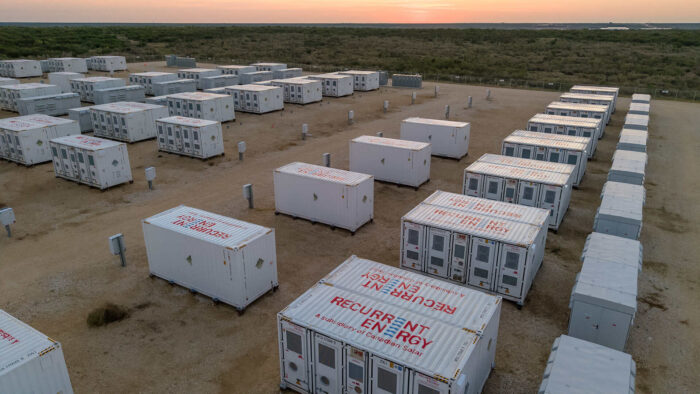
Canadian Solar Inc. subsidiary Recurrent Energy has completed its sale of the 200-MWh Fort Duncan Battery Storage facility to Dallas-based Hunt Energy Network.
Based in Maverick County, Texas, near the Mexican border, the facility first came online for commercial operation in June 2025. Canadian Solar Inc. previously announced the securing of $183 million in project financing and tax equity for the facility in March of last year.
Ismael Guerrero, CEO of Recurrent Energy, says the company is pleased to complete the sale, which supports his firm’s strategy to “selectively monetize projects” to advance corporate growth.
“The project has demonstrated exceptional performance and has become a reliable and responsive asset for the Texas grid,” he says. “This transaction is an important milestone in our strategic initiative to selectively monetize projects to support our continued growth.”
The project operates on a merchant basis, the companies say, and “has established itself as a top-performing standalone battery energy storage system in the ERCOT South load zone.” The strong track record of performance is also back by BESS systems supplied by Canadian Solar’s e-STORAGE division.
Bright spot: During construction of the BESS center, officials from Canadian Solar Inc. estimated that the electricity stored and delivered during a two-hour cycle at the facility would be equivalent to serving up to 66,100 households across Texas. With the purchase of the Fort Duncan BESS project, Hunt Energy Network now operates about 420 MW of BESS facilities.
MN8 Energy Supports Meta’s U.S. Data Center Operations with 80 MW Solar Project in Pennsylvania
Mark Zuckerberg-led tech giant Meta has inked a deal with MN8 Energy to purchase 100% of the offtake generated by MN8’s new Walker Solar Project site in Juniata County, Pennsylvania.
Scheduled to begin operations by the end of 2026, the 80-MW solar project will join more than 4 GW of operational and under-construction solar projects in the MN8 portfolio. The transaction with Meta represents the first contractual agreement between the two companies, with Meta supporting MN8’s efforts to add incremental generation to the energy grid.
“As demand for data centers and artificial intelligence accelerates, access to reliable, domestic energy has never been more critical,” says Moe Hanifi, SVP of MN8 Energy. “We’re proud to partner with Meta on a long-term basis and to build the domestic energy infrastructure needed to power the next generation of digital innovation.”
Bright spot: In addition to adding renewable energy to the grid, the project will supply local construction and operations jobs, as well as tax revenue. MN8 officials expect the project to also strengthen the central Pennsylvanian energy grid, as the project also supplies domestically-produced renewable power to the PJM Interconnection.
PowerBank wins approval for $309,720 for Elmira Solar Project
Distributed solar power and infrastructure firm PowerBank Corporation has secured up to $309,720 from the New York State Energy Research and Development Authority’s (NYSERDA) NY-Sun program, for its 2.6-MW Elmira Solar Project in Elmira, New York.
In addition to the initial funding, PowerBank will now enroll the project in the NY-Sun program’s Inclusive Community Solar Adder (ICSA) stream, which could provide up to $545,107 in additional funding. Expected to power about 325 homes annually, the site will be operated as a community solar project, the company says.
“The Project advances New York’s path to 10 GW of solar by 2030,” company representatives say. “The State leads the United States in community solar capacity, having achieved the New York State Climate Act 6 GW solar goal in the fall of 2024.”
Bright spot: PowerBank boasts “proven expertise” in the realm of solar and community distributed energy projects, with over 100 MW of completed projects and a pipeline of more than 1 GW as of February 2026. The Elmira project will allow New Yorkers to see reduced costs per kWh from the power company, helping the Empire State’s straining grid.
Arevon secures $183 million debt package for Big Muddy Solar Project
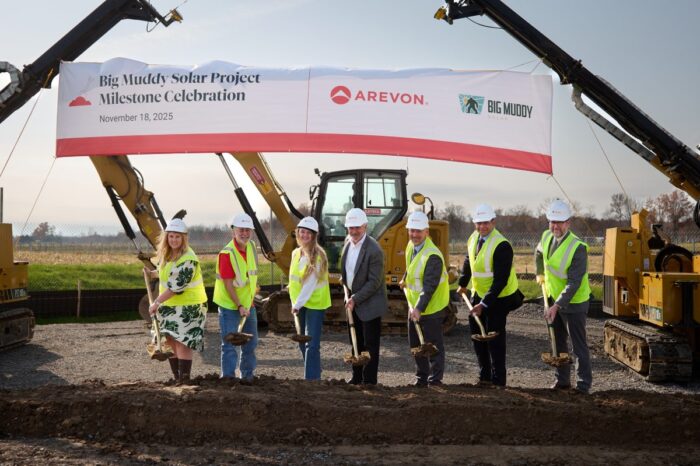
Energy developer, owner, and operator Arevon has secured a total debt package of $183 million for its 124-MW Big Muddy Solar Project in Jackson County, Illinois, as of Feb. 25.
The package includes a tax equity bridge loan, a construction-to-term loan, and a letter of credit, officials say.
When construction began in 2025, the Big Muddy Solar Project marked Arevon’s first foray into the world of utility-scale solar. The company has a cumulative total of $5.1 billion in project financings executed over the course of the last two years, and will retain long-term owner and operator rights to the project once it comes online.
“This successful close is yet another example of Arevon’s commitment to work in lock step with our partners,” says Denise Tait, chief investment officer at Arevon, “delivering long-term value for our financial counterparties as well as lasting benefits to communities.”
Bright spot: The project is expected to give a major boost to the economy in Illinois, employing an estimated 250 personnel during peak construction. Additionally, the project will disburse more than $12.6 million in property tax payments over the course of its lifetime, supporting Jackson County’s roads, schools, and infrastructure.
Arevon officials say that once operational, Big Muddy will generate enough renewable energy to power more than 24,000 homes across the Land of Lincoln. The land beneath and around the solar panels themselves will also be turned into a habitat for pollinators, representatives say.
OCI Energy, Arava Power close construction financing for 347 MWdc project
OCI Energy LLC, Arava Power, and ING Capital LLC have announced the successful close of construction financing for Houston-based Project SunRoper, a 347-MWdc solar project.
The new project is the second transaction for OCI and ING, who had previously worked together on the Alamo City Battery Energy Storage System project. OCI Energy President Sabah Bayatli says the closing of construction funds “represents an important milestone” for both OCI and its corporate partners.
The transaction will allow the company to continue its commitment toward utility-scale solar projects to help strengthen the American energy grid and its infrastructure, he adds.
Bright spot: Total investment in the project, which is supported by a 20-year power purchase agreement (PPA) is expected to be about $394 million. The project is expected to come online for commercial operations in Q3 2027, and will support grid reliability and affordability, as well as greenhouse gas emissions reduction.
“Arava Power is entering a pivotal phase of growth, and the U.S. market is a central pillar of our long‑term strategy,” says Ilan Zidkony, CEO of Arava Power. “Project SunRoper highlights the strength of our collaboration with OCI Energy. Our teams have operated with exceptional alignment and a shared commitment to excellence – securing the strongest commercial package, finalizing financing, and completing a long‑term busbar PPA with a major U.S. energy company to advance the project toward construction.
“SunRoper is a strategic milestone that supports our vision of building more than 1 GW of solar capacity in the United States within the next two years.”
Mt. San Antonio College taps Willdan for $49 million distributed energy project
Energy transition company Willdan Group has announced that it was selected by California-based Mt. San Antonio College to implement a $49 million energy services contract.
The contract includes turnkey delivery of distributed energy resources, as well as energy infrastructure improvements like solar systems, a BESS system, EV charging ports, and what the school calls “comprehensive parking lot redesign.”
Bright spot: Once finished, the project will advance the university’s sustainability mission, serving about 77,000 students annually. As a “qualified energy service company” in the state of California, Willdan Group has been working to implement distributed energy resources like solar systems at community colleges and other public sector facilities throughout the Golden State.
“Sustainability is central to our mission and vision, guiding our students and staff while ensuring our campus can serve the community reliably for years to come,” says Dr. Robert Hidalgo, Mt. San Antonio College’s president of the Board of Trustees. “This project reflects those values by reducing energy use, adding resiliency through local energy generation and storage, and providing the flexibility to support a future microgrid and campus electrification.”
The project is expected to complete construction by the third quarter of 2027. No date was given for the project’s start of construction.
Empact Technologies, Sabanci Renewables form long-term tax credit compliance partnership
Tax credit incentive compliance management software provider Empact Technologies has announced a new long-term agreement with Sabanci Renewables, an American subsidiary of Turkish industrial conglomerate Sabanci Holding.
Bright spot: Under the new agreement, Empact will manage compliance with the prevailing wage and apprenticeship (PWA) requirements of the Inflation Reduction Act (IRA) and One Big Beautiful Bill (OBBB) Act for Sabanci Renewables, officials say. The companies will start with two solar American solar projects: Pepper Solar, a 156-MW site in Illinois, and Lucky 7, a 130-MW project in Texas.
“As we expand our presence in the U.S. renewable energy sector, prioritizing compliance and governance across our projects is essential,” says Tolga Kaan Doğancıoğlu, CEO of Sabanci Climate Technologies. “Our partnership with Empact Technologies will allow us to manage the IRA requirements effectively and reliably. By scaling our portfolio through strong partnerships and a disciplined risk management approach, we continue to generate predictable and sustainable value for our investors.”
Charles Dauber, founder and CEO of Empact, says his firm is proud to partner with Sabanci to handle these two solar projects and their growing solar portfolio at large. The company plans to work with Signal Energy, Sabanci’s EPC firm, to ensure that PWA requirements are met, documented, and certified to Sabanci and its stakeholders.
“Navigating compliance requirements takes precision — and the right partner can make all the difference in protecting tax credit value and accelerating capital deployment,” Dauber says. “We look forward to de-risking their projects as they scale.”