
House passes SPEED Act permitting reform bill that could inhibit solar projects
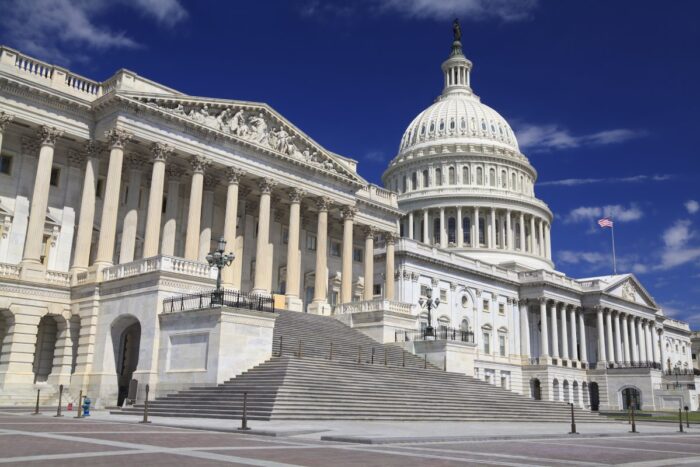
Congress is considering a permitting reform bill that could create more challenges for solar project development. The U.S. House of Representatives passed the Standardizing Permitting and Expediting Economic Development (SPEED) Act by a vote of 221-196 on Dec. 18. The bill now moves to the Senate for approval.
The SPEED Act was originally introduced on July 25, by U.S. House of Representatives Natural Resources Committee Chairman Bruce Westerman (R-AR) and Rep. Jared Golden (D-ME) as a bipartisan effort to help expedite large-scale infrastructure projects. The permitting reform bill proposed significant changes to the National Environmental Policy Act (NEPA), a federal law enacted in 1970 that mandates the review of potential environmental impacts before certain federal actions, including certain actions on infrastructure projects, can proceed.
Solar advocates rebuke amendments
Some renewable energy advocates supported the bill early on. However, the House amended the proposed law to inhibit solar and wind projects while favoring projects that advance fossil fuels and nuclear power. The Bipartisan Policy Center provides a recap of the SPEED Act here.
The American Clean Power Association (ACP) issued a statement withdrawing support from the SPEED Act as currently amended, with association CEO Jason Grumet calling out the House Rules Committee’s actions that “fundamentally changed legislation that represented genuine bipartisan progress on permitting reform.”
“Our support for permitting reform has always rested on one principle: fixing a broken system for all energy resources,” Grumet said. “The amendment adopted last night violate that principle. Technology neutrality wasn’t just good policy, it was the political foundation that made reform achievable.”
Grumet praised the original form of the bill.
“Chairman Westerman’s original legislation demonstrated that Congress could move beyond stale energy debates,” he said. “It’s disappointing that a partisan amendment in Rules Committee has now jeopardized that progress, turning what should have been a win for American energy into another missed opportunity.”
Grumet added that true bipartisan permitting reform is still needed in the United States.
“The underlying problem remains urgent,” he said. “Without permitting reform, energy prices will spike and grid reliability will deteriorate. American families and businesses need Congress to act. We look forward to working with Senate leaders to restore the balanced, technology-neutral approach that can actually become law.”
Solar Energy Industries Association (SEIA) president and CEO Abigail Ross Hopper also criticized the House passage of the bill.
“The SPEED Act falls short of ensuring a fair and predictable permitting process that enables developers to invest, build, and compete,” Ross Hopper said. “For months, SEIA and our member companies have worked relentlessly to advance permitting reform in Congress to help lower energy costs and build the infrastructure needed to win the AI race and beat China. But without action to address this unequal treatment of solar, energy projects across the country will continue to stall.”
Ross Hopper added that the SEIA values bipartisan engagement on permitting reform and would continue to advocate for a deal in the U.S. Senate that addresses the slowdown of permitting solar projects. She highlighted permitting reform that “prioritizes certainty and fairness” to deliver affordable energy to the U.S. residents.
Original bill protected renewable projects
The version of the SPEED Act included a provision that would make it harder for presidents to cancel permits for any energy project. The language was added to address concerns from Democrats that President Donald Trump would attack wind and solar projects, but the provision protected all energy projects form having permitting approvals arbitrarily revoked depending on the party in power.



Comments are closed here.