Intersolar 2026 | Fractured times call for collaborative measures
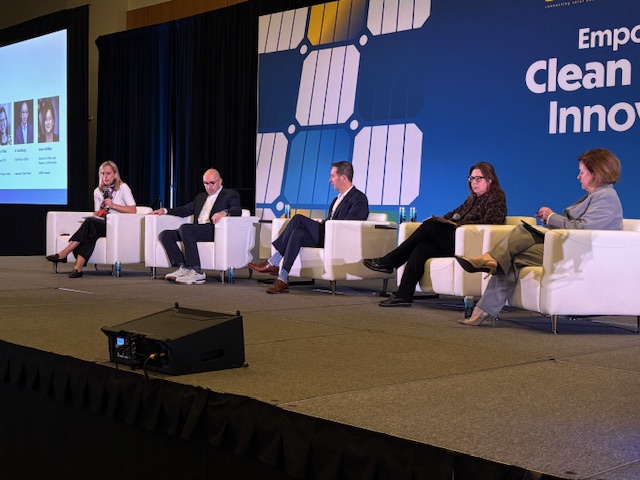
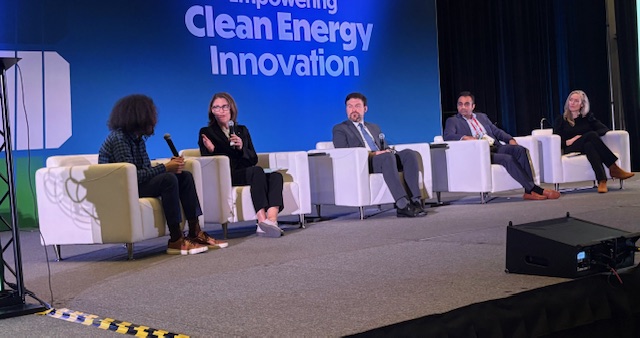
Amy Harder, national energy correspondent for Axios and the host of the Thursday, Feb. 19, morning keynote panel at Intersolar & Energy Storage North America 2026, opened that day’s discussion with an extremely blunt — and widely true — statement.
“We are living in fractured times to say the least, on pretty much everything on this planet, including clean energy.”
Since President Trump’s retaking of the Oval Office in November 2024, the solar industry has stood on somewhat shaky ground. Federal policy changes like the One Big Beautiful Bill Act (OBBBA) have gutted Biden-era renewable energy policies in favor of the once and current president’s more fossil-forward agenda. The balance of electrical power has been flipped on its head.
As for where we go from here, the consistent theme has been collective action, even if that means breaking things up across state lines to push projects over the finish line.
States take matters into their own hands
The keynote panel on the first day of Intersolar 2026 sent a strong message: despite federal policy change, there are still renewable energy being built in this country.
Hosted by Sammy Roth, a former Los Angeles Times climate reporter and the current writer of Climate-Colored Goggles, the panel featured four top officials from state-level policymaking associations and their latest methods of get ahead in a post-ITC world.
“In California, everyone is just happy if you can keep costs from going up just a little bit less,” Roth says. “Affordability is the big problem right now that we’re all grappling with, but I think that’s not going to be the case forever. … You’re obviously going to want and need to continue to grow this space after that is the thing that’s going to get governors elected, presidents elected.”
JC Sandberg, chief policy officer at the American Clean Power Association, says that even as state-level policies kick in to offset federal changes, there could be some tension in the solar world.
“We were brought to the dance by the environmental movement many years ago, but since we were brought to that dance, we have grown into a very large domestic economic engine,” he says. “I think there have been some growing pains there. … One side of the political dynamic wants to hear about all the environmental benefits. The other side is more persuaded by the business benefits, but doesn’t want to hear about the environmental benefits.
“How we manage that tension going forward, at a federal, state and local level, I think will be key.”
At the Massachusetts Executive Office of Energy and Environmental Affairs, undersecretary of energy Michael Judge offers one way of managing things across state grids in distributed energy resources.
“Massachusetts actually has the second highest penetration of distributed solar of any state in the country, after Hawaii,” Judge says. “It’s because we don’t really have much utility-scale opportunities.”
That lack of truly massive, utility-scale projects is “breaking the grid” for the Bay State, Judge says. That comes with its own set of opportunities and challenges for the state, he adds.
“We’re not connecting solar projects and transmission, generally,” he continues. “Pretty much everything we’ve built is on the distribution system, and we’ve been really successful in driving rooftop adoption, but there’s more that we need to do. When you look at our long-term policy objectives, and our 2050 vision, … We called for 27 GW of solar, just for Massachusetts. We’re at 4.5, 5 (GW) right now. It’s a huge part of what we’re trying to do.”
Another point of tension the solar industry will have to manage, panelists say, is the health of the American energy grid itself as demand continues to rise.
Managing a straining grid
Affordability took center stage on day two of Intersolar, dominating much of the conversation throughout the Thursday keynote.
“We operate from a neutral position: who owns it doesn’t matter,” says Arnab Pal, executive director of Deploy Action. “Every one of these utilities is a monopoly regulated by a PUC, which is generally appointed by a governor or elected, and I think ultimately we need to think about their business model. And for them, it’s bringing down costs.
“We should work with the utilities, but I think everyone’s number one north star should be bringing down these costs.”
However, the topic of affordability itself, even as rising energy bills under a straining grid become a top issue, is a bit of a strange beast. The terms of the argument around affordability are difficult to define, says Doreen Harris, president and CEO of the New York State Energy Research and Development Authority (NYSERDA).
Still, the topic of grid strain and utility affordability has become a top issue among both consumers and utilities since the data center boom of the past few years.
“The affordability problem for this industry is a bit of a marketing problem,” Pal says. “If you look at the generation rates (in California), they’ve largely remained flat, or in line with inflation. All of the affordability issue is in electrical delivery, in transmission and distribution.
“The problem that I think the industry faces is that in the states where solar and storage are most successful, and there’s affordability problems, I think the general public could draw the conclusion — especially if aided by the federal government apparatus — that, oh, this state is expensive because they like solar. The truth is just the very opposite of that.”
Part of what needs to happen, Pal says, is “an industry-wide coordinated marketing campaign” in favor of solar. In the face of federal policies shifting seemingly by the week, and the Trump administration near-constantly criticizing renewable energy, the industry needs to adjust not only the way it practices, but the way it presents itself.
In short, we must adjust
Despite all the federal policy change, solar had a relatively solid 2025 if you look at it by the numbers. Recent numbers from the Federal Energy Regulatory Commission (FERC) show that solar power accounted for 72% of new American energy capacity additions in November 2025, heavily leading the pack in that regard.
There is, however, a federal government-sized elephant in the room.
“The elephant in the room that we kind of alluded to at the beginning is that the Trump administration is doing everything in its power to just block not only off-shore wind, but every large scale on-shore wind project,” Roth says. “Not just on federal lands, but using all of its permitting authorities to try to stop, or at the very least slow down, everything happening on private land as well.”
Sandberg echoed Roth’s sentiment during the day two keynote panel, making a point to say that wind power was slowing down immensely among new renewable additions, likely thanks in part to President Trump’s general distaste for wind farms. The solar industry has to be able to adjust and stay flexible if it wants to avoid a similar fate.
“I think there is a tiny bit of progress in the solar space, and there is progress on the storage side,” Sandberg says. “Where there is absolutely no progress is wind, and we could spend a day talking about why that is, whether it’s a golf course or whether it’s (something else). In the first Trump administration, we deployed a lot of wind, more than we did in the Biden administration. This time around, not so much, and you’re seeing that as a real impediment to the deployment of green energy.”
So, what does actively avoiding that fate look like on a practical level? For Heather O’Neill, president and CEO of Advanced Energy United, the answer is simply: follow prior industry blueprints to create collaborative strategies.
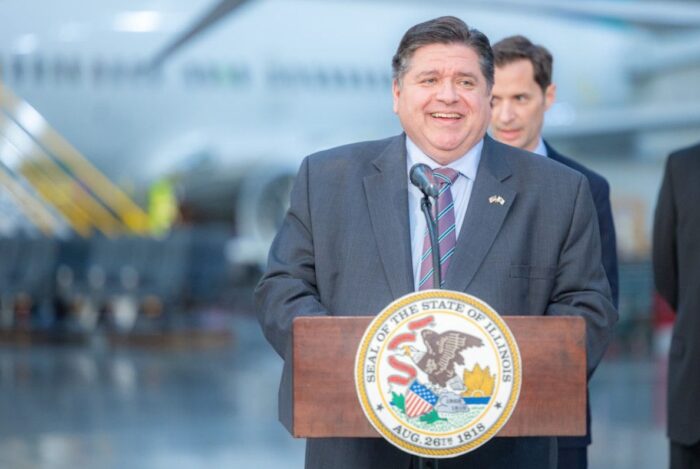
“We saw affordability concerns really show up (in Illinois in 2025),” she says. “They’re not being able to build what they need to build, you’ve got rising demand, they’re part of PJM to some extent. You’ve got all kinds of affordability pressures coming together, so the industry actually worked together. United worked with SEIA, with ACP, with ACP’s regional affiliate, and environmental and labor stakeholders to pass the Clean and Reliable Grid Affordability Act.”
As the U.S. comes down from being the political “envy of the world” in the solar space according to Harris, the resounding message of Intersolar 2026 was that, yes, renewable energy implementation is much harder right now than it needs to be. Still, companies, utilities, consumers, and policymakers need to band together and help steer the industry toward something resembling a collective whole.
“Even a state like New York just can’t do this alone,” Harris says. “That was the beauty of the Inflation Reduction Act and the Bipartisan Infrastructure law, is that it created this momentum really nationwide and beyond that. … I think it is the case that this has also introduced market uncertainty in a way that is quite challenging.”