Debunking 5 myths about rail-less solar PV mounting on metal roofs
By Mark Gies | Rail-less solar PV continues to gain traction as the solar industry prioritizes cost, speed, logistics and performance. Yet, misconceptions persist that can make installers and project owners hesitant to adopt this more efficient method, especially when compared to traditional rail-based mounting. These misconceptions often stem from outdated assumptions, a lack of familiarity or resistance to change.
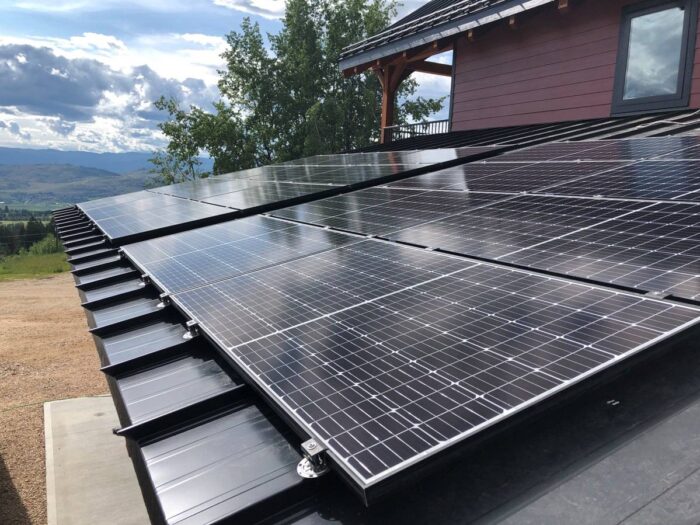
But here’s the truth: Metal roofs are the ideal substrate for rail-less solar mounting. Unlike most other roof types, rail-less systems capitalize on the very features of metal roofs — using the structural ribs or standing seams as inherent mounting rails. This eliminates the need for bulky rails, reducing materials and allowing for more direct, secure attachment. With non-penetrating attachment options, the roof’s integrity remains intact and supports uniform load distribution without compromising manufacturer warranties.
Compared to tile or asphalt shingle roofs, where mounting often requires roof penetration, flashing and tricky detailing, metal, in particular standing seam metal, offers fewer components, zero penetration and long-term performance. The long service life of metal — up to 70 years — also outlasts PV systems, avoiding costly disassembly and re-roofing mid-life of the solar.
Let’s take a closer look at five of the most common misconceptions — and debunk them with experience, data and smart design principles.
Myth #1: Rail-less mounting is more expensive
Truth: Rail-less mounting is often significantly cheaper — in both material and labor. Material savings stem from eliminating long rail extrusions and reducing component counts. In many cases, 85% less aluminum and fewer than a third of the parts are needed compared to traditional rail-based systems.
Logistical costs also drop dramatically. Shipping rails is expensive and cumbersome, especially for large projects where truckloads of rail are required. By contrast, rail-less hardware can be transported in far smaller, lighter shipments — sometimes on a single pallet or in the trunk of a car. This translates into savings in freight, lifting equipment and jobsite coordination.
Myth #2: Rail-less mounting takes longer to install
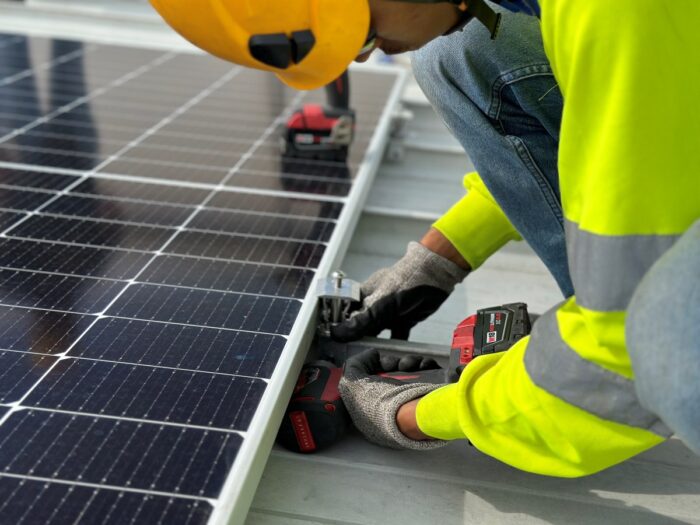
Truth: Rail-less mounting is actually faster than traditional rail-based installations. Contrary to the myth, labor savings are where rail-less mounting really shines. Installers report that with proper planning module-level installations can be completed in two minutes or less per module.
By eliminating the need to measure, cut, locate and align rails, and by reducing the number of components, rail-less systems minimize time on-site, especially costly time on the roof.
Installation efficiency is maximized when module preparation — including pre-attached electronics and organized leads — is done in advance on the ground or at a staging area. Combined with well-planned string layouts and clear wiring diagrams, this approach can dramatically reduce rooftop wiring time. On large commercial projects this method has saved crews 30% to 50% in the installation time.
Myth #3: Wire management is more difficult without rails
Truth: Wire management is not more difficult — just different. In fact, many installers report that it can be easier and more efficient with proper planning. With rail-based systems, installers often zip-tie wires to the rails, which can encourage inefficient, messy and inconsistent setups.
Rail-less systems emphasize thoughtful layout and preparation, leading to faster, cleaner installations. With pre-staging, module preparation, pre-attached module-level electronics and strategic string design, wiring becomes straightforward — and organized. When planned correctly, modules can be installed on the roof in a plug-and-play fashion, often requiring less handling and less time on the roof.
Myth #4: Metal roofs aren’t structural
Truth: Metal roofs are structural and can handle significant loads when properly installed. Whether it’s standing seam, corrugated or trapezoidal panels, all have built-in strength when attached to a roof frame. In fact, OSHA requires roofs to support at least a 200-lb point load — and metal roofs easily meet this requirement.
When weight is applied — such as snow, wind or foot traffic — the panel may flex slightly, but its metal construction resists damage due to its high tensile strength. The exact strength depends on factors like the material, thickness and design of the panel, including rib height and spacing, which add stiffness and reduce sag.
This structural capacity is especially important when adding solar panels. With rail-less solar systems, loads from wind or snow pass through the panels and into the metal roof itself, then into the roof and building structure. Every connection — clips, fasteners and mounting points — must be designed to handle these forces. When done right, metal roofs not only support these systems, but they’re also one of the best options for them.
Myth #5: Rails help installers move around the roof more safely
Truth: While rails might provide temporary handholds and footholds, they are not intended or rated for human support — and relying on them can actually result in unsafe habits.
With a thoughtful approach, installers working on rail-less systems often find it easier to move straight up and down steep-slope roofs using scaffolding or harness lines, rather than maneuvering around and over bulky rails. Using this approach, the solar modules are best installed one column at a time starting at the eaves and working up to the ridge. Then, the scaffolding can be moved over to install the next column, very easily and straightforward.
Additionally, scaffold access or controlled harness zones can be designed to work efficiently with rail-less layouts — often streamlining movement and reducing the risk of module damage from foot traffic.
Why metal roofs and rail-less systems are a perfect match
Metal roofing has been evolving for more than 3,000 years. But in the last 40 years, it has surged in popularity, thanks to improved manufacturing and lower costs. It’s now recognized for:
- Durability: Service life of up to 70 years, far outlasting the 32.5-year average PV system lifespan.
- Lightweight: 85% lighter on the roof compared to rails and 25% better load distribution.
- Sustainability: 98% recycled content and zero landfill waste.
- Eco-efficiency: 90% less energy used in producing rail-less components vs. rail-based.
- Lifetime ROI: Eliminates the need for roof replacement during the solar system’s life.
Unlike other roofing systems that require costly PV removal during re-roofing, metal eliminates that expense and headache. Once it’s installed, the roof and solar array function as a single, long-term integrated system, minimizing maintenance needs and maximizing ROI.
Main takeaway: A smarter, simpler way to mount solar
Rail-less solar mounting on metal roofs is a proven method that solves many of the challenges associated with traditional racking. In an industry that prizes efficiency, safety and durability, clinging to outdated myths only slows progress. It’s time to embrace a smarter, lighter and more efficient way to deploy rooftop PV. With thoughtful design and the right hardware, rail-less mounting isn’t just viable — it’s often the better choice.
Mark Gies is director of strategy and market development at S-5! He has experience ranging from product development, operations, installation, compliance, codes and standards to sales and business development. Gies also is the vice-chair of SEIA’s Mounting System Manufacturers Committee, a member of SEAOC’s PV Committee and a founding member of UL 2703’s Standard Technical Panel.