What to know about the 2026 National Electrical Code
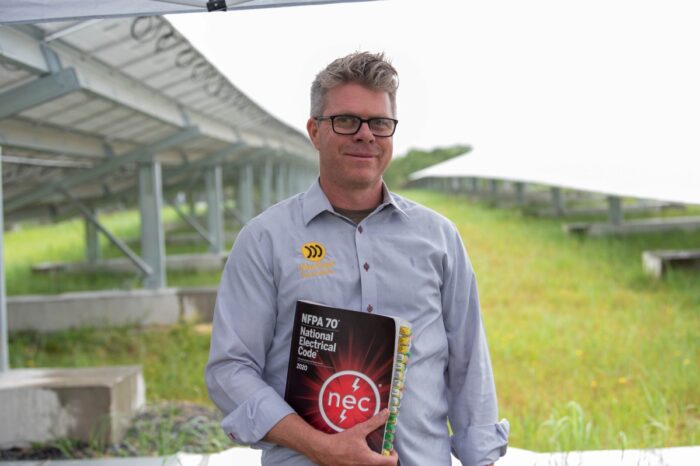
By Ryan Mayfield | The new Code book is here! The new Code book is here! The 2026 edition of the National Electrical Code (NEC) is now available. And while many of you may not be as excited as I am, it’s always a significant event to see the updates and changes to the NEC every three years. This year, I’m especially excited because I was on Code Making Panel 13 (CMP-13) for the first time. This panel is responsible for Article 706 Energy Storage Systems, among others.
As always, the Code is full of changes and modifications. When it comes to Article 690, Solar Photovoltaic (PV) Systems, the changes are plentiful, but they don’t seem as monumental as they have in the past. This time around, the changes are more along the lines of clarifications, rather than significant changes as we have seen in the past. This isn’t to say there aren’t significant changes in other parts of the Code. For example, some Articles have been renumbered and relocated within the Code — Article 220 is now Article 120, and Article 750 is now Article 130. In this article, I’ll highlight some of the changes and discuss their impacts on PV, energy storage systems (ESSs) and interconnected power systems in Articles 690, 706 and 705, respectively.
Article 690
In Article 690, under General Requirements, a new subsection “690.4(G) Fractions of an Ampere or Volt” was added. This has long been a question on the proper way to handle the results of calculations that include fractions of an amp or volt. The article dealing with similar calculations for branch circuits, feeders, and services (Article 220 in 2023 and prior, Article 110 in 2026) allows dropping fractions of an ampere less than 0.5. And while it would stand to reason that applying a similar standard to PV systems could be used, it wasn’t until 2026 that we saw a specific allowance.
The language in 690.4(G) specifies that these fractions, less than 0.5, should be dropped for calculations. This means that you will need to apply the proper correction factors and conditions of use to the voltages and amperages you are looking at first, and the results can then be rounded up or down to the nearest whole number.
Another change you’ll see as it relates to voltage and amperage values appears in 690.7(A)(3) and 690.8(A)(1)(a)(3). These sections enable a licensed electrical engineer to use calculations to determine the maximum voltages and currents within PV systems. Before 2026, these calculations only applied to systems with a generating capacity (ac power rating) exceeding 100 kW. 2026 NEC removed the reference to a system size, now allowing the calculation method for any size system.
An additional method for calculating the maximum circuit current in 690.8(A)(1)(a)(2) was added in 2026. This new subsection allows the use of instructions included with the PV module for the calculation. This may become most useful for bifacial modules, provided manufacturers include the necessary instructions. The gain from bifacial modules has been as much art as science when it comes to calculating the maximum currents. Therefore, any guidance in the form of instructions for the listed modules is welcomed by the industry.
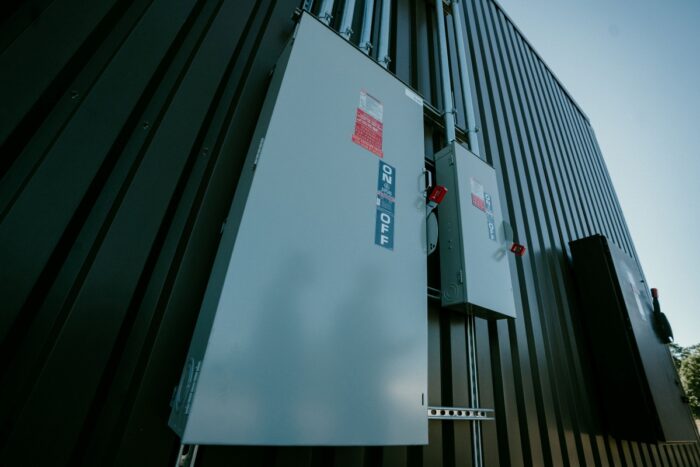
Section 690.13, Photovoltaic System Disconnecting Means, has been updated to reflect the new requirements. The primary change is the direction to install the system disconnect in accordance with 705.20, which are the requirements for disconnecting means for power production sources. Overall, the requirements for the system disconnecting means in 2026 will effectively be as they were previously, given that the 705 requirements mirror the 2023 690.13 requirements. The changes you will see in 690.13 are mostly reordering the requirements and using the reference to 110.25 for the locking requirements to be more consistent with the rest of the Code.
Article 706
Similar to 690, the changes for Energy Storage Systems, Article 706, add clarification to the requirements, rather than significant changes to the rules. Article 706 is still relatively young, first appearing in the 2017 Code, and energy storage systems are rapidly evolving. Hence, changes and clarifications are to be expected in this and forthcoming Code cycles.
Reading through Article 706, one of the most significant changes occurs in Part II, Disconnecting Means. The text doesn’t initially appear to show many changes. 706.15 Disconnecting Means follows the same pattern of Article 690, with the charging language directing Code users to 705.20 for the requirements, as well as 706.15(A) through (D). This change is intentional and should be helpful overall for all involved. Making the requirements consistent, regardless of the technology used, will increase the standardization for power production sources and their interaction with each other.
One section that those with a keen eye will notice missing in 2026 is 706.16 Connection to Energy Sources. This section was deleted in its entirety from the 2023 to the 2026 versions. This deletion leads to one of the most substantive changes with respect to 706, specifically in relation to the capacity (power) sizing of ESSs for backing up loads. Solar Builder published an article in February 2025 that delves deeper into the topic and explains how we arrived at our current position on the subject.
In short, most ESSs will fall under the classification of optional standby power systems and will need to follow the rules in Article 702 for proper design and installation. This deviation is from the previous method outlined in 706, which applies the rules of Article 710 Stand-Alone Systems. These 710 systems are defined as those that do not have a connection to a power source, such as a utility, and are therefore different from our typical interconnected systems.
Ultimately, this will drive us to use 702.4 Capacity and Rating to properly size the power capacity of our systems, as well as the methodology our systems use to control the power. There are three options within this section that users can follow to meet the requirements, all of which are available to ESSs. The third option is new to 702 this cycle and will only apply to systems installed in one- and two-family dwellings. This option will require inverter-based systems to use a listed power control system (PCS) to ensure that the loads automatically trying to connect when the utility fails do not cause a hazard by overloading the backup system. The new UL standard, UL 3141, is already being integrated to inverter-based systems and will be the basis for applying this code section correctly.
Article 705
The final Code article I’ll cover here is 705, Interconnected Electric Power Production Sources. This article is likely familiar to those who design and install PV systems and ESSs already. It governs the requirements for interconnecting these systems with the primary power source, almost always the local utility. Specifically, I’d like to draw your attention to section 705.11 Source Connections to a Service. Over the last few code cycles, this section has changed, and 2026 is no exception. These are the systems that are interconnected to the supply side of any service disconnecting means. The Code Making Panel has been attempting to eliminate duplication of other Code requirements in the first four chapters of the Code, where general requirements are presented. And while these systems are not services, we are connecting power production sources to service conductors and need to ensure we are doing so correctly.
The 2023 version of 705.11 consistently directed users back to previous Code articles for installation methods related to overcurrent protection, disconnecting means, and grounding and bonding. 2026 maintains this to an extent, but without the same number of subsections and direct call-outs. This requires code users to refer back to the general rules without requiring several direct references. These sections still apply and should be referenced for proper installation methods.
One significant change in 2026 to be aware of is the reappearance of specific conductor length requirements for interconnecting power production sources in buildings to the service conductors. These length requirements were included in the 2020 Code, removed in 2023, and reinstated in 2026. 705.11(C)(1) is your new reference and brings back the same distance limitations we saw in 2020. These distances are the actual conductor lengths, not the physical distance between components. Therefore, the location of overcurrent devices and disconnecting means will typically be physically closer than the lengths listed in the Code.
This section aims to reduce the length of unprotected conductors inside buildings, thereby minimizing the risks associated with faulted conductors. This change may reduce some of the flexibility that was in the 2023 Code, so it is an important one for users to be aware of.
Conclusion
As always, the release of the newest NEC requires users to reassess the electrical systems they are installing. As PV systems and ESSs continue to evolve and become more prevalent in our homes and businesses, Code is doing its best to keep up with the technology. Overall, the changes we see in 2026 shouldn’t require significant changes to the installed methodology for systems, but the changes I outlined here will have an impact on these systems. And as always, we need to remember that the general requirements for electrical systems always apply to PV systems and ESSs, and we need to refer back to those articles and changes, too.
Ryan Mayfield is the founder and chief engineer at Mayfield Renewables, founded in 2007. An engineer by training and a full-fledged renewable energy champion by choice, Mayfield has amassed more than two decades of technical expertise in the solar and energy storage sectors, where he’s done everything from boots-on-the-roof labor to literally writing the book on system design and installation. He has been teaching the full-day NEC for PV systems code course since the inception of the continuing education NABCEP conference.