NABCEP 2026 | Rolling with the punches in a changing landscape
The solar industry is in a state of flux. That’s nothing new.
The renewable energy space as a whole has become somewhat liminal since the 2024 presidential election. There is a pre-second Trump administration solar market, and there will a post-second Trump administration solar market. But right now, we’re in that ever-shifting “during” period, and that’s a very interesting — or depending on who you ask, a very nerve-wracking — place to be.
The industry’s recent major trade shows have reflected that trend. A fair percentage of panels at both Intersolar 2026 and this year’s NABCEP Continuing Education conference dealt with “staying a step ahead” of the solar landscape’s constant evolution.
“I think solar is here to stay; it’s cost-competitive with fossil fuels,” says Tori Clifford, head of growth for HelioVolta’s SolarGrade affiliate. “It is a shame that the incentives got cut off, but I think we’re going to overcome.”
NABCEP 2026 painted an excellent picture of just what “overcoming” looks like.
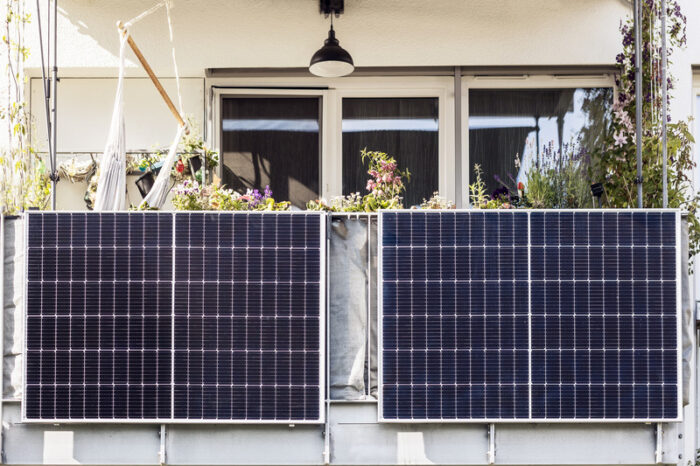
Takeaway: Balcony solar is on the rise
With legislature having passed through Virginia’s state assembly last week, and another bill on the way in Illinois, it seems balcony solar is making its way to the mainstream.
Bills regarding plug-in solar arrays for homeowners — and perhaps even more crucially, apartment renters — have cropped up in nearly half the states in the Union. Clifford says the balcony solar trend is turning out to be one of the industry’s strongest moves of the year in the residential sector.
“If you think about solar in its early days, there has always been a real commitment to clean energy from wanting to go with solar, to make people independent,” Clifford says. “We’re self-reliant and we protect the planet, all the ‘tree-hugger’ sentiments, that’s definitely part of the industry too. I think there’s been this tension in wanting to professionalize, wanting to take it to the next step, and we’ve moved in that direction really seriously.”
The self-reliance piece of the balcony solar argument is a crucial one, Clifford says. The practice is booming in Europe, with a focus on Germany, where experts estimate that the country had installed well over half a million systems by 2025. The American Solar Energy Society (ASES) is hopeful that America’s cultural pendulum will swing in favor of balcony solar sooner rather than later, and the state-level legislature is certainly leaning toward hope as well.
“Like traditional rooftop solar, they reduce energy bills and reliance on the power grid,” wrote ASES columnist and Texas Solar Energy Society researcher Elle Nicholson earlier this year. “For example, one owner interviewed by a German news outlet said he can produce enough solar for half of his family’s daily needs. When compared to rooftop solar, balcony solar does not disrupt existing structures or require access to a roof, solving two major issues that come with traditional solar panels.”
Still, balcony solar has one more big hoop to jump through: it currently is not approved by the National Electrical Code (NEC). Though UL began the process earlier this year, the next major code update is set for 2029, as the industry is still getting used to the 2026 changes.
Takeaway: O&M, code changes take center stage with change
The NEC received its latest update earlier this year, sending a butterfly effect through the energy industry at large. That effect was felt in full at NABCEP, when seemingly every continuing education panel timeslot had at least one option for an O&M or NEC code-focused discussion.
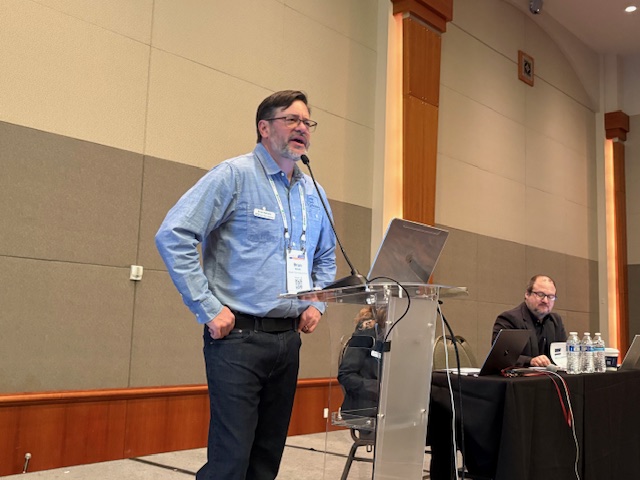
That culminated on the conference’s closing day in an all-encompassing, all-day panel titled ‘The Ever-evolving National Electrical Code: Focus on PV, Storage, Interconnection, and EVs.” Helmed by Brian Mehalic, a senior consultant for the Solar Tech Collective, the panel showcased the recent changes from the new NEC code book, and a little bit on what installers can expect going forward to 2029.
“As part of this overall evolution, and we’re going to undergo some pretty dramatic changes in 2029, is this attempt to create the articles so that they follow the same kind of path,” Mehalic says. “In 2026, we made a lot of progress in getting here. Most sections — not all, it’s still a work in progress — are now laid out with the scope, listing requirements, uses permitted, uses not permitted, following that same structure.”
While the majority of the new code book’s updates come from a desire to streamline the code itself, Mehalic says a few new articles did make their debut. He specifically shouted out the energy management systems article, which while not new, jumped from number 750 to 130 from 2023 to 2026.
“That’s a big flashing light that says, ‘This stuff is important,'” he says. “This is not just going to be limited to the people that do solar and storage. It’s going to (appear in) all kinds of electrical systems all over the place.”
While Mehalic strayed away from touching on 2029’s upcoming code book too much, he says the book is promising a “wholesale change in the way the document is organized.” He urged solar installers and “code savants” to remain patient as the NEC goes through this mass overhaul.
“It’s a consensus-based process, and that’s a big deal; getting consensus is a challenge,” Mehalic says. “It’s part of the reason why you probably look at some requirements in the code and you say, ‘Who the heck? What? No.’ It’s because, you have to get (consensus). Sometimes, you have to pick your battles.”

Takeaway: Remote solar operation and AI are must-haves
Another trend in the energy industry that I observed at both major conferences I’ve attended this year is the “in-appification” of solar services. I talked to multiple firms utilizing fully digital services during this year’s NABCEP continuing education event, including SPAN, who produces smart electrical panels.
“To a homeowner, a SPAN panel is a SPAN panel, but to installers, we sell five different SKUs in all different sizes,” says Liz Cutlip, a territory sales manager for SPAN. “The second part of our product that we sell is SPAN drive, that’s the full level two EV charger. Then, all of that gets combined into the SPAN Home app.”
The solar owner and operator apps are far from new, with phone and tablet programming available now for several solar companies. But combined with recent advancements in AI and their subsequent advancements into the wider energy industry, the two could revolutionize solar maintenance.
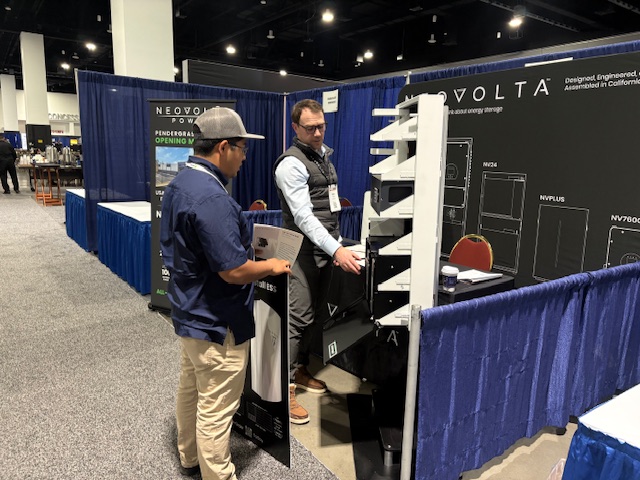
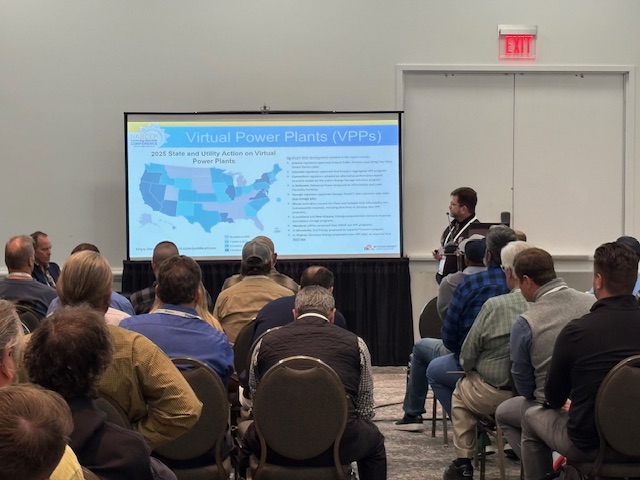
Virtual power plants (VPPs) are another major tool working to keep the nationwide energy grid reliable, according to John LeBlanc, a Midwest sales expert for Detroit-based battery firm NeoVolta. Even more enticingly, it allows many homeowners to take some power — electrical or otherwise — back, from the comfort of their own homes.
“I’ve been talking about VPP for about six to eight months,” LeBlanc says. “They’re coming, and they should be in your mindset. The virtual power plant was mainly for the residential side, supporting the grid. (The idea was) it would get so much permeability into the market that now the homes can start to sustain the grid.
“But for the commercial aspect, you have to think about it. You have this big thing that you have to install, you have to maintain. It has all these little cells in it. … And, it might need firmware.”
SPAN and NeoVolta were just two of a large swath of companies that spoke on the merits of AI and VPPs in 2026. Perhaps even more prevalent was the conference-wide talk of both home-scale and grid-scale batteries taking hold in the United States.
Takeaway: Batteries and storage are undeniable going forward
The other half of NABCEP 2026’s panels that didn’t concern O&M and recent code changes seemed to revolve around the advent of large-scale ESS and BESS projects. These projects and add-ons have gone from being a nice perk of many a solar project to absolutely essential to the industry.
“The other piece of (what we do) is energy storage,” Cutlip says. “When we talk about this whole market, we call this the electrification space. SPAN is an electrification company. … That whole market will be an estimated $73 billion market by 2035. That’s why we’re here. That residential electrification market is just going to continue to grow, because it just makes sense.”
The residential electrification space is booming as Cutlip says, and with that comes a spike in energy storage. Specifically, Cutlip cited places like California, where severe weather and grid outages have become commonplace, as hotspots for battery storage.
Batteries aren’t just for residential markets anymore either, as the practice is becoming increasingly important to the energy grid overall. The U.S. Energy Information Administration estimates that 28% of new power plant capacity built in the U.S. in 2026 will come from battery storage, and that number will likely climb even higher by the end of the 2020s.
For Americans in brownout and blackout-susceptible areas, that means the grid will be more reliable than ever, says LeBlanc.
“When was the last time you experienced a brownout? It’s been a while,” he says. “That grid is switching faster. It’s got some capabilities. Well, batteries are going to make that even less, because they can react in a fraction of the time — milliseconds, versus minutes or hours.”
As electricity becomes ever more crucial to American life, inching from “essential” to “a basic, inalienable necessity,” that miniscule amount of time begins to really matter. And right now, policy issues aren’t helping the process.

Takeaway: Federal policy changes are rippling through the industry
The central thread tying together the entirety of NABCEP 2026 — and really, the entirety of the solar industry over the past year and a half — is that, yes, the rampant federal policy changes are having an effect after all.
I wrote in my recap of Intersolar 2026 that I was surprised at the lack of doom and gloom around the solar industry, even in the face of federal policy changes. That still rings true, but as Clifford tells me, “it depends on who you ask.”
“I think people are really thinking seriously about their business models and what types of financing they’re offering,” Clifford says, noting the changes since the termination of solar’s federal tax credits. “If you’ve been a cash player from here on out, now you really need to figure out third-party owned projects and how that fits into your framework. I think that’s been a topic here.”
It’s obviously a big change, but it’s not all bad, according to Clifford.
She says the Biden-era solar incentives sometimes fostered market dynamics that “weren’t great for quality.” Although great for businesses and asset owners alike, the incentives occasionally created an environment in which some of the wider energy industry’s more unsavory developers could perform a kind of stock market “pump and dump” strategy, building solar projects before quickly offloading them in order to maximize tax credits.
“A lot of developers were selling projects after five years, once they got that tax credit,” she says. “(They) weren’t invested in long-term reliability or performance. You know, 30% guaranteed money off this project, it just changes how you approach development.”
As for right now, we’re very much in the liminal space that is the second Trump administration. What matters most now is how solar owners, installers, and manufacturers handle this time period and the “perception problem” that often comes with it in the current political landscape.
“Everyone wants to save money on their power bill; everyone is upset that those costs are going up every month,” she says. “When I think about mass adoption of solar, the story that resonated was always around cost. I think we just have to deliver cost-effective clean power, and not be shady about it.”