Maine’s first utility-scale BESS project comes online
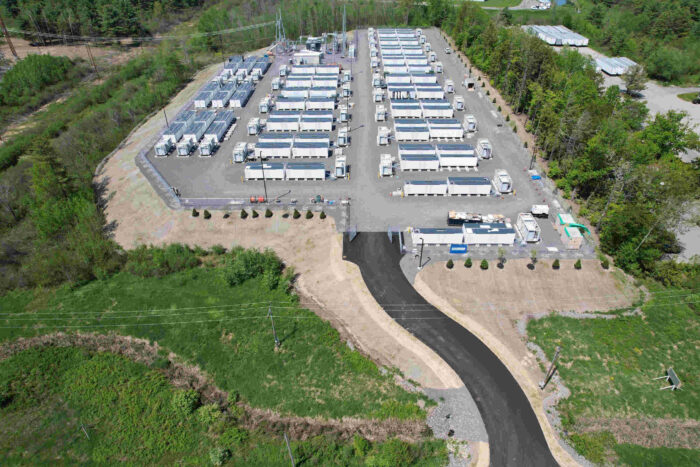
Cross Town Energy Storage, the first utility-scale battery energy storage system (BESS) center project in the state of Maine, came online Feb. 11.
Located on about five acres of land in the small town of Gorham in southern Maine, the 175 MW and 350 MWh is the largest of its kind in the region, narrowly beating out the Cranberry Point Energy Storage center in Massachusetts. Texan energy firm and BESS specialist Plus Power will be operating the battery center.
The project comes with hopes of flattening energy grid usage spikes and the rising utility costs they create, according to Maine Gov. Janet Mills.
“Today, Maine welcomed the largest energy storage project of its kind in New England, delivering real cost savings and reliable power for Maine,” Mills says. “This project will help lower electricity costs by reducing the need for costly fossil fuels when the grid is strained, as we’ve seen during recent extreme cold weather. I congratulate the Town of Gorham and Plus Power on this significant achievement that will deliver lasting savings and reliability for Maine people.”
For Plus Power, the new energy station is just a piece of the wider renewable energy puzzle, albeit an important one. The company currently has about 11 GW of renewable energy in development across more than 20 U.S. states, according to its website.
“Plus Power is proud to operate another landmark facility in New England and further strengthen power reliability in the region,” says Naveen Abraham, CEO of Plus Power. “We look forward to continuing our partnership with ISO New England as our facilities demonstrate the unique capabilities of battery energy storage systems.”
Great expectations
The new Cross Town BESS center is just one part of a larger vision for renewable energy across Vacationland, officials say. According to the state’s Maine Energy Plan, Mills and other public officials are aiming for Maine to run 100% on renewable energy by 2040, as demand continues to rise. Additionally, the state has further goals to deploy 400 MW of battery energy storage by 2030.
“The report also found that while Maine’s electricity demand is expected to more than double between now and 2050 as heating and transportation are electrified, total energy use will decrease as Maine shifts away from traditional combustion technologies and toward high efficiency electric technologies such as heat pumps and electric vehicles,” state officials say. “Greater use of electricity across the economy also results in lower electricity prices over time as costs are spread out over a greater number of customers and uses.”
Along with the Maine Energy Plan, the state has also founded a four-year climate plan called ‘Maine Won’t Wait.’ In its 2025 annual report, the plan found the Lobster State to be 91% of the way to full carbon neutrality, bolstered by more than 20,000 electric and plug-in hybrid vehicles on the roads throughout the state.
“Maine must reduce greenhouse gas emissions to meet 2030 and 2050 targets and do our part to limit global warming to 1.5°C this century,” the plan states. “This means changing our transportation, buildings, and energy to use cleaner energy sources such as electricity from renewable resources.”