
Home storage: AI, VPPs, OBBBA and other acronyms shaping the ESS market
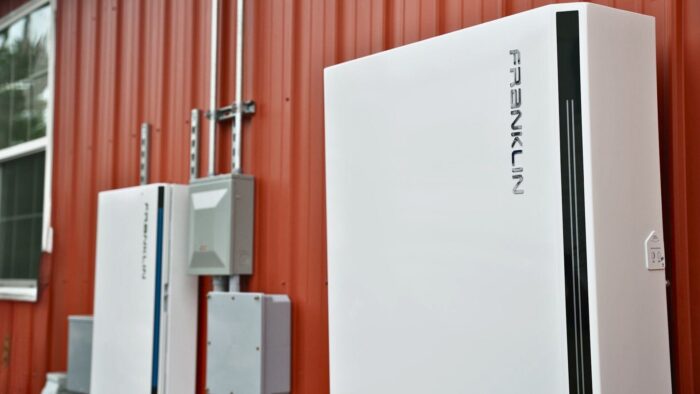
In a span of 30 years between 1991 and 2021, lithium-ion battery prices dropped by 97%, thrusting home energy storage systems (ESS) into a more palatable price range for many mainstream consumers. As the home ESS installation industry heads into 2026, it seems the winds of change are blowing through the sector once again.
Thanks in large part to spiking energy prices around the U.S., the past few years have seen a battery renaissance in North America.
Energy storage practices are firmly taking hold around the country, with the U.S. seeing a 132% year-over-year increase in residential ESS installation in Q2 2025, according to a joint report by the American Clean Power Association and data research firm Wood Mackenzie. Perhaps even more promising, the Solar Energy Industries Association has reported that prices are plummeting, with average battery pack costs now consistently below $200/kWh.
That sharp of an increase (and the subsequent decrease in prices) has made the forecast relatively rosy for batteries in 2026. The U.S. Energy Information Administration now predicts up to 22.1 GW in new ESS installations for this year, good for second in new electricity capacity, behind solar’s expected 39.6 GW.
Douglas Amarhanow says that statistical increase in interest is translating to very real traction across the industry. The FranklinWH product manager says that his San Jose, California-based company views the market as being in a solid spot for 2026, with a real chance to grow in the short-term future.
“Essentially, we’re seeing storage going from nice to have, to basically sold with every job because of (shifting policies),” he says. “Also, utilities realizing that battery storage offers meaningful impacts on the hottest days of the year, when there are demand response events, by offering active demand response.”
Amarhanow and the ESS industry have quite a few reasons to be excited, and the byproducts of the 2020s artificial intelligence (AI) boom might top the list.

AI effects, VPPs top of mind in the new year
As homeowners continue to look for scalable alternative energy solutions to cut down on rising utility bills, the full-scale advent AI presents a “significant transformation” for the home storage industry.
Since its jump to the mainstream of the business world in 2022, AI has established itself as the foremost corporate buzzword of the decade across a multitude of spaces, and renewable energy is no exception. Once merely an intriguing novelty, AI has matured in the past few years and is now indispensable to the industrial landscape. Executives across the renewable energy industry are taking notice, according to officials from Chinese solar manufacturer Anern.
“Artificial intelligence (AI) will become a standard feature in energy storage solutions,” says the company in its 2026 ESS predictions. “These systems will learn your household’s energy consumption patterns and analyze external data, such as weather forecasts and utility rate changes.
“An AI-powered system can predict your solar panel output and decide the best times to store energy, use it to power your home, or even sell it back to the grid. This maximizes your savings and ensures you always have power when you need it.”
The possibilities are theoretically endless, but all that power has to come from somewhere. The electrical needs of the AI data center industry are, in short, astonishing.
In 2023, just months after the launch of popular service ChatGPT, data centers across the U.S. combined for about 4.4% of total electrical consumption across the country. That number is expected to balloon, with reports from MIT Technology Review saying that by 2028, AI could use between 165 and 326 terawatt-hours (TWh) every single year. For reference, that’s the same energy need as about 22% of all U.S. households, combined.
For Amarhanow and FranklinWH, this outsized need for electricity presents a unique opportunity for the ESS installation market.
“Power is front of mind for everybody,” he says. “It’s probably the best thing possible to happen to the energy storage market.”
Amarhanow added that he expects the home battery market to “follow in that wake” created by the data center boom. With utility companies needing more power than ever before, especially in the summer, the opportunity is there for the taking for homeowners, and thereby storage manufacturers, to gain power from energy companies and save money during the grid’s most straining months.
“These daily peaks, as well as seasonal peaks, are when electricity is most expensive, hence when demand flexibility can save consumers the most money,” wrote Jigar Shah, former director of the Loan Programs Office for the U.S. Department of Energy, in 2022. “But don’t just take my word for it: active VPP participants are saving hundreds of dollars a year. VPPs’ benefit to energy affordability is equitable too, with a growing number of VPP companies and programs demonstrating significant adoption by low to middle income households.”
The concept of VPPs is relatively new to the U.S., with the technology truly coming to relevance over the past five years, according to Amarhanow. But as the country’s energy demands spike higher than ever, these residential power plants will become even more integral to the fabric of the American electrical grid.

Reliability, affordability over all
Rex Liu, VP of product management for clean energy at Generac Power Systems, says that the focus of energy storage customers has shifted. Now more than ever, homeowners are placing a premium on reliability and affordability, two things in increasingly short supply with the modern energy grid. It’s up to the manufacturers and the energy supply chain to heed those demands, he says.
“It’s really about empowering the homeowner,” he says. “I’ve been in this industry for a long time. I remember an often-cited quote that people would use was that your typical homeowner thinks about energy less than four minutes a year, which made it very difficult to go sell solar to somebody if they just don’t care.
“That’s not the case anymore. Homeowners are constantly thinking about energy; in many cases, it’s probably your highest utility bill.”
New technologies and advancements in energy storage hardware have reflected those consumer priorities, Liu says. Since bolstering itself in the storage market with its acquisition of Pika Energy in 2019, Liu and Generac have been working to roll with those changes. In 2025, the company launched the PWRcell 2, the first energy storage system developed by Generac.
Each of these moves and new products exists in service of empowering homeowners and other ESS customers looking to get a leg up on an increasingly unreliable energy grid, Liu says. On the other side of that coin, giving that power back to the customer can also help utilities companies themselves.
“Batteries can really help with reducing that spike in demand,” he says. “Also, you’re starting to see a lot of utilities have incentives for people to buy batteries and install them, so they can reduce the high demand at times. (They’re) taking those homeowners out of the high demand times, because those homeowners are now using batteries.
“I think that is what we’re seeing in the market today, in terms of how homeowners can really leverage batteries to reduce the cost of electricity.”
Liu says that in response to shifting customer demands across the energy space, the Waukesha, Wisconsin-based company is taking “a broader ecosystem approach” to solar and home storage.
“How do we integrate solar and storage, and generators, and provide a better experience overall for the homeowner? On our clean energy side of the business, we’ve really focused on establishing a presence in the market,” he says.
That includes software advancements, Liu says, including Generac’s integration with the ecobee app. Generac has been integrating its products into the Canadian home automation firm’s mobile app for the past few years, with the integrated product list now including the PWRcell 2 and other renewable energy-based products.
“There’s really a lot of opportunity to elevate that homeowner experience and just simplify everything for them,” he says of the ESS market.

Political impacts
The storage market is mostly promising right now for manufacturers and installers, according to Liu, with BESS energy solutions gaining traction in the past few years. But recent policy tweaks, including the One Big Beautiful Bill Act (OBBBA) have created one of the industry’s larger roadblocks, he says.
“(Policy changes are) going to change how solar and storage is sold,” Liu says. “It’s also going to change how homeowners buy their solar systems, and it could make the process more confusing. There will be a settling period in 2026 as the way that solar is sold and bought kind of evolves a little bit.”
Signed on July 4, a few of the OBBBA’s finer points have become infamous in the solar world, including Section 25D, which placed a cutoff on the Residential Clean Energy Tax Credit for Dec. 31, 2025.
“There may be a lull in sales,” says Amarhanow. “But there’s plenty of new financing tools out there. People have been moving toward (third-party owner products) anyways; the TPO price versus the financing price is kind of the same thing because of the high interest rate for loans. But there’s also this new prepaid lease product where, because the commercial tax credit is still in effect, so you get the 30%, and you get the commercial depreciation of the battery asset.”
Following the commercial depreciation period, normally lasting five to seven years according to Amarhanow, the homeowner gets to purchase the battery wholesale. On a less positive note for the installation side of things, the 25D tax credit loss is likely to affect smaller installers most greatly, contributing to an industry-wide knowledge gap.
“What makes me most afraid? Probably the shift away from 25D which will impact smaller electrical contractor shops who were just getting into home batteries,” Amarhanow says. “That’s always a loss of experienced talent in the workforce, which is not great for the industry.”
Liu says that FEOC restrictions imposed by the Trump administration could also contribute to sales headwinds for storage manufacturers and installers. One of the biggest victims of those particular policies could be buyer options for OEM equipment, he says.
“You’ll see more of the main players that are going to be able to participate, and some of the smaller players will fall out of the market,” he says. “On the positive side of things, I’m really looking forward to how the integration of these ecosystems is going to come into play. I think that we can create some really innovative and new consumer experiences, and dealer experiences.”
But despite the expected sales dip, ESS owners and installers are finding workarounds to prevent the market from plummeting in the latter half of the 2020s. The battery industry is far from dead, and Amarhanow says the resiliency of the industry is one of its greatest strengths.
“The most exciting this is the economic benefits of batteries broadly,” he says. “The economic benefits are the time of use and VPP incentives. People think that the battery industry will go of a cliff because of the 25D loss, but I think that we’ll hold really strong because of those revenue streams that are available for the homeowner.”

Comments are closed here.