Distributed solar gets massive boost with Ontario’s Save On Energy program
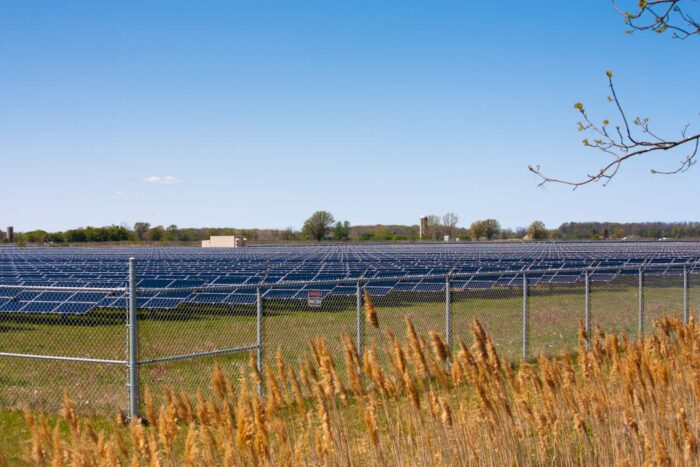
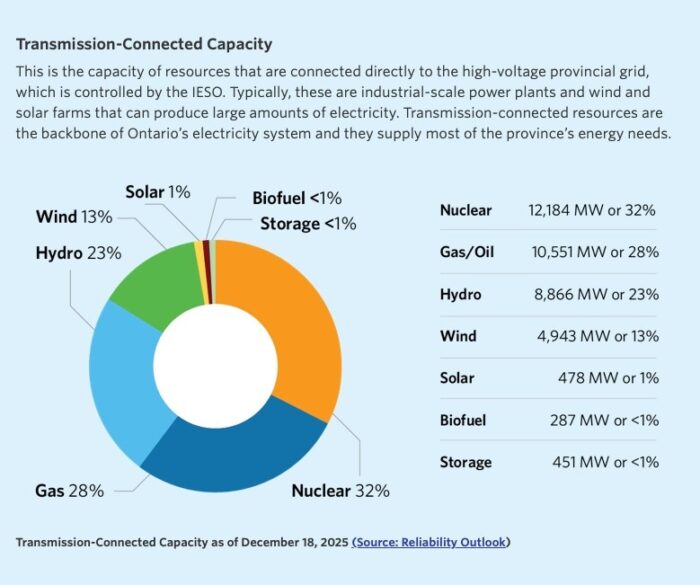
Ontario’s Independent Electricity System Operator (IESO) is investing heavily in distributed solar and storage to avoid new base load investments with a multi-billion dollar program now one year old.
The IESO has earmarked $10.9 billion to invest in its Home Renovation Savings Program over the next 11 years under the brand name Save On Energy, which is being co-managed by Ontario natural gas provider Enbridge Gas.
“That’s the biggest commitment that the Ontario government has made to energy efficiency in its history,” says Mary Bernard, the supervisor of IESO’s Residential and Community Program Performance unit, in a February interview with SB Canada.
Over the short term, “the 2025–2027 Program Plan has a budget of $1.8 billion for the portfolio of programs and is forecasted to achieve 900 MW of peak demand savings and 4.6 TWh of electricity savings by 2027,” according to the IESO website.
An IESO overview of the 2025-2027 program includes rigorous cost/benefit analysis. “Cost-effectiveness under the plan is assessed using forecasted program participation, program delivery costs, and supply-side avoided costs, which estimate the cost of supplying that same amount of energy and capacity from the current and 2025-2027 Demand Side Management Program Plan, projected electricity generation mix,” the website says.
The Save on Energy program is part of the province’s 12-year plan begun in 2025 to meet the expected long-term rise in electricity demand. “The most recent IESO demand forecast, published in late 2024, indicates load growth in Ontario of 75% by 2050. Electricity demand side management (eDSM) offers one of the lowest cost resources to address system needs, reducing the need for investment in new supply resources and supporting reliability into the future,” the IESO website states.
“These initiatives come in at a cost of about three cents per kilowatt-hour, which is one of the lowest-cost resources available to our electricity grid,” Bernard says.
All told, Ontario recognized after several years of energy research that eDSM was a cost-effective alternative to new load base investment. “eDSM programming, including traditional energy-efficiency incentive programs as well as programs to support installation of distributed energy resources (DERs), is often faster to deploy and less subject to siting restrictions than supply side resources,” the website notes.
Additional eDSM program could take place near term. “On November 7, 2024, The Ministry of Energy and Electrification issued a directive to the IESO to conduct an Achievable Potential Study by December 31, 2026,” the IESO states. “The study will be used to inform the IESO’s 2028-2030 eDSM Program Plan and other eDSM and system planning activities,” the website says.
Residential participation grows
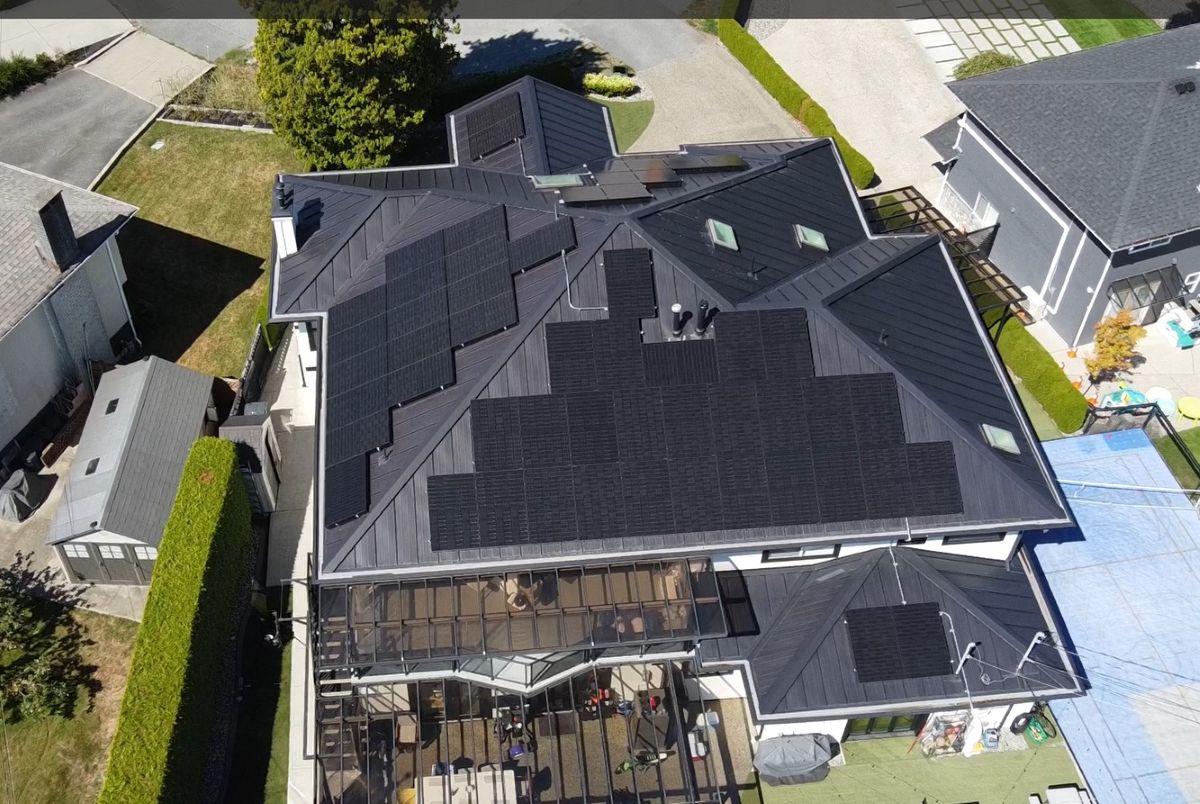
Over the first year of the Save On Energy program operation, close to 100 homes received subsidies of up to $10,000 each for the adoption of solar, storage, and other renewable energy and energy efficient appliances. Today, the program has a pipeline of around 750 applications already, Bernard estimates.
“Save on Energy covers incentives for electrically heated homes as well as propane, oil and wood-heated homes,” she says.
Most of the homes that signed up for the program during the first year opted for both solar and storage, Bernard adds. The program is aimed at reducing demand behind the meter, and it has no net metering provision. However, Ontario customers can purchase a system without the incentive and participate in a net metering arrangement.
Rewarding solar adoption by the panel
The subsidies under the Save on Energy program are generous.
“For panels we will pay up to $1,000 per kilowatt, up to $5,000 or up to 50% of the total costs,” Bernard says. “For the battery storage units we will pay $300 per kilowatt-hour, up to $5,000 or 50% of the total cost. So the most incentive that you can achieve for a solar and battery system is $10,000.”
Subsidies for C&I, municipal and other businesses
The Save on Energy program also has incentives for commercial and industrial, as well as municipal energy efficiency projects that would result in a minimum electricity savings of 600 MWh per year. This XLerate companion program is “designed for large-scale, complex energy-efficiency projects across Ontario’s industrial, municipal, institutional and healthcare sectors. Project feasibility study funding at a 50% cost share helps organizations assess opportunities and reduce upfront risk. Project incentives of $300/MWh up to 75% of eligible project costs, with a maximum of $15 million per project,” the IESO website states.
Apart from these capital investment support incentives, Save On Energy also rewards businesses for reducing demand load. “Incentives are available for small and large commercial, industrial and institutional participants who are interested in behind-the-meter solar installations to displace their load and reduce their demand on the grid under the Prescriptive stream,” the IESO website states.
“Micro-generation projects up to 10 kW of direct current (DC) capacity are eligible to receive $1,000/kW-DC, and small-medium generation projects greater than 10 kW up to 1 MW of alternating current (AC) capacity are eligible to receive $860/kW-AC, up to 50 percent of the eligible project costs. Projects larger than 1 MW-AC are eligible, however, the incentive is capped at 1 MW-AC,” the website continues.
Aiding installers in making sales
The Save on Energy program helps solar and storage installers sell systems to homeowners, since the subsidies are so readily available and require no home inspection.
“We have more than 70 different contractors supporting the stream of the program,” Bernard says. “We don’t have a registered list of these contractors, but we do ask them to sign [an agreement of] terms and conditions, just make sure we’re all on the same page, to support the customers.”