Off-grid Systems: Making The Energy Storage Switch
Off-grid living offers homeowners energy independence, resilience during outages, and protection from rising utility costs. By generating and storing their own power, they also gain control over energy use. This approach is particularly beneficial in remote areas but is increasingly appealing to those seeking self-sufficiency and long-term savings.
For decades, lead-acid batteries have been the standard for off-grid energy storage. Their reliability, affordability, and well-understood performance have made them a trusted choice. However, they are typically designed to operate within a limited depth of discharge—usually 25–50%—to preserve battery life. This means battery banks must be oversized to ensure adequate usable energy, increasing physical space and maintenance requirements.
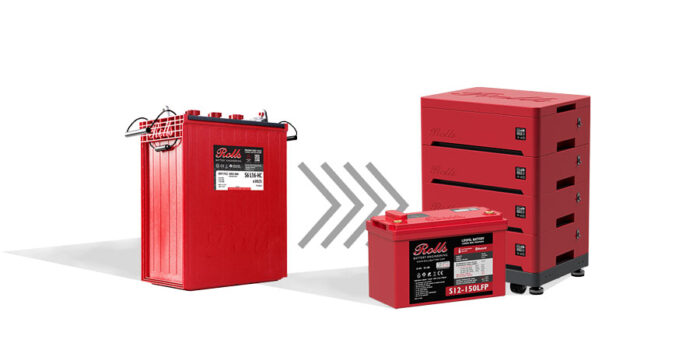
LiFePO4 lithium batteries are now a popular alternative, offering several key advantages. Available in drop-in replacement case formats for easy replacement, or standalone stackable or rack-mount option, they offer higher usable capacity (up to 80–100% depth of discharge), improved charge efficiency, minimal maintenance, and inverter communication with the potential for remote monitoring. As a result, homeowners can often install smaller battery banks while achieving equal or greater usable energy compared to lead-acid battery banks.
That said, switching to lithium does require consideration and planning. In cold climates, lithium batteries cannot be charged safely below 0°C (32°F), so they may need to be installed in insulated or heated spaces, or feature internal heating to bring cell temperatures up to allow safe charging. Lead-acid batteries, when properly charged, can operate in a much broader temperature range. Additionally, existing inverters and charge controllers must be compatible with lithium charging profiles; older equipment may require reprogramming or replacement. Upgrades may also allow the integration of new features such as closed-loop inverter communication and remote monitoring of the system.
Overall, with a system-wide evaluation and planning, switching to lithium can improve performance and reduce maintenance needs and long-term costs.
Considerations:
- Off-grid living provides independence, resilience, and cost control
- Lead-acid batteries are reliable but limited to 25–50% usable capacity in off-grid applications
- LiFePO4 lithium batteries typically allow 80–100% usable energy, allowing smaller systems, both in footprint and capacity
- Operating temperatures may limit the use and location of lithium batteries
- Inverters, charge controllers and other system components must be lithium-compatible
Sponsored By: